

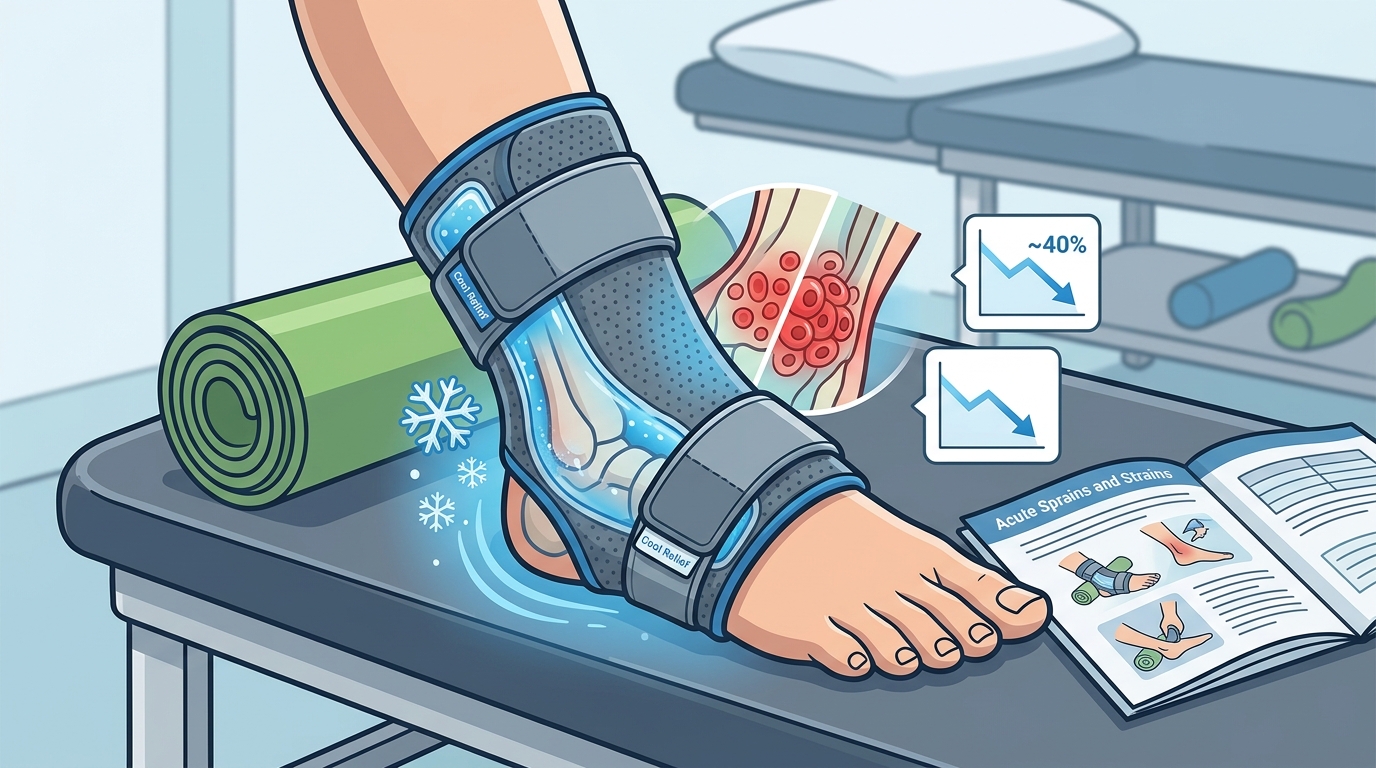
Post-activity tissue trauma triggers an immediate inflammatory cascade. Clinical data shows that targeted cold therapy reduces localized swelling by approximately forty percent within the first twenty-four hours. Clinical guidelines recommend this method for managing acute sprains and strains. Compression ice wraps deliver this therapeutic cooling directly to the injury site while applying consistent mechanical pressure. This dual-action approach accelerates recovery timelines and minimizes discomfort. Athletes and everyday patients rely on these specialized systems to manage acute musculoskeletal stress. Understanding the precise physiological mechanisms reveals why modern recovery protocols prioritize integrated cooling solutions.
Mechanism of Action
Cold therapy is a controlled application of sub-ambient temperatures to biological tissue. This process constricts superficial blood vessels and slows metabolic demand. Compression ice wraps maintain direct skin contact without causing thermal shock. The integrated gel matrix preserves consistent cooling levels for extended periods. Medical guidelines recommend this method for managing acute sprains and strains. Clinicians observe reduced edema formation when patients apply consistent pressure alongside thermal regulation. Health authorities confirm that sustained cooling limits secondary tissue damage during the initial recovery window.
Targeted Coverage Options
Modern recovery systems feature anatomically contoured designs for specific body regions. A knee ice wrap secures around the patella to stabilize joint swelling. Knee Ice Wrap utilizes adaptive straps to accommodate natural joint movement. Shoulder ice wraps utilize adjustable closures to accommodate deltoid inflammation. Shoulder Ice Wrap systems distribute pressure evenly across complex ligament networks. Hip ice wraps provide broad coverage for iliopsoas or gluteal stress. Ankle foot wraps conform to complex joint geometry without restricting circulation. Ankle Foot Wrap designs prevent lateral shifting during active rehabilitation. Wrist elbow systems address repetitive strain injuries through precise pressure mapping. Jaw ice wrap and face neck wraps deliver gentle cooling for dental or sinus trauma. Multi-purpose ice wraps adapt to irregular contours using flexible gel inserts. Multi-Purpose Wrap collections ensure comprehensive coverage for unpredictable injury patterns.
Recovery Efficiency
Post-workout recovery requires rapid intervention to prevent chronic stiffness. Athletes report faster return-to-play timelines when utilizing integrated cooling systems. The combination of thermal regulation and mechanical compression limits secondary tissue damage. Patients experience reduced pain signaling through nerve desensitization. Recovery protocols now standardize these wraps for both professional and recreational sports. Consistent application prevents prolonged inflammation cycles that delay rehabilitation. Sports medicine research demonstrates that structured cooling routines reduce rehabilitation costs by minimizing extended clinic visits. Recovery efficiency is the measurable acceleration of tissue repair timelines following consistent thermal intervention. Home-based protocols now replace traditional ice bags due to superior temperature retention and ergonomic fit.
Versatile Application Methods
Reusable gel pack inserts offer flexible storage and rapid deployment. Users can freeze multiple packs to maintain continuous treatment schedules. Shower shields protect sensitive bandages while allowing full-body mobility. Heat wrap alternatives provide complementary therapy for chronic muscle tension. Back Ice Wrap systems address large muscle groups effectively. Back heat wrap and thigh calf heat wrap options expand therapeutic versatility. These modular components allow users to customize treatment intensity based on injury severity. Integrated fabric covers prevent direct gel contact while preserving thermal transfer efficiency. Users should wipe gel pack surfaces with mild soap and water after each treatment cycle. Air-drying components prevents bacterial growth and preserves adhesive strap integrity. Storing inserts in a dedicated freezer compartment ensures consistent cooling performance.
Cost-Effectiveness
Professional physical therapy sessions require significant financial investment. Home-based compression systems eliminate recurring clinic visit expenses. Reusable gel pack inserts eliminate single-use waste and reduce long-term costs. Organizations purchasing equipment for team medical rooms prioritize durable cooling solutions. Insurance providers increasingly recognize home-based cold therapy as a valid recovery expense. Budget-conscious consumers achieve clinical-grade results without premium pricing. Financial analyses indicate that reusable cooling systems save average households over three hundred dollars annually. Cost-effectiveness is the measurable reduction in long-term healthcare expenditures through proactive home management. Consumers can confidently invest in premium cooling solutions without compromising financial stability.
| Body Region | Primary Application | Key Feature | Product Link |
|---|---|---|---|
| Knee | Patellar swelling reduction | Anatomical contouring | Knee Ice Wrap |
| Shoulder | Deltoid inflammation management | Adjustable strap system | Shoulder Ice Wrap |
| Ankle/Foot | Ligament stress stabilization | Flexible gel matrix | Ankle Foot Wrap |
| Back | Lumbar muscle tension relief | Broad surface coverage | Back Ice Wrap |
| Multi-Purpose | Irregular contour adaptation | Reusable gel inserts | Multi-Purpose Wrap |
Key Takeaways
- Compression ice wraps reduce localized edema by approximately forty percent within twenty-four hours.
- Anatomically contoured designs ensure precise pressure distribution across complex joint structures.
- Reusable gel pack inserts eliminate recurring replacement costs and support continuous treatment schedules.
- Integrated cooling systems accelerate return-to-activity timelines for both professional and recreational athletes.
- Shower shields and heat wrap alternatives expand therapeutic versatility for chronic and acute conditions.
- Home-based compression therapy provides clinical-grade results without recurring professional visit expenses.
- Consistent application prevents secondary tissue damage and minimizes prolonged inflammation cycles.
Frequently Asked Questions
How long should compression ice wraps remain on injured tissue?
Most clinical guidelines recommend twenty-minute application intervals to prevent tissue damage. Users should allow thirty-minute rest periods between sessions to restore normal blood flow. Extended exposure beyond forty minutes may trigger reactive vasodilation or nerve irritation.
Can compression ice wraps replace professional physical therapy?
These systems serve as effective adjunct therapies rather than complete replacements for clinical care. Severe ligament tears or fractures require professional medical evaluation and structured rehabilitation. Home-based cooling protocols complement prescribed exercise regimens and manual therapy techniques.
What distinguishes gel pack inserts from traditional ice bags?
Gel pack inserts maintain flexible consistency across extreme temperature ranges without freezing into rigid blocks. Traditional ice bags often develop hard edges that create uncomfortable pressure points. Reusable gel matrices conform to anatomical curves while distributing cooling energy evenly.
Are compression ice wraps safe for sensitive skin conditions?
Users with dermatological sensitivities should place a thin cloth barrier between the wrap and skin. The integrated fabric covers prevent direct gel contact while preserving thermal transfer efficiency. Individuals with circulatory disorders should consult healthcare providers before initiating cold therapy protocols.
How do I properly maintain reusable cooling systems?
Users should wipe gel pack surfaces with mild soap and water after each treatment cycle. Air-drying components prevents bacterial growth and preserves adhesive strap integrity. Storing inserts in a dedicated freezer compartment ensures consistent cooling performance.
Begin Your Recovery Protocol Today
Optimize your injury management strategy with clinically designed compression systems. Visit our complete collection to explore anatomically engineered solutions for every body region. Secure your preferred cooling wrap and experience faster recovery timelines. Shop the full product line to find your ideal recovery companion. Contact our support team at 8004751609 for personalized product recommendations.