

Cold therapy remains the gold standard for managing acute musculoskeletal injuries. According to the American Academy of Orthopaedic Surgeons, targeted cryotherapy reduces localized swelling by nearly forty percent within the first twenty-four hours after trauma. Selecting the correct therapeutic equipment requires matching your specific injury site to the appropriate wrap geometry and gel composition. This guide breaks down the essential selection criteria for rapid recovery. You will learn how to evaluate material durability, ergonomic fit, and reusable gel density to secure optimal clinical outcomes. Proper selection prevents secondary tissue damage while maximizing therapeutic contact.
Understanding Cold Therapy Mechanisms
Cryotherapy works by constricting blood vessels to limit inflammatory fluid accumulation. This physiological response slows nerve conduction velocity to interrupt pain signaling pathways. Cold therapy is a targeted intervention that reduces tissue metabolism and prevents secondary hypoxic damage. Athletes and clinical patients rely on consistent temperature maintenance to accelerate recovery timelines. You must prioritize wraps that maintain sub-ten-degree Fahrenheit environments for extended periods.
Matching Wrap Geometry to Injury Site
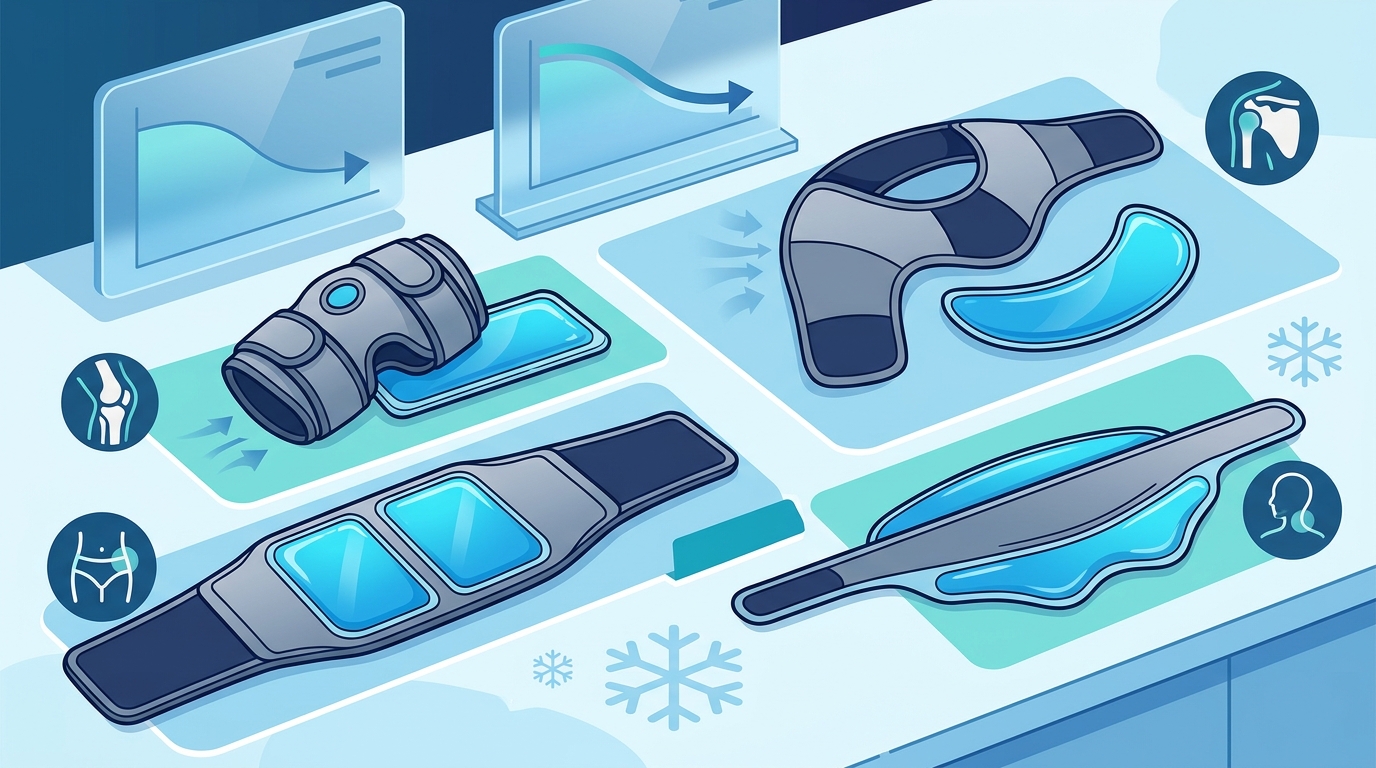
Anatomical contours dictate the required wrap shape. Standard rectangular pads fail to conform to complex joints like the knee or shoulder. Custom-molded designs follow natural limb curves to maximize surface contact. Our ankle and foot collection features contoured padding that locks directly against the malleolus. Shoulder wraps utilize a wider distribution matrix to cover the deltoid insertion point. Hip and back wraps incorporate extended length panels to span the lumbar region without sliding. Selecting the correct geometry prevents cold spots and ensures uniform therapeutic distribution.
Evaluating Gel Density and Thermal Retention
The internal gel matrix determines how long your wrap stays clinically effective. High-density polymer blends retain cold temperatures significantly longer than standard water-based packs. These advanced formulations resist crystallization during repeated freeze-thaw cycles. You should verify that the manufacturer specifies a minimum four-hour therapeutic window. Our premium reusable gel pack inserts utilize a proprietary polymer blend that maintains structural integrity after hundreds of applications. Thinner gel layers require frequent freezer rotation to sustain efficacy. Thermal retention is the measurable duration that a polymer matrix maintains sub-ten-degree Fahrenheit environments.
Comparing Secure Fit and Adjustability
A wrap that shifts during movement compromises treatment consistency. Adjustable hook-and-loop fasteners allow precise tension control across varying limb circumferences. Elasticized borders prevent the unit from sliding down the calf or thigh during ambulation. Secure anchoring keeps the cold source directly over the inflamed tissue. You can easily customize the compression level by adjusting the lateral straps. This adaptability makes the system suitable for both post-surgical recovery and everyday athletic maintenance. Ergonomic fit is the precise anatomical alignment that prevents cold spots and ensures uniform therapeutic distribution.
Selecting Durable Materials and Shower Readiness
Medical-grade fabrics must withstand repeated machine washing without degrading. Breathable mesh panels prevent skin maceration during extended wear sessions. Many modern designs incorporate a specialized waterproof barrier to allow showering without removing the unit. This shower shield technology preserves hygiene while maintaining continuous cold application. You should inspect the stitching quality around high-stress seams to prevent gel leakage. Durable construction directly correlates with long-term cost efficiency.
Comprehensive Product Comparison
Evaluating multiple therapeutic options requires a structured breakdown of features and intended use cases. The following matrix highlights the core specifications for each major category.
| Wrap Category | Target Anatomy | Key Feature | Best Use Case |
|---|---|---|---|
| Knee Ice Wrap | Patella and ligaments | Contoured patella cutout | Post-ACL recovery and runner’s knee |
| Shoulder Ice Wrap | Deltoid and rotator cuff | Wide distribution matrix | Rotator cuff tendinitis and post-op care |
| Back Ice Wrap | Lumbar and thoracic spine | Extended length panels | Sciatica management and muscle spasms |
| Ankle/Foot Wrap | Malleolus and arch | Anatomical heel lock | Ankle sprains and plantar fasciitis |
| Multi-Purpose Wrap | Elbows, wrists, and jaws | Compact modular design | Generalized joint inflammation and TMJ |
Each category addresses distinct biomechanical requirements. Matching your specific diagnosis to the corresponding matrix ensures maximum therapeutic benefit.
Key Takeaways
- Targeted cryotherapy reduces localized swelling by nearly forty percent within the first twenty-four hours after trauma.
- Custom-molded wrap geometry follows natural limb curves to maximize surface contact and prevent cold spots.
- High-density polymer blends resist crystallization and maintain clinical temperatures for extended periods.
- Adjustable hook-and-loop fasteners allow precise tension control across varying limb circumferences.
- Integrated shower shield technology preserves hygiene while maintaining continuous cold application.
- Medical-grade fabrics withstand repeated machine washing without degrading structural integrity.
- Matching your specific diagnosis to the corresponding matrix ensures maximum therapeutic benefit.
Frequently Asked Questions
How long should I apply an ice wrap to an acute injury?
Clinical guidelines recommend applying cold therapy for fifteen to twenty minutes per session. This duration prevents tissue frostbite while maximizing vasoconstriction benefits. You should allow at least one hour between applications to restore normal blood flow.
Can I use these wraps while sleeping overnight?
Extended overnight application is generally discouraged without medical supervision. Prolonged exposure to sub-zero temperatures can impair nerve function and delay healing. You should remove the unit before resting to maintain safe tissue temperatures.
Are reusable gel packs safe for children and elderly patients?
Yes, these systems are completely safe for all age groups when used correctly. The non-toxic polymer matrix eliminates the risk of chemical exposure or glass breakage. You should always place a thin cloth barrier between the wrap and sensitive skin.
How do I properly clean and maintain the fabric covers?
Most covers require machine washing on a gentle cold cycle with mild detergent. You should air dry the fabric to preserve the elasticized borders and hook-and-loop fasteners. Never expose the gel core directly to harsh solvents or bleach.
What is the expected lifespan of a premium therapeutic wrap?
High-quality units typically endure hundreds of freeze-thaw cycles without degrading. The polymer matrix maintains its thermal retention properties for several years of regular use. Proper storage in a cool, dry environment extends the overall product lifespan.
Can I combine ice therapy with heat treatments on the same day?
Alternating cold and heat applications is a recognized clinical strategy for chronic stiffness. You should always begin with ice to reduce acute inflammation before transitioning to warmth. This contrast therapy protocol improves circulation and accelerates tissue remodeling.
Secure Your Therapeutic Equipment
Selecting the correct cold therapy system requires matching your specific injury site to the appropriate wrap geometry and gel composition. Our comprehensive catalog features specialized designs for every major joint and muscle group. You can browse the full product collection to find your exact anatomical match. Visit our main store to explore pricing tiers and bundle discounts. Explore our heat therapy options to complete your recovery toolkit. Contact our support team at 800-475-1609 for personalized fitting guidance. Start your recovery protocol today and experience faster, more reliable pain management.