

Chronic inflammation and acute tissue damage require precise thermal management to accelerate healing. According to the American Academy of Orthopaedic Surgeons, consistent application of cold therapy can significantly reduce swelling and pain in the first 48 hours after an injury. This statistic highlights why modern recovery protocols have shifted from simple ice bags to advanced compression systems. Understanding the mechanics of these devices is essential for anyone seeking effective, non-invasive pain relief.
The Mechanism of Action
Compression ice wraps operate on a dual-action principle that standard ice packs cannot replicate. The core technology relies on the simultaneous delivery of cryotherapy and mechanical pressure to the affected area. This combination creates a physiological response that standard cold therapy lacks.
A compression ice wrap is a therapeutic device that combines cold gel packs with adjustable elastic straps to apply pressure to injured tissues. The adjustable straps ensure that the cold source remains in constant contact with the skin, preventing the formation of air gaps that reduce thermal transfer efficiency. This constant contact is critical for maintaining a consistent tissue temperature drop.
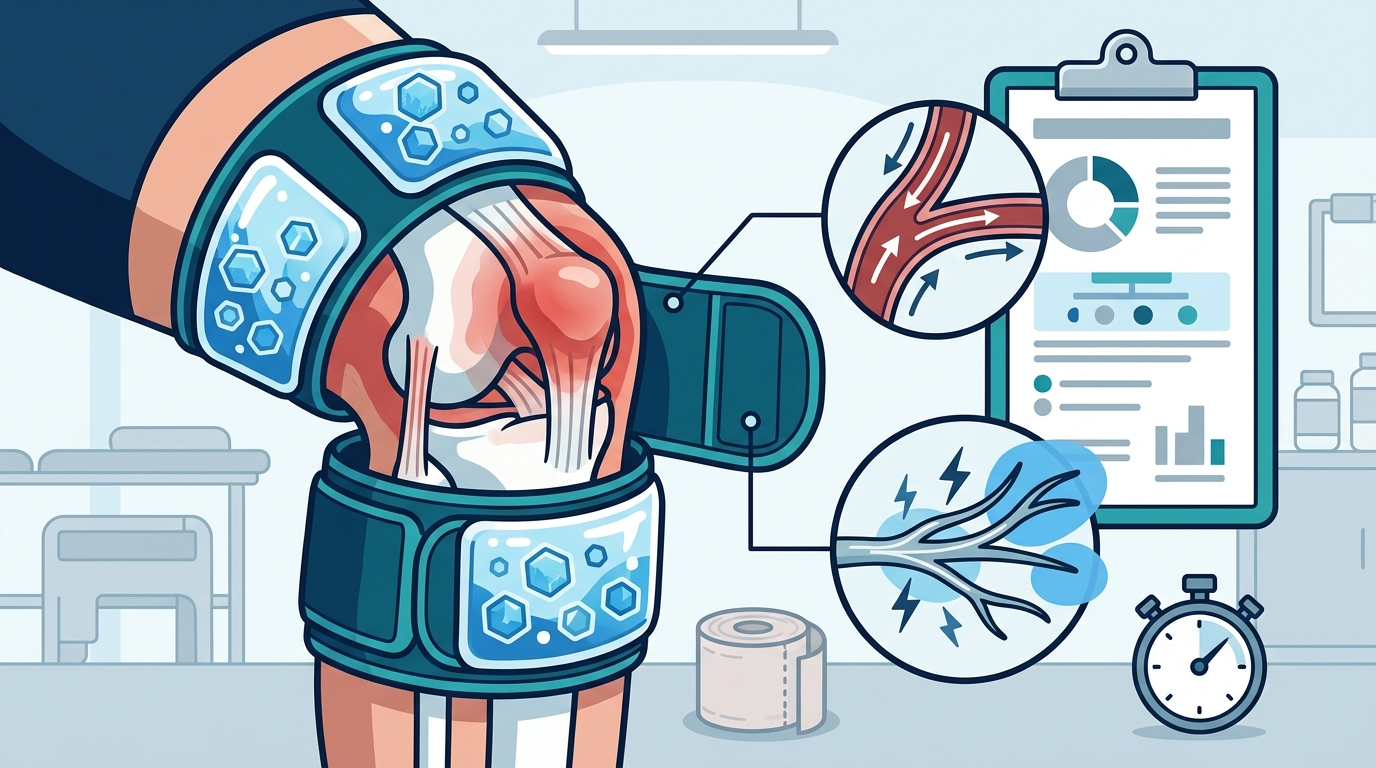
The mechanical pressure component works by constricting blood vessels in the immediate vicinity of the injury. This constriction limits the flow of blood to the area, which directly reduces the accumulation of fluid that causes swelling. Without compression, ice melts quickly and loses its therapeutic value. With compression, the cold is retained longer, and the inflammatory response is managed more effectively.
Key Benefits of Compression
Integrating compression into your ice therapy routine offers several distinct advantages over traditional methods. These benefits are particularly relevant for athletes, post-surgical patients, and individuals managing chronic joint pain.
Enhanced Swelling Reduction
Swelling, or edema, is the body's natural response to injury, but excessive fluid buildup can delay healing and increase pain. Compression ice wraps mechanically force this fluid out of the injured tissue and back into the circulatory system for processing. This process is far more efficient than passive ice application, which relies solely on gravity and natural lymphatic drainage.
Improved Pain Management
Cold therapy acts as a local anesthetic by slowing down nerve conduction velocity. When combined with compression, the pain signals are further dampened by the pressure on the nerve endings. This dual-action approach provides superior pain relief, allowing patients to move more comfortably and engage in necessary physical therapy exercises sooner.
Convenience and Portability
Traditional ice packs require constant manual holding to maintain pressure. Compression ice wraps are designed to be worn hands-free. This feature is crucial for maintaining therapy duration. Most users can comfortably wear these wraps for the recommended 15 to 20 minutes without fatigue. The secure fit ensures that the gel pack does not shift or fall out during movement.
Targeted Therapy for Specific Areas
Different body parts require different approaches to cold therapy. Cool Relief offers specialized designs for various anatomical regions. For example, a knee ice wrap is contoured to fit the joint's curvature, ensuring even pressure distribution. Similarly, a shoulder ice wrap is designed to accommodate the broader surface area of the deltoid region. This anatomical specificity maximizes therapeutic outcomes.
Product Comparison
Choosing the right compression ice wrap depends on the specific injury location and the desired level of compression. The following table compares the primary product categories available for injury relief.
| Product Type | Primary Use Case | Compression Level | Key Feature |
|---|---|---|---|
| Knee Ice Wrap | ACL recovery, arthritis, meniscus tears | High | Hinged design for stability |
| Shoulder Ice Wrap | Rotator cuff injuries, post-surgery | Medium | Wide coverage for broad areas |
| Ankle Ice Wrap | Sprains, fractures, post-activity | High | Anatomical fit for joint contour |
| Back Ice Wrap | Lower back strain, sciatica | Medium | Flexible gel for spinal curvature |
Application Guide
Proper application is critical for achieving the desired therapeutic effects. Incorrect usage can lead to ice burns or ineffective treatment. Follow these steps to maximize the benefits of your compression ice wrap.
Step 1: Preparation
Ensure the ice wrap is properly frozen. Most gel packs require 2 to 4 hours in a standard freezer to reach optimal temperature. Do not use ice wraps that are partially frozen, as they will not provide consistent cold therapy. Check the pain relief guide for specific freezing instructions for your model.
Step 2: Placement
Position the gel pack directly over the injured area. The gel should cover the entire site of inflammation. For joint injuries, ensure the pack straddles the joint line for maximum coverage. Avoid placing the pack directly on bony prominences without a thin cloth barrier to prevent pressure points.
Step 3: Compression
Secure the wrap using the adjustable straps. The compression should be firm but not restrictive. You should be able to slide a finger under the strap. If your toes or fingers become numb or change color, loosen the straps immediately. Proper compression is key to reducing swelling without compromising circulation.
Step 4: Duration
Apply the ice wrap for 15 to 20 minutes at a time. Prolonged exposure can damage tissue and nerves. Remove the wrap and allow the skin to return to normal temperature before reapplying. This cycle can be repeated every 2 to 3 hours during the acute phase of injury.
Key Takeaways
- Dual-Action Therapy: Compression ice wraps combine cold therapy with mechanical pressure to reduce swelling more effectively than ice alone.
- Enhanced Circulation Control: The compression component constricts blood vessels, limiting fluid buildup and accelerating the healing process.
- Hands-Free Convenience: Adjustable straps allow for secure, hands-free application, ensuring consistent therapy duration without user fatigue.
- Anatomical Specificity: Specialized designs for knees, shoulders, and ankles ensure optimal contact and pressure distribution for different body parts.
- Pain Management: The combination of cold and pressure dampens nerve signals, providing superior pain relief for acute and chronic conditions.
- Reusability: Reusable gel pack inserts offer a cost-effective and sustainable alternative to disposable ice packs.
- Professional Grade: These devices are designed to meet the standards of physical therapy clinics, bringing professional care to home recovery.
Frequently Asked Questions
How often should I use a compression ice wrap?
For acute injuries, it is recommended to use the wrap every 2 to 3 hours for 15 to 20 minutes. Consistency is key to managing inflammation effectively during the first few days after injury.
Can I use a compression ice wrap on chronic pain?
Yes, compression ice wraps can be beneficial for chronic conditions like arthritis. The cold helps reduce flare-ups, while the compression provides support and pain relief. However, consult a physician for long-term management strategies.
What is the difference between an ice wrap and a heat pack?
Ice wraps are used for acute injuries and inflammation to reduce swelling and numb pain. Heat packs are used for chronic stiffness and muscle tension to increase blood flow and relax tissues. Cool Relief offers both specialized heat and ice solutions for different needs.
How do I clean the compression ice wrap?
Most Cool Relief wraps are designed with removable gel packs. The fabric cover can typically be machine washed on a gentle cycle. Always check the specific care instructions for your model to ensure longevity.
Are compression ice wraps safe for all skin types?
Yes, they are generally safe for all skin types. However, individuals with sensitive skin or circulatory issues should place a thin cloth barrier between the wrap and their skin to prevent irritation or cold burns.
How long does a gel pack stay cold?
A properly frozen gel pack in a compression wrap can stay cold for 30 to 45 minutes. The compression helps maintain contact with the skin, extending the therapeutic effect compared to a loose ice pack.
Can I wear the wrap while sleeping?
No, you should not wear a compression ice wrap while sleeping. Prolonged exposure to cold and pressure can damage tissue and nerves. Always remove the wrap after the recommended 20-minute session.
Start Your Recovery
Effective injury relief requires the right tools and proper application. Compression ice wraps offer a superior method for managing pain and swelling at home. Explore the full range of Cool Relief products to find the perfect solution for your specific injury. Visit our Pain Relief Guide for more detailed advice on recovery protocols. Take the first step toward faster healing today.