

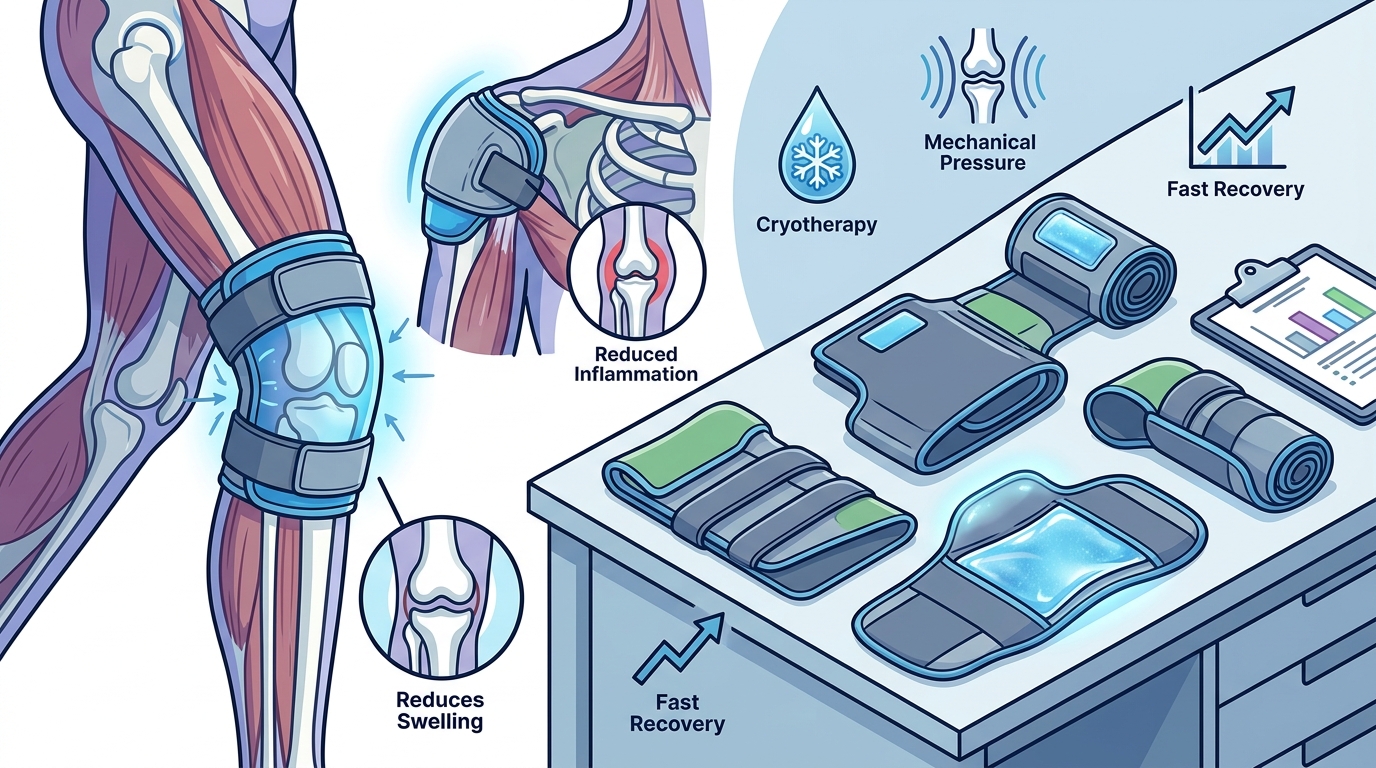
Chronic joint pain and acute injuries affect millions of people globally, creating a massive demand for effective at-home recovery solutions. According to recent medical data, over 50 million Americans suffer from arthritis alone, driving a significant shift toward non-invasive thermal therapy. Compression ice wraps have emerged as a superior alternative to traditional gel packs because they combine cryotherapy with mechanical pressure to reduce swelling and numb pain more effectively. This guide explores the specific body parts that benefit most from these specialized wraps, the physiological mechanisms at play, and how to select the right product for your unique injury.
Knee Applications and Ligament Support
The knee is arguably the most common target for compression ice therapy. This complex joint bears the weight of the entire body and is highly susceptible to ligament tears, meniscus damage, and patellar tendonitis. Using a knee ice wrap provides two critical benefits: it maintains a consistent low temperature to reduce inflammation, and the compression sleeve stabilizes the joint during the initial healing phase.
For athletes recovering from sports injuries, or individuals managing osteoarthritis, the ability to keep the wrap in place is vital. Traditional ice packs often slide off the curved surface of the knee, requiring constant adjustment. A dedicated knee wrap uses elastic straps or neoprene material to ensure the cold gel pack remains in direct contact with the painful area. This continuous contact maximizes the vasoconstriction effect, which limits blood flow to the injured site and reduces the accumulation of inflammatory fluids.
When treating knee injuries, it is important to apply the wrap for 15 to 20 minutes at a time. Over-icing can lead to nerve damage or skin irritation. The compression aspect also helps prevent the knee from swelling excessively, which can restrict range of motion and delay rehabilitation. Many users find that combining knee ice wraps with gentle physical therapy exercises yields the best long-term outcomes.
Shoulder Recovery and Rotator Cuff Care
The shoulder joint is the most mobile joint in the human body, making it incredibly prone to instability and injury. Rotator cuff tears, bursitis, and frozen shoulder are common conditions that cause significant pain and limited mobility. A shoulder ice wrap is designed with a contoured shape that fits the deltoid and acromioclavicular joints, ensuring that cold therapy reaches the deep tissues where inflammation often resides.
Compression is particularly useful for shoulder injuries because it helps hold the shoulder in a neutral position. When the shoulder is injured, patients often instinctively hunch or guard the arm, which can lead to secondary muscle tension. By providing gentle compression, the wrap encourages proper posture and reduces the strain on surrounding muscles. This is especially helpful for post-surgical recovery, where keeping the incision site cool and dry is critical for healing.
Many shoulder wraps feature a shower shield design, allowing users to maintain their cold therapy routine while bathing. This convenience is a significant quality-of-life improvement for patients who are otherwise restricted in their daily activities. The reusable gel inserts in these wraps can be frozen and reapplied multiple times, offering a cost-effective solution for chronic shoulder pain management.
Hip Therapy and Deep Tissue Cooling
Hip pain can be debilitating, often stemming from bursitis, arthritis, or muscle strains in the gluteal region. The hip joint is deep within the body, making it difficult for surface-level cooling methods to penetrate effectively. A hip ice wrap addresses this challenge by using a larger surface area and higher-density gel packs to deliver cold therapy deeper into the tissue.
The hip region is also a common site for referred pain from the lower back. By applying compression ice to the hip, patients can sometimes alleviate pain that originates from spinal issues. The wrap typically wraps around the pelvis, securing the gel pack over the greater trochanter or the anterior hip joint. This secure fit ensures that the cold does not dissipate quickly, even when the user is sitting or lying down.
For individuals with hip replacements or those recovering from orthopedic surgery, consistent icing is a standard medical recommendation. The compression helps manage the post-operative swelling that can be particularly severe in the hip area due to gravity and blood flow. Using a wrap designed specifically for the hip ensures that the pressure is distributed evenly, avoiding pressure points that could cause discomfort or skin breakdown.
Back Pain Management and Spinal Alignment
Lower back pain is one of the leading causes of disability worldwide. Whether caused by a herniated disc, muscle strain, or sciatica, inflammation in the spinal region requires careful management. A back ice wrap is designed to contour around the lumbar spine, providing targeted cold therapy without restricting movement entirely.
The key advantage of a compression back wrap is its ability to stay in place while the user is upright. Traditional ice packs tend to slide down the back when standing or sitting. The elastic nature of these wraps keeps the cold source firmly against the skin, ensuring maximum therapeutic benefit. This is particularly important for acute injuries where the first 48 hours are critical for reducing swelling.
Some back wraps are designed to be worn under clothing, allowing users to seek relief while at work or running errands. This discretion and mobility are invaluable for those who cannot afford to take extended time off for recovery. The compression also provides a mild massage-like effect, which can help relax tight muscles that often accompany back pain. It is essential to follow medical advice regarding the duration of application to prevent cold-induced injuries.
Extremities: Ankles, Wrists, and Feet
Acute injuries to the extremities, such as ankle sprains and wrist strains, are extremely common. These injuries often result in rapid swelling that can compromise circulation and healing. A ankle and foot ice wrap or a wrist and elbow ice wrap uses the RICE method (Rest, Ice, Compression, Elevation) principles to accelerate recovery.
The compression provided by these wraps acts as a splint, limiting the range of motion in the injured joint and preventing further damage. This is crucial for ankle sprains, where the ligaments are stretched or torn. By keeping the joint stable and cold, the wrap reduces the pain signals sent to the brain and minimizes the inflammatory response. This allows the patient to begin rehabilitation sooner than they might with a standard ice pack.
For foot injuries, such as plantar fasciitis or metatarsal fractures, the wrap must be flexible enough to accommodate the shape of the foot while still providing adequate pressure. Many of these wraps feature adjustable straps that allow the user to customize the tightness based on their comfort level and the severity of the swelling. This adaptability ensures that the therapy remains effective throughout the healing process.
Head, Neck, and Jaw Relief
Pain in the head, neck, and jaw regions requires a different approach due to the sensitivity of the skin and the proximity to vital structures. A face and neck ice wrap is typically made from softer, more flexible materials to ensure comfort and safety. These wraps are often used for tension headaches, migraines, TMJ disorders, and dental surgery recovery.
For migraines, applying cold to the temples or the back of the neck can help constrict dilated blood vessels, which is a common trigger for headache pain. The gentle compression helps keep the wrap in place without causing pressure headaches. Similarly, for TMJ pain, the wrap can soothe the jaw muscles and reduce inflammation in the temporomandibular joint.
Dental patients often use these wraps after oral surgery to reduce swelling in the face and jaw. The compact size of these wraps allows them to fit comfortably under the chin or along the jawline. It is important to use a thin barrier between the wrap and the skin to prevent frostbite, as the skin in these areas is thinner and more sensitive than on the limbs.
Product Comparison and Selection
Choosing the right compression ice wrap depends on the specific body part and the nature of the injury. Below is a comparison of the primary product categories available to help you make an informed decision.
| Product Type | Best For | Key Feature | Typical Use Case |
|---|---|---|---|
| Knee Ice Wrap | Ligament tears, Arthritis | High compression stability | Sports recovery, Post-op |
| Shoulder Ice Wrap | Rotator cuff, Bursitis | Contoured fit | Overhead injury, Surgery |
| Hip Ice Wrap | Bursitis, Hip replacement | Deep tissue penetration | Deep joint pain, Mobility |
| Back Ice Wrap | Lumbar strain, Sciatica | Under-clothing wearability | Chronic pain, Acute flare-ups |
| Ankle/Foot Wrap | Ankle sprains, Plantar fasciitis | Flexible joint support | Acute injury, Walking aid |
| Head/Neck Wrap | Migraines, TMJ, Dental | Soft, flexible material | Headache relief, Post-surgery |
Key Takeaways
- Compression enhances efficacy: Compression ice wraps provide superior pain relief compared to standard ice packs by combining cold therapy with mechanical pressure to reduce swelling and stabilize joints.
- Knee and shoulder are primary targets: These joints benefit most from the stability and contoured fit provided by specialized wraps, which are essential for ligament support and post-surgical care.
- Hip and back require deep penetration: Due to the depth of these joints, larger gel packs and secure wrapping mechanisms are necessary to deliver effective cold therapy to the affected tissues.
- Extremities need flexibility: Ankles and wrists require wraps that allow for some movement while still providing enough compression to limit swelling and prevent further injury.
- Head and neck need gentle application: These sensitive areas require softer materials and lighter compression to avoid irritation while still providing relief for migraines and TMJ pain.
- Reusability is cost-effective: Most compression ice wraps use reusable gel inserts that can be frozen and reapplied multiple times, offering a long-term solution for chronic pain management.
- Proper application is critical: Limit ice application to 15-20 minutes at a time to prevent tissue damage, and ensure the wrap is secure but not too tight to restrict blood flow.
Frequently Asked Questions
How long should I use a compression ice wrap?
It is generally recommended to apply ice for 15 to 20 minutes at a time. Prolonged exposure can lead to skin damage or nerve irritation. Allow the skin to return to normal temperature between applications.
Can I wear a compression ice wrap while sleeping?
It is not recommended to wear compression ice wraps while sleeping. You may lose sensation in the area, leading to potential injury from frostbite or excessive pressure. Apply the wrap while awake and monitor the skin.
What is the difference between an ice wrap and a heat pack?
Ice wraps are used for acute injuries and inflammation to reduce swelling and numb pain. Heat packs are used for chronic muscle stiffness and tension to increase blood flow and relax muscles. Never apply heat to a fresh injury.
Are compression ice wraps safe for sensitive skin?
Most wraps are made from hypoallergenic materials, but it is important to use a barrier cloth between the wrap and your skin. If you have sensitive skin, check the product specifications for material composition before purchasing.
How do I clean a compression ice wrap?
Most compression ice wraps can be wiped down with a damp cloth and mild soap. The gel inserts are usually removable and can be washed separately. Always follow the manufacturer's care instructions to maintain the integrity of the wrap.
Can I use a compression ice wrap for arthritis pain?
Yes, compression ice wraps can be very effective for managing arthritis pain. The cold helps reduce inflammation in the joints, while the compression provides support and stability. Many users find relief from both acute flare-ups and chronic discomfort.
What size compression ice wrap do I need?
Most compression ice wraps are designed to fit a range of body sizes due to their adjustable straps. However, it is important to check the product dimensions to ensure a proper fit. If you have a larger or smaller build, look for wraps specifically designed for your needs.
Start Your Recovery Journey
Effective pain management begins with the right tools. Whether you are recovering from a sports injury, managing chronic arthritis, or healing from surgery, Cool Relief offers a comprehensive range of compression ice wraps designed for every part of the body. Explore our Pain Relief Guide for more expert advice on managing your health. Visit our shop today to find the perfect wrap for your needs and start feeling better.