
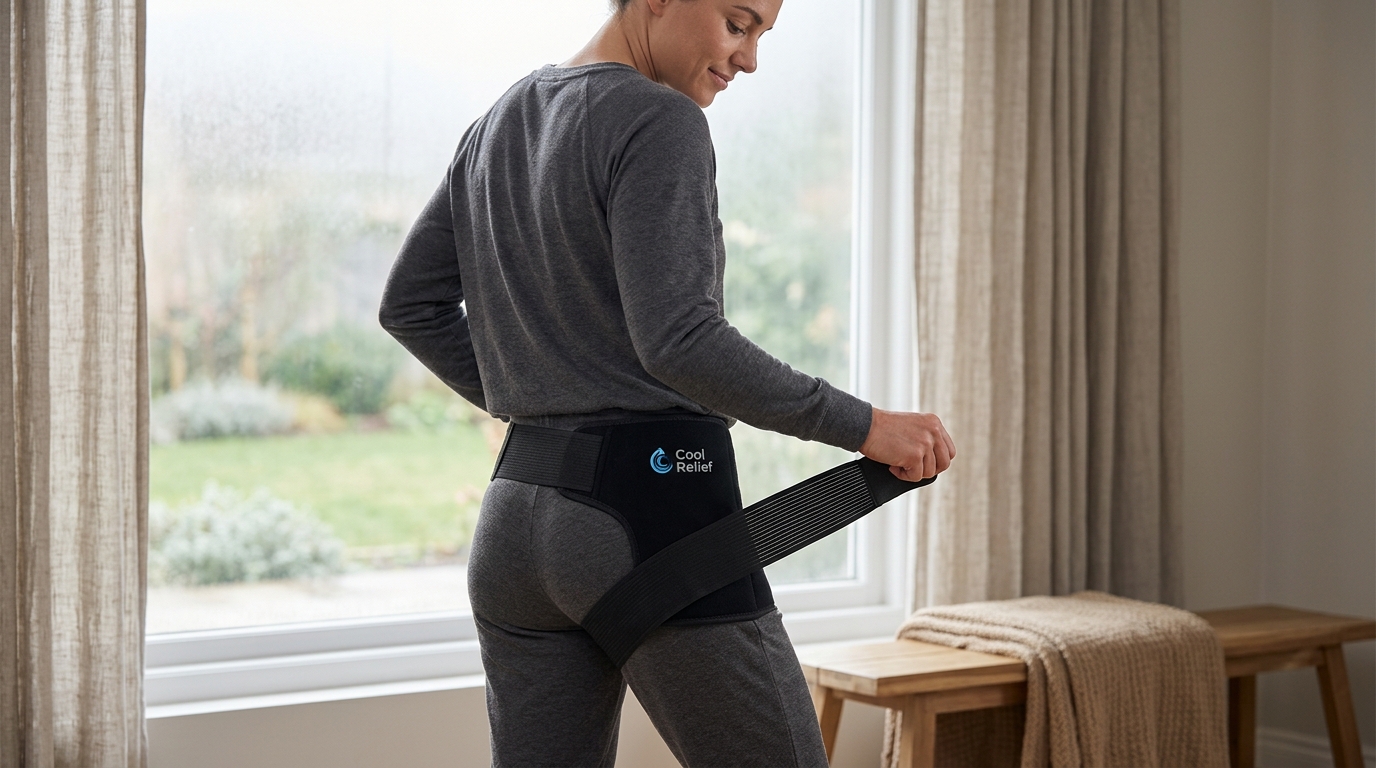
Chronic hip pain often stems from poor circulation or inflammation that standard ice packs fail to address because they slide off the body's natural curves. According to the American Academy of Orthopaedic Surgeons, targeted cryotherapy is essential for reducing swelling in large joints like the hip, but only when the cold source remains in constant contact with the skin. A loose fit allows warm air to circulate, rendering the treatment ineffective and potentially causing uneven cooling that leads to skin irritation. This guide details the exact steps to secure your Cool Relief hip ice wrap for maximum therapeutic benefit. (Collections ndash Ice Wraps)
Assessing Your Hip Anatomy and Wrap Size
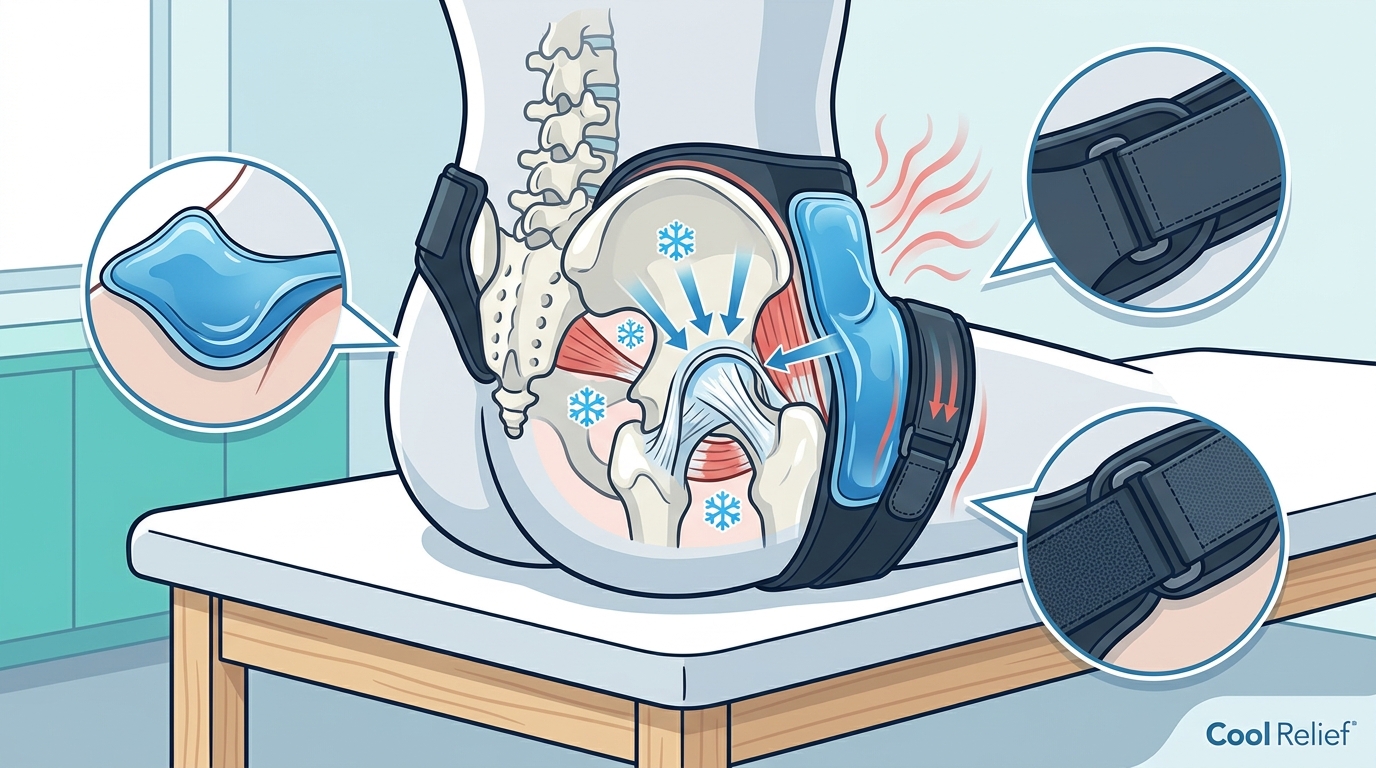
The hip joint is a complex ball-and-socket structure that requires a wrap capable of conforming to its spherical geometry. Cool Relief designs its hip ice wraps with anatomical contours that mimic the natural shape of the pelvis. Before applying the wrap, you must identify the specific area of pain. Is the discomfort located in the front of the hip, the side (lateral), or the lower back extending into the buttock?
Proper fit begins with selecting the correct orientation. The Cool Relief hip wrap typically features a gel pack that is flexible enough to bend around the curve of your thigh and waist. If you are using a reusable gel pack insert, ensure it is fully frozen to maintain structural integrity. A partially frozen pack may shift position during application, leading to an uneven fit. The material of the outer cover should be breathable yet durable, designed to withstand the tension required to keep the cold source in place.
Understanding your body type is crucial for this step. Individuals with a larger waist-to-hip ratio may find that standard tension straps are insufficient. In such cases, the wrap must be positioned slightly lower on the thigh to utilize the wider surface area for better anchoring. Conversely, those with a smaller frame should ensure the straps do not overlap excessively, which can create pressure points. The goal is to distribute the cold evenly across the inflamed tissue without restricting blood flow.
Preparing the Area for Optimal Adhesion
Before you even touch the wrap, the skin must be prepared. Moisture, oils, or loose clothing can prevent the wrap from adhering correctly, leading to slippage. The Cool Relief hip wrap is designed to work directly against the skin or over thin, tight-fitting athletic wear. Avoid wearing loose shorts or pants under the wrap, as the fabric will bunch up and create gaps between the ice pack and your hip.
If you have recently applied lotion or sunscreen, wipe the area dry. A clean, dry surface allows the elastic components of the wrap to grip the skin effectively. This is particularly important for individuals who sweat heavily, as moisture can reduce the friction needed to keep the wrap secure. Additionally, check the gel pack for any leaks or damage. A compromised seal will not only ruin the fit but also pose a hygiene risk. Ensure the outer cover is clean and free of lint, which can interfere with the strap's ability to lock into place.
Positioning is the next critical preparation step. Lie down on a firm surface to relax the hip muscles. Tension in the hip flexors can make it difficult to wrap the device snugly. Take a deep breath and exhale fully before beginning the application. This relaxes the abdominal and hip muscles, allowing the wrap to sit flush against the body. If you are applying the wrap while standing, ensure your weight is evenly distributed on both legs to prevent the hip from tilting.
Step-by-Step Application and Tension Control
Applying the Cool Relief hip ice wrap requires a methodical approach to ensure the gel pack stays centered over the painful area. Start by placing the gel pack directly on the target zone. For lateral hip pain, center the pack over the greater trochanter, which is the bony prominence on the side of your hip. For anterior hip pain, position the pack slightly lower and more forward, covering the groin area.
Next, bring the straps around your body. The Cool Relief design typically includes multiple anchor points to accommodate different body shapes. Begin with the lower strap, pulling it firmly but comfortably around your thigh. The tension should be tight enough to prevent the pack from sliding down but loose enough to allow normal circulation. You should be able to slide two fingers under the strap comfortably. If you cannot, it is too tight.
Then, secure the upper strap around your waist or lower back. This strap is crucial for preventing the wrap from shifting upward during movement. Pull this strap with equal tension to the lower one. The goal is to create a "sandwich" effect where the gel pack is held securely between the two straps. Adjust the position of the gel pack as needed. It should remain centered over the inflamed tissue. If the pack shifts to the side, loosen the straps, reposition the pack, and re-tighten. Do not force the pack into an awkward position, as this can cause discomfort and reduce efficacy.
Finally, check the edges of the wrap. The material should lie flat against your skin without curling up. Curling edges can create pressure points and allow warm air to enter the wrap. If the edges are curling, adjust the tension of the straps or reposition the wrap slightly. The Cool Relief hip wrap is designed to be self-adhering in many models, but the straps provide the primary security. Ensure all Velcro or hook-and-loop fasteners are fully engaged for maximum hold.
Testing the Security of the Fit
Once the wrap is applied, you must test its security before engaging in any activity. Stand up slowly and walk around the room. Perform gentle hip rotations, such as lifting your knee toward your chest. If the wrap shifts significantly during these movements, it is not fitted correctly. A proper fit should remain stationary relative to the hip joint, moving with your body rather than sliding over it.
Pay attention to any areas of discomfort. Numbness, tingling, or excessive tightness indicates that the wrap is too tight or positioned incorrectly. Loosen the straps immediately and reapply. The goal is therapeutic compression, not constriction. If you feel the gel pack digging into your skin, adjust its position to ensure it lies flat. The Cool Relief hip wrap is designed to distribute pressure evenly, so any localized pain suggests a fit issue.
Check the seal of the gel pack. Even with a secure wrap, the pack itself must be leak-proof. Gently press on the gel pack to ensure it is contained within its outer shell. If you notice any cold spots that feel different from the rest of the pack, the internal gel may have separated. In this case, remove the pack and check for damage. A proper fit also includes ensuring the outer cover is not twisted. Twisting can create uneven cooling and reduce the surface area in contact with your skin.
Maintaining Cold During Extended Use
A proper fit is only effective if the cold is maintained. The Cool Relief hip ice wrap is designed to retain cold for extended periods, but the fit plays a role in this efficiency. Gaps between the wrap and your skin allow warm air to circulate, which accelerates thawing. A snug fit minimizes these gaps, keeping the cold source in constant contact with the skin.
If you plan to use the wrap for more than 20 minutes, monitor the temperature. The skin should feel cool, not numb. If the gel pack warms up too quickly, it may be due to a poor fit or excessive body heat in the area. Re-freeze the pack and reapply the wrap, ensuring a tighter seal. You can also use a thin towel between the wrap and your skin to regulate temperature and protect sensitive areas, but be aware that this may slightly reduce the cooling efficiency.
Regularly check the position of the wrap during use. Even a well-fitted wrap can shift over time, especially if you are moving around. Adjust the straps as needed to maintain the correct position. The Cool Relief hip wrap is designed for ease of adjustment, allowing you to fine-tune the fit without removing the entire device. This flexibility is crucial for maintaining therapeutic benefits throughout the treatment session.
Cool Relief Hip Wrap vs. Standard Ice Packs
Understanding the difference between a specialized hip wrap and a standard ice pack highlights the importance of fit. Standard ice packs are rigid or semi-rigid and cannot conform to the hip's complex geometry. This results in poor contact and uneven cooling. The Cool Relief hip wrap, by contrast, is engineered to hug the body's curves, ensuring maximum surface area contact.
| Feature | Cool Relief Hip Wrap | Standard Ice Pack |
|---|---|---|
| Anatomical Fit | Conforms to hip curves | Flat or rigid shape |
| Security | Straps and tension control | Relies on manual holding |
| Cold Retention | Extended contact improves efficiency | Poor contact reduces efficiency |
| Mobility | Allows for gentle movement | Restricts movement |
| Comfort | Distributed pressure | Pressure points possible |
The data shows that specialized wraps like the Cool Relief hip ice wrap provide superior therapeutic outcomes compared to generic ice packs. The ability to maintain a consistent fit ensures that the cold penetrates deeper into the tissue, reducing inflammation more effectively. This is particularly important for chronic hip pain, where consistent treatment is key to management.
Key Takeaways
- Anatomical Contouring: The Cool Relief hip wrap is designed to mimic the natural shape of the hip, ensuring maximum contact with the skin.
- Tension Balance: Straps should be tight enough to prevent slippage but loose enough to allow two fingers to slide underneath comfortably.
- Skin Preparation: Apply the wrap to clean, dry skin or thin athletic wear to maximize adhesion and cooling efficiency.
- Positioning: Center the gel pack over the specific area of pain, whether lateral, anterior, or posterior.
- Security Testing: Walk and rotate your hip after application to ensure the wrap does not shift.
- Regular Adjustment: Check the fit periodically during use to maintain optimal cold contact.
- Proper Fit Benefits: A secure fit minimizes warm air circulation, extending the duration of cold therapy.
Frequently Asked Questions
How long should I wear the Cool Relief hip ice wrap?
It is recommended to wear the wrap for 15 to 20 minutes at a time. Prolonged exposure to cold can cause skin damage or nerve irritation. Allow your skin to return to normal temperature between sessions.
Can I wear the hip wrap over clothing?
While you can wear it over thin, tight-fitting clothing, direct skin contact is preferred for maximum cooling efficiency. Loose clothing can bunch up and reduce the effectiveness of the wrap.
What if the wrap slips off during use?
If the wrap slips, it is likely due to incorrect tension or positioning. Reapply the wrap, ensuring the straps are pulled firmly and the gel pack is centered. Check that the skin is dry and free of oils.
Is the Cool Relief hip wrap suitable for both left and right hips?
Yes, the Cool Relief hip wrap is designed to be ambidextrous. It can be applied to either hip with equal effectiveness, provided the straps are adjusted to fit your body shape.
How do I clean the hip wrap?
The outer cover is typically machine washable. Remove the gel pack before washing. Follow the care instructions provided with your specific model to maintain the integrity of the materials.
Can I use heat with the Cool Relief hip wrap?
Some Cool Relief products are dual-purpose, allowing for both ice and heat therapy. Check your specific product manual to confirm if it supports heat application. Never use heat if the product is designed for ice only.
What size hip wrap do I need?
The Cool Relief hip wrap is designed to fit a wide range of body types. If you have a larger waist or thigh, ensure the straps have enough length to secure the wrap comfortably. The adjustable nature of the wrap allows for customization.
Start Your Recovery Journey
Achieving the right fit for your Cool Relief hip ice wrap is the first step toward effective pain relief. By following these guidelines, you can ensure that your therapy is both comfortable and efficient. Visit our Hip Heat Wrap collection to explore more targeted solutions for your pain management needs. For detailed instructions on other products, check out our Pain Relief Guide. Ready to experience the difference? Shop Cool Relief today and take control of your hip health.