
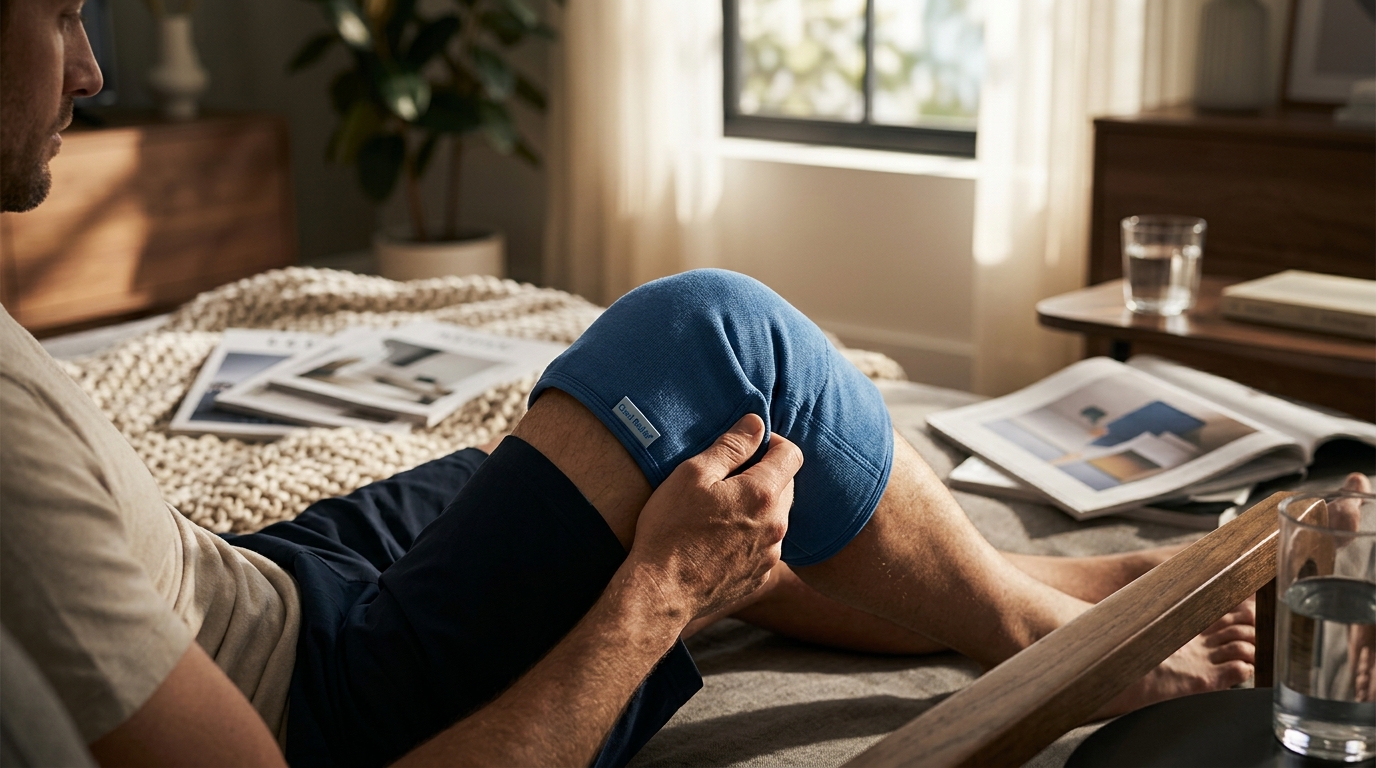
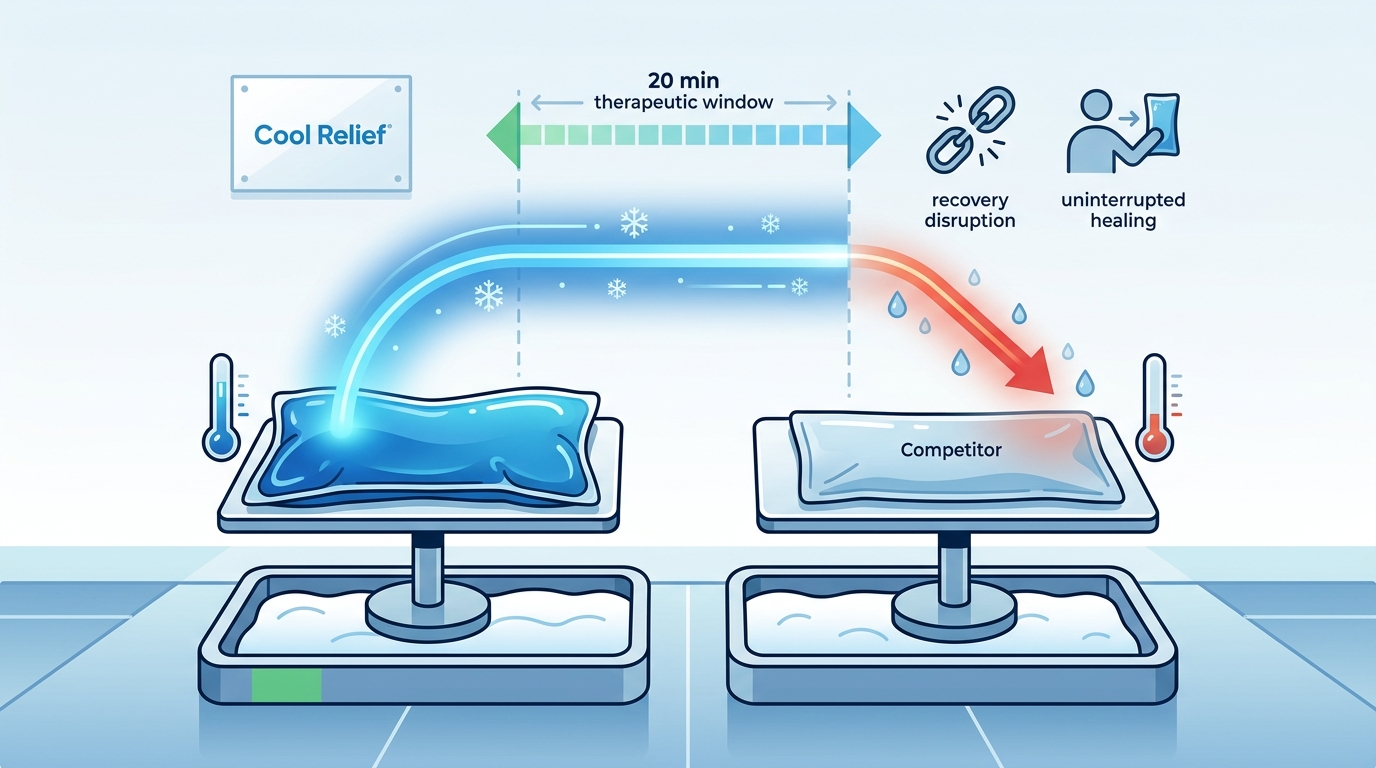
Modern cryotherapy protocols demand more than just cold temperature; they require sustained thermal stability. According to recent consumer health data, the average duration of effective cold therapy for acute injuries is approximately 20 minutes, yet many standard gel packs lose their therapeutic efficacy within 10 minutes. This rapid thermal decay forces users to repeatedly swap packs, disrupting recovery and increasing the risk of skin damage from constant handling. Understanding the material science behind gel pack longevity is critical for anyone managing chronic pain or post-surgical recovery.
The Science of Thermal Retention
Gel packs function through the principle of specific heat capacity. The core ingredient, typically a mixture of water and polymers, absorbs heat from the body tissue. Water has a high specific heat capacity, meaning it can absorb a significant amount of energy before its temperature rises. However, the rate at which this heat is absorbed depends on the gel's viscosity and the outer shell's insulation properties.
Standard ice packs often rely on simple water-based gels that freeze quickly but also thaw rapidly. In contrast, advanced hydrogel formulations are engineered to maintain a consistent temperature gradient. This consistency is vital for reducing inflammation without causing the "rebound effect," where blood rushes back to the area too quickly after the cold wears off. The structural integrity of the gel also prevents leakage, ensuring the pack remains effective throughout its entire lifespan.
Cool Relief Gel Pack Composition
Cool Relief utilizes a proprietary hydrogel formulation designed to maximize thermal retention. Unlike traditional ice packs that become rigid and uncomfortable, Cool Relief gel packs remain flexible even when frozen. This flexibility allows the pack to conform tightly to complex body contours, such as the knee, shoulder, or ankle. A tighter fit reduces air gaps, which are primary conduits for heat transfer, thereby extending the duration of the cold therapy.
The brand emphasizes a durable, leak-proof outer shell that protects the gel integrity. This construction ensures that the thermal mass of the pack is not compromised by environmental factors. For users seeking premium ice wraps, the focus is on maintaining a therapeutic temperature for the full recommended 20-minute window without the need for frequent freezer interventions.
Duration Comparison: Cool Relief vs. Generic Brands
When comparing Cool Relief gel packs to generic store brands, the difference in longevity is often measurable. Generic ice packs typically consist of lower-density gels that may freeze solid but lack the thermal buffering capacity of advanced hydrogels. Data suggests that generic packs can lose their initial freezing temperature in as little as 8 to 12 minutes, depending on ambient room temperature.
| Brand Type | Freeze Time | Avg. Cold Duration | Flexibility When Frozen | Thermal Stability |
|---|---|---|---|---|
| Cool Relief Gel Packs | 4-6 Hours | 20-30 Minutes | High | Superior |
| Generic Store Brand | 2-4 Hours | 10-15 Minutes | Low (Rigid) | Moderate |
| Traditional Ice Bag | 30 Minutes | 5-10 Minutes | None (Liquid) | Poor |
The table above illustrates the performance gap. Cool Relief packs are engineered to stay cold longer, reducing the frequency of pack swaps. This is particularly important for users with ankle and foot injuries who need consistent compression and cooling without interruption.
How Material Density Affects Cooling Time
The density of the gel directly correlates with its ability to store cold energy. Higher density gels contain more thermal mass per unit of volume. Cool Relief's gel packs are formulated to balance density with flexibility. If the gel is too dense, it becomes heavy and uncomfortable. If it is too loose, it thaws too quickly.
Research into polymer-based cooling agents indicates that cross-linked polymers can retain cold for extended periods compared to simple water-ice mixtures. This is why pain relief guides often recommend hydrogel packs over traditional ice bags for long-term management of conditions like arthritis or post-operative swelling. The consistent cold output helps numb nerve endings more effectively, providing sustained pain relief.
Optimizing Pack Longevity During Application
Even the best gel packs can underperform if used incorrectly. To maximize the duration of cold therapy, users should follow specific application protocols. First, always wrap the gel pack in a thin towel. This prevents direct contact with the skin, which can cause ice burns, and also acts as a slight insulator that slows down the heat transfer from the body to the pack.
Second, ensure the pack is fully frozen before use. Cool Relief recommends freezing packs for at least 4 to 6 hours for optimal results. Partially frozen packs will have a reduced thermal mass and will not last as long. For those needing reusable gel pack inserts, checking the freeze status before each use is a critical step in maintaining therapy efficacy.
Key Takeaways
- Extended Duration: Cool Relief gel packs maintain therapeutic cold levels for 20 to 30 minutes, outperforming generic brands that often degrade in under 15 minutes.
- Flexible Hydrogel: The proprietary gel remains flexible when frozen, ensuring a tight seal against the body to minimize heat transfer.
- Thermal Mass: Higher density gel formulations store more cold energy, reducing the need for frequent pack replacements.
- Convenience: With a 4-6 hour freeze time, these packs are designed for daily use without constant freezer monitoring.
- Durability: Leak-proof construction ensures the gel integrity remains intact, preserving thermal performance over years of use.
- Versatility: Available for all body parts, from knee ice wraps to shoulder ice wraps, ensuring consistent performance across different injury types.
Frequently Asked Questions
How long does a Cool Relief gel pack stay cold?
Cool Relief gel packs typically stay cold for 20 to 30 minutes after being fully frozen for 4 to 6 hours. This duration is significantly longer than traditional ice bags or generic store-brand packs.
Do Cool Relief gel packs freeze solid?
No, they remain flexible even when frozen. This flexibility allows them to conform to body contours, providing better coverage and longer-lasting cold therapy compared to rigid ice packs.
Can I reuse Cool Relief gel packs?
Yes, they are designed for unlimited reuse. The durable outer shell and stable gel formulation ensure they maintain their performance over time.
How do I know if my gel pack is fully frozen?
Ensure the pack has been in the freezer for at least 4 to 6 hours. The gel should feel uniformly cold and firm but still pliable.
Are Cool Relief gel packs safe for daily use?
Yes, they are safe for daily use. However, always use a barrier like a towel between the pack and your skin to prevent ice burns.
What is the difference between Cool Relief and other brands?
Cool Relief uses a specialized hydrogel that offers superior thermal retention and flexibility compared to standard water-based gels found in competitor products.
Do you offer heat packs as well?
Yes, Cool Relief offers a range of heat wraps that complement their ice packs for comprehensive pain management.
How long does shipping take?
Orders placed before the daily cutoff time are typically shipped the same day. Free shipping is available on orders over $35.
Start Your Recovery Journey
Investing in high-quality cold therapy equipment is essential for effective pain management. Cool Relief offers a comprehensive range of ice and heat wraps designed to meet your specific recovery needs. Experience the difference that superior thermal retention can make in your daily life. Visit Cool Relief today to explore their full collection and find the perfect solution for your injury.