

Applying ice to a knee is a standard first-aid step, but direct contact with frozen gel can cause cold injury. The goal is to lower tissue temperature without freezing the skin. By using barriers, limiting time, and monitoring sensation, you can achieve pain relief safely. Cool Relief designs wraps that make this process easier by providing a soft, flexible interface between the cold source and your body.
1. Always Use a Barrier Between Ice and Skin
Never place frozen gel directly against bare skin. Direct contact creates a thermal bridge that can freeze superficial tissue. Use a thin cotton sock, a towel, or the fabric layer of a wrap to insulate the skin. This barrier slows heat transfer, allowing the cold to penetrate deeper tissues without damaging the epidermis.
2. Limit Sessions to 15 to 20 Minutes
Time your application to prevent prolonged cold exposure. Most medical guidelines recommend icing for no more than 20 minutes at a time. After this period, the local blood vessels constrict significantly, which can reduce blood flow to the skin. Set a timer to ensure you remove the pack before the tissue becomes too cold.
3. Monitor for Numbness and Color Changes
Check your skin for warning signs of cold injury. If your knee feels completely numb, or if the skin turns white, waxy, or pale, remove the ice immediately. These are signs that the tissue is losing sensation or circulation. Normal icing should feel cold and soothing, not painful or completely dead to touch.
4. Choose a Wrap That Conforms to the Knee
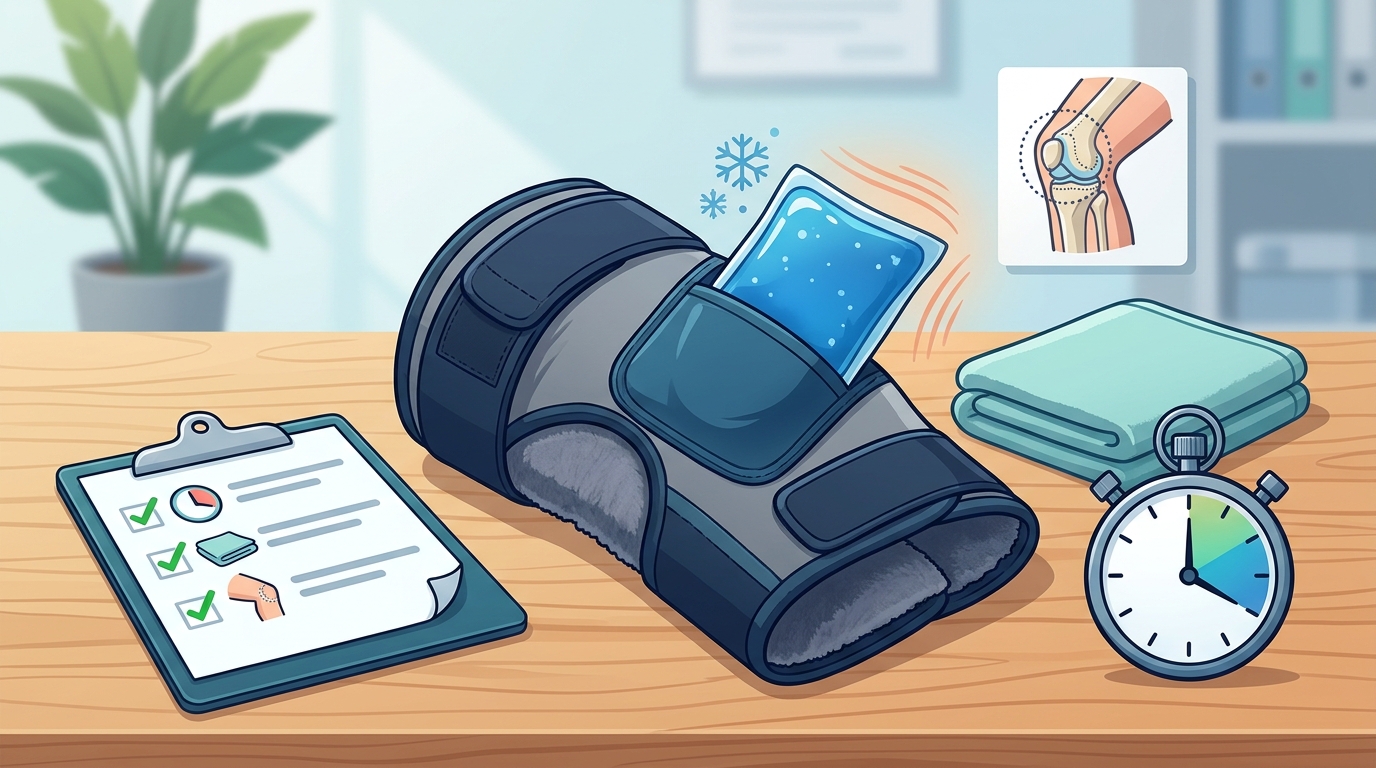
Use a flexible wrap that distributes cold evenly. Rigid ice packs can create pressure points that increase the risk of localized cold injury. A soft, flexible gel wrap, such as the knee ice wrap from Cool Relief, molds to the joint. This ensures even coverage and prevents the gel from pooling in one spot and freezing the skin underneath.
5. Allow Skin to Warm Up Between Sessions
Give your tissue time to recover circulation. Do not reapply ice immediately after removing it. Wait at least 45 to 60 minutes to allow blood flow to return to normal. This rest period helps the skin regain its natural temperature and sensitivity, reducing the risk of cumulative cold damage.
6. Avoid Icing if You Have Circulatory Issues
Consult a doctor if you have peripheral vascular disease. People with conditions that affect blood flow, such as diabetes or Raynaud's phenomenon, are at higher risk for cold injury. Their skin may not respond normally to temperature changes. If you have a history of poor circulation, seek medical advice before starting a cold therapy routine.
7. Store and Handle Gel Packs Correctly
Ensure your ice pack is not damaged or leaking. A leaking gel pack can create a concentrated cold spot that is harder to control. Check your wrap for tears or bulges before use. If the gel is leaking, discard the pack. Using a well-maintained, high-quality wrap from a trusted brand ensures consistent and safe cooling performance.
Choosing the Right Approach
Frequently Asked Questions
Can I ice my knee while sleeping?
No, you should not ice your knee while sleeping. You may not wake up if the skin becomes too cold, leading to frostbite or cold injury. Always apply ice while you are awake and able to monitor your skin and remove the pack if needed.
What is the best material to use as a barrier?
A thin cotton sock or a small towel works well. The material should be thin enough to allow cold transfer but thick enough to prevent direct contact. Avoid thick wool or synthetic materials that may insulate too much and reduce the effectiveness of the ice.
How often can I ice my knee in a day?
You can ice your knee 3 to 4 times a day, provided you allow adequate rest periods between sessions. Ensure at least 45 to 60 minutes of warm-up time between applications to allow blood flow to normalize.
Does Cool Relief sell wraps specifically for knees?
Yes, Cool Relief offers a dedicated knee ice wrap. This product is designed to be soft and flexible, conforming to the shape of the knee for even cooling. You can find it in our shop by injury section.
What should I do if my skin turns white after icing?
Remove the ice immediately and allow the skin to warm up naturally. Do not rub the area. If the skin remains white, waxy, or painful after warming, seek medical attention. This could be a sign of frostbite or cold injury.