

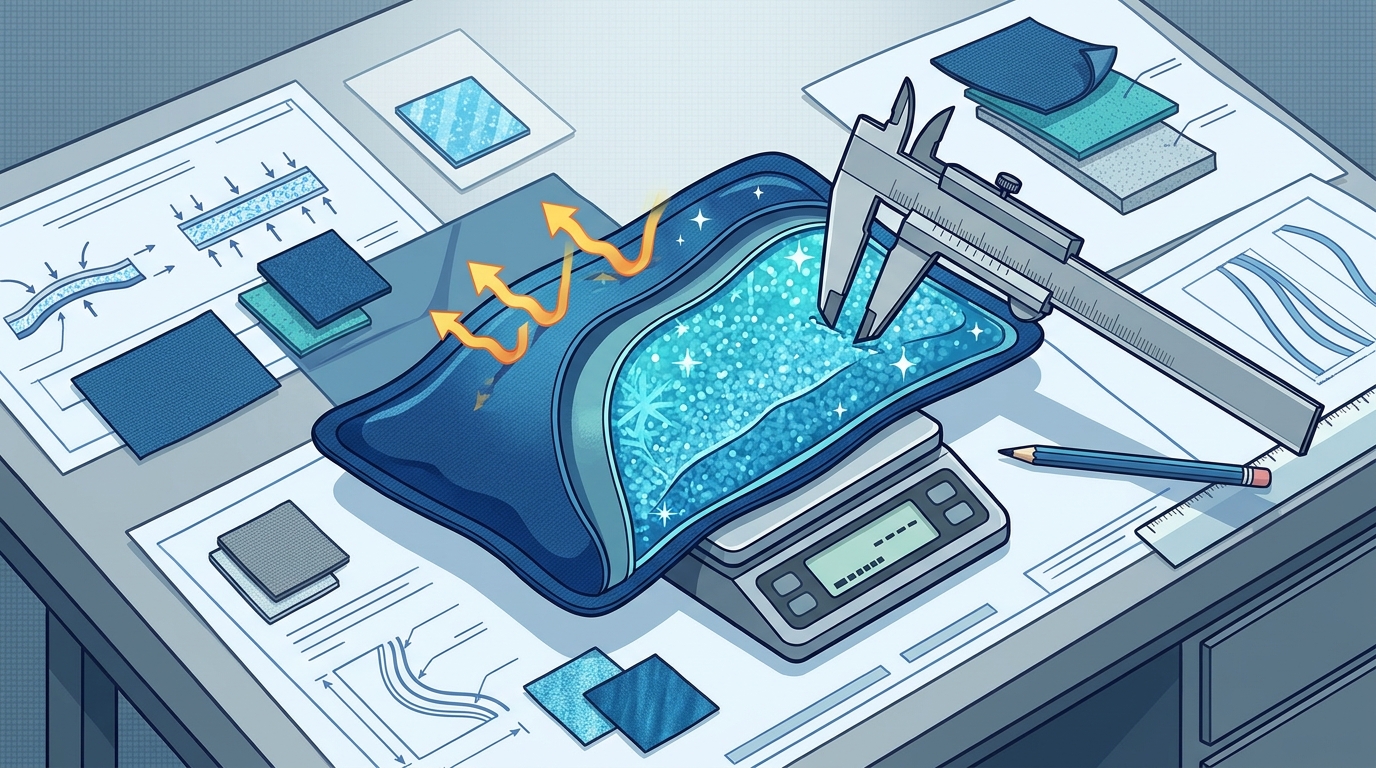
When selecting a soft gel ice pack, the three primary specifications that determine how long it stays cold are the gel-to-shell ratio, the thermal conductivity of the outer material, and the total mass of the unit. Cool Relief designs its wraps with high-density gel cores and flexible, insulating shells to maximize retention time. Understanding these engineering metrics helps you choose a product that delivers consistent therapeutic cooling rather than brief, ineffective bursts of cold.
The Role of Gel Density and Volume
The core of any ice pack is the gel medium. Gel density is the mass of the gel per unit volume, which directly impacts thermal mass. A higher density gel holds more heat energy before warming up, extending the duration of cold therapy. Standard water-based ice packs often have lower density and freeze into rigid blocks, whereas soft gel packs use additives to remain flexible while maintaining high thermal capacity.
Volume is the second critical factor. A larger volume of gel provides a larger reservoir of cold energy. For example, a large gel pack designed for the back will stay cold significantly longer than a small pack for the wrist, even if both use the same gel formula. When shopping, look for specifications that list the weight of the gel core, not just the dimensions of the pack. Heavier packs generally offer longer cold retention because they have more material to absorb body heat.
Cool Relief utilizes high-quality gel inserts that are engineered for long-lasting cold. Their reusable gel pack inserts are designed to maintain flexibility while providing the necessary mass for extended therapy sessions. By focusing on the weight and density of the gel, you can predict how long the pack will remain effective during a 20-minute application window.
Shell Material and Thermal Conductivity
The outer shell of an ice pack plays a crucial role in how quickly heat transfers from your body into the gel. Thermal conductivity is the rate at which heat passes through a material. Materials with high thermal conductivity, such as thin plastics or metals, transfer heat quickly, causing the gel to warm up faster. Conversely, materials with lower thermal conductivity act as insulators, slowing the heat transfer and keeping the gel cold for a longer period.
Soft, flexible fabrics like neoprene or thick cotton blends often provide better insulation than thin, rigid plastics. However, the fabric must also be durable enough to withstand repeated freezing and thawing cycles. A well-designed ice wrap balances insulation with comfort. If the shell is too insulating, it may feel uncomfortable against the skin, but if it is too conductive, the cold dissipates too quickly.
When evaluating a product, check the material composition of the outer wrap. Cool Relief ice wraps are constructed with soft, flexible materials that conform to the body while managing heat transfer. This design ensures that the cold is delivered effectively to the injury site without the pack warming up prematurely. The flexibility of the shell also allows for better contact with the skin, which is essential for consistent therapeutic results.
Insulation Layers and Barrier Technology
Many premium ice packs include an additional insulation layer between the gel core and the outer shell. This layer acts as a thermal barrier, reducing the rate of heat exchange with the environment. Insulation is particularly important for wraps that are worn for extended periods, as it helps maintain a stable temperature at the skin surface.
The effectiveness of insulation depends on the thickness and material of the barrier. Air is a natural insulator, so materials that trap air, such as foam or certain fabrics, can significantly extend cold duration. However, excessive insulation can make the pack bulky and difficult to wear. The goal is to find a balance that provides adequate insulation without compromising mobility or comfort.
Look for products that mention specific insulation features in their specifications. Cool Relief designs its wraps with attention to thermal management, ensuring that the gel stays cold for the recommended duration of use. By understanding how insulation layers work, you can select a pack that maintains its therapeutic temperature throughout your recovery routine.
Freezing Efficiency and Phase Change Materials
Some advanced gel packs use phase change materials (PCMs) that release or absorb heat at specific temperatures. PCMs are substances that change state, such as from solid to liquid, at a controlled temperature. This allows the pack to stay at a consistent temperature for a longer period, rather than gradually warming up. Standard water-based gels do not have this property, so they warm up more quickly as they melt.
Freezing efficiency refers to how well the gel freezes in a standard home freezer. A gel that freezes quickly and uniformly will have a more consistent cold surface when applied. If the gel freezes unevenly, some parts of the pack may be warmer than others, reducing its effectiveness. High-quality gels are formulated to freeze efficiently, ensuring that the entire pack reaches the desired temperature in a reasonable time.
Practical Application and Wearability
The physical design of the ice pack affects how well it stays in place and how effectively it transfers cold to the target area. A pack that slips or shifts during use will not provide consistent cooling, as the contact with the skin will be intermittent. Straps, Velcro closures, and ergonomic shapes are all features that improve wearability and ensure that the cold is delivered where it is needed.
Wearability also impacts the duration of use. If a pack is uncomfortable, you are less likely to wear it for the full recommended time. Soft, flexible wraps that conform to the body are generally more comfortable than rigid packs, allowing for longer application periods. This is particularly important for joints like the knee or shoulder, where movement is restricted during recovery.
Cool Relief offers a range of wraps designed for specific body parts, including knee, shoulder, hip, and back. Each wrap is engineered to fit the anatomy of the target area, ensuring maximum contact and comfort. By choosing a wrap that fits your body well, you can maximize the effectiveness of the cold therapy and achieve better recovery outcomes.
Key Takeaways
- Gel density and volume are the primary determinants of how long an ice pack stays cold.
- Shell material and thermal conductivity affect the rate of heat transfer from the body to the gel.
- Insulation layers can significantly extend cold duration by acting as thermal barriers.
- Phase change materials allow for consistent temperature retention over longer periods.
- Freezing efficiency ensures that the gel reaches the desired temperature quickly and uniformly.
- Wearability and ergonomic design impact the consistency and duration of cold application.
- Cool Relief wraps are designed with high-density gel and flexible shells for optimal cold retention.
Frequently Asked Questions
What is the most important spec for cold duration?
The most important specification is the thermal mass of the gel core, which is determined by its density and volume. A heavier, denser gel pack will stay cold longer than a lighter one, as it has more material to absorb body heat before warming up.
How does the shell material affect cold retention?
The shell material affects cold retention by influencing thermal conductivity. Materials with lower thermal conductivity act as insulators, slowing the transfer of heat from the body to the gel. This helps the gel stay cold for a longer period.
Do phase change materials make a difference?
Yes, phase change materials can make a significant difference. They release or absorb heat at a specific temperature, allowing the pack to stay at a consistent temperature for a longer period. This is more effective than standard water-based gels, which warm up gradually.
How long should I use an ice pack?
It is generally recommended to use an ice pack for 15 to 20 minutes at a time. Prolonged use can cause tissue damage, so it is important to follow the recommended duration. Allow the skin to return to normal temperature before reapplying the pack.
Can I use a soft gel pack in the shower?
Some soft gel packs are designed to be waterproof and can be used in the shower. However, not all packs are suitable for wet environments. Check the product specifications to ensure that the pack is waterproof before using it in the shower.
How do I know if a gel pack is high quality?
High-quality gel packs are made with durable materials that can withstand repeated freezing and thawing cycles. They should remain flexible after freezing and not crack or leak. Look for products from reputable brands that provide detailed specifications and warranties.
Choosing the Right Pack for Your Needs
Selecting the right ice pack requires balancing several specifications to match your specific recovery needs. By understanding the role of gel density, shell material, insulation, and phase change materials, you can make an informed decision that ensures effective cold therapy. Cool Relief offers a wide range of wraps and gel packs designed to meet these specifications, providing reliable cold retention for various body parts. Whether you are recovering from a sports injury or managing chronic pain, choosing a pack with the right specs will help you achieve better results. To find the perfect fit for your needs, explore the Cool Relief collections or contact our team for personalized recommendations.