

For immediate, hands-free migraine relief, a refreezable ice bandana often outperforms rigid ice packs and standard cold compresses. It suits individuals who need to remain mobile, such as outdoor workers or commuters, and those seeking targeted cooling for the neck and head. While prescription medications remain the gold standard for severe attacks, a cooling scarf provides a safe, non-pharmacological first step. Cool Relief designs these wraps to offer sustained, dry cooling without the mess of melting ice.
Ice Bandanas: Targeted, Hands-Free Cooling
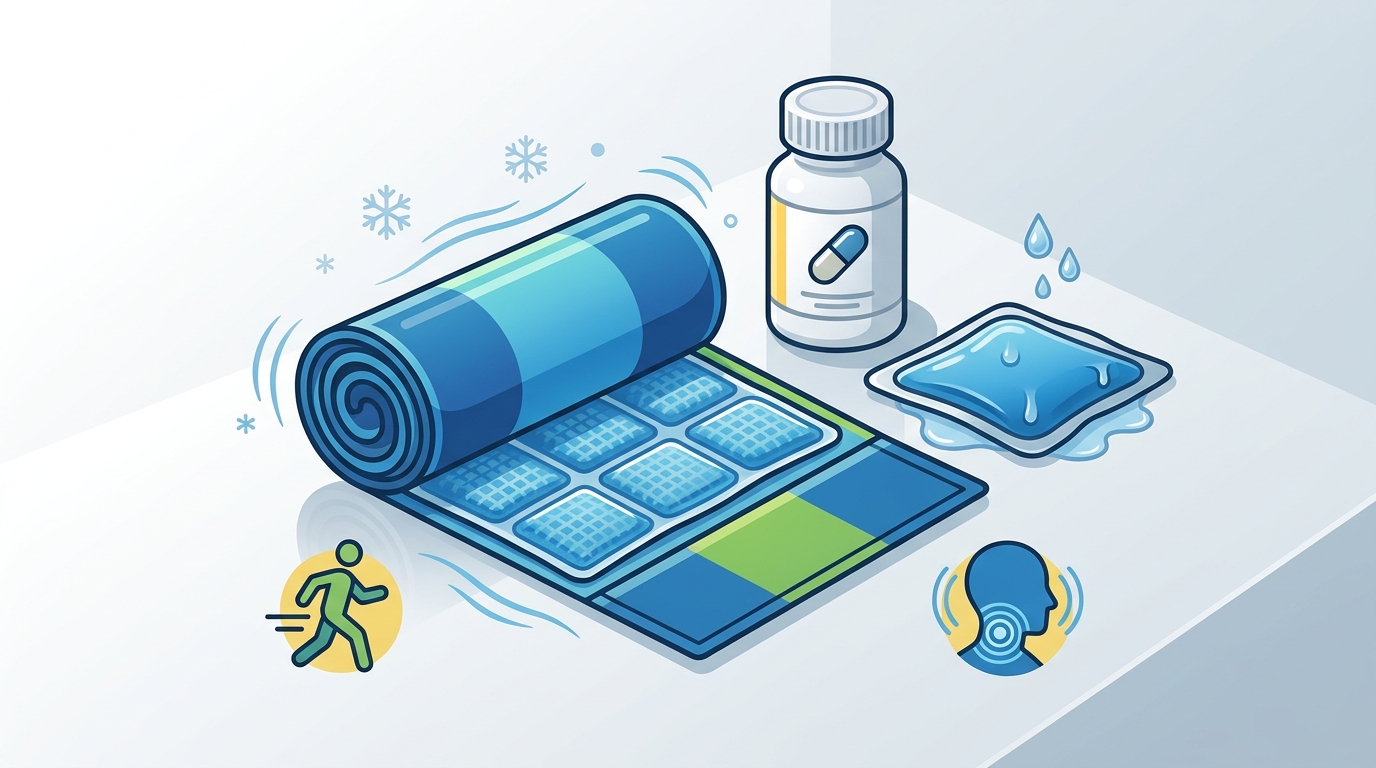
An ice bandana is a wearable cooling device that uses refreezable gel inserts to deliver cold therapy to the neck, forehead, or temples. This method is particularly effective because cooling the neck targets the carotid arteries, which may enhance the effectiveness of migraine relief compared to other placement sites. The primary strength of a bandana is its versatility. You can adjust the fit to cover the back of the head, the sides of the temples, or the entire neck. This hands-free design allows you to continue light activities while the cold therapy takes effect. The main limitation is that it provides external cooling only. It does not address the underlying neurological causes of the migraine, nor does it offer the potent pain suppression of triptans or other abortive medications. It is best suited for mild to moderate attacks or as an adjunct to medication.
Standard Ice Packs and Compresses
Standard ice packs are rigid or semi-rigid containers filled with water or gel that freeze into a solid block. They are widely available and inexpensive. The primary strength of a standard pack is its intense initial cold. However, this intensity can be a drawback. Rigid packs do not conform to the curves of the head or neck, leading to uneven cooling and potential discomfort. They also require you to hold them in place, which can be tiring during a long attack. Furthermore, as the ice melts, it can create a wet, messy environment that is unpleasant during a headache. These options suit individuals who have a specific, localized spot of pain and do not mind holding the pack in place for short durations.
Prescription and Over-the-Counter Medications
Pharmacological treatments include over-the-counter analgesics like ibuprofen or acetaminophen, and prescription abortive medications like triptans. These drugs work by targeting the chemical pathways in the brain that trigger migraine pain. Their primary strength is their ability to stop a migraine attack in its tracks, often within 30 to 60 minutes. The limitation is that they are not suitable for everyone. Some individuals experience side effects, or their migraines may become medication-overuse headaches if taken too frequently. Medications are the best choice for severe, debilitating attacks that prevent daily function. They are not a substitute for cooling if you prefer a non-drug approach, but they are often the most effective tool for stopping pain quickly.
Comparison of Migraine Relief Methods
| Method | Onset of Relief | Hands-Free Capability | Conformity to Head/Neck | Best For |
|---|---|---|---|---|
| Ice Bandana | 5-15 minutes | Yes | High (Flexible Gel) | Mild-Moderate attacks, mobile users |
| Standard Ice Pack | Immediate | No | Low (Rigid) | Localized pain, short sessions |
| OTC Medication | 30-60 minutes | Yes | N/A | Moderate-Severe attacks |
| Prescription Triptans | 30-60 minutes | Yes | N/A | Severe, debilitating attacks |
Choosing the Right Method for Your Needs
Choose an ice bandana if you need to remain mobile during an attack, such as when working outdoors or commuting. It is also the best choice if you prefer a non-pharmacological approach or want to combine cooling with medication for faster relief. The flexible design ensures even coverage over the neck and head, which is critical for targeting the carotid arteries.
Choose a standard ice pack if you have a very specific, small area of pain and do not mind holding the pack in place. It is a good option for quick, short-term relief when you are at home or in a stationary position.
Choose OTC or prescription medication if your migraine is severe, disabling, or prevents you from working. These are the most effective tools for stopping the pain itself. You can use a cooling wrap alongside these medications to enhance comfort and potentially speed up relief.
Frequently Asked Questions
Can I use an ice bandana with migraine medication?
Yes, using cold therapy alongside medication is a common and safe strategy. The cooling can help reduce the intensity of the pain while the medication works to stop the attack. This combination often provides faster and more complete relief than either method alone.
How long should I wear an ice bandana for a migraine?
Most people find relief within 15 to 20 minutes. You can leave it on for up to 30 minutes, but it is important to monitor your skin. If you feel numbness or see skin changes, remove the bandana and let your skin return to normal temperature before reapplying.
Is an ice bandana better than a cold shower?
A cold shower provides whole-body cooling, which can be helpful for some people. However, an ice bandana offers targeted cooling to the neck and head, which is where migraine pain often concentrates. The bandana is also more convenient and does not require you to get wet or change clothes.
What if the ice bandana does not work for my migraine?
If cold therapy does not provide relief, it may be because your migraine is primarily driven by neurological factors rather than inflammation or vascular dilation. In this case, medication may be a more effective option. You can also try adjusting the placement of the bandana to different areas of the head or neck.
How do I clean and maintain my ice bandana?
Most ice bandanas have a removable cloth cover that can be washed by hand or in a gentle cycle. The gel inserts should be wiped down with a damp cloth and air-dried. Do not machine wash the gel inserts, as this can damage the seal and cause leaks.
Final Thoughts on Migraine Relief
There is no single best method for every migraine. The right choice depends on the severity of your attack, your lifestyle, and your personal preferences. An ice bandana offers a unique combination of targeted cooling, hands-free convenience, and comfort. For many people, it is the ideal first step in managing migraine pain. Cool Relief offers a range of cooling solutions designed to help you find the right fit for your needs.