

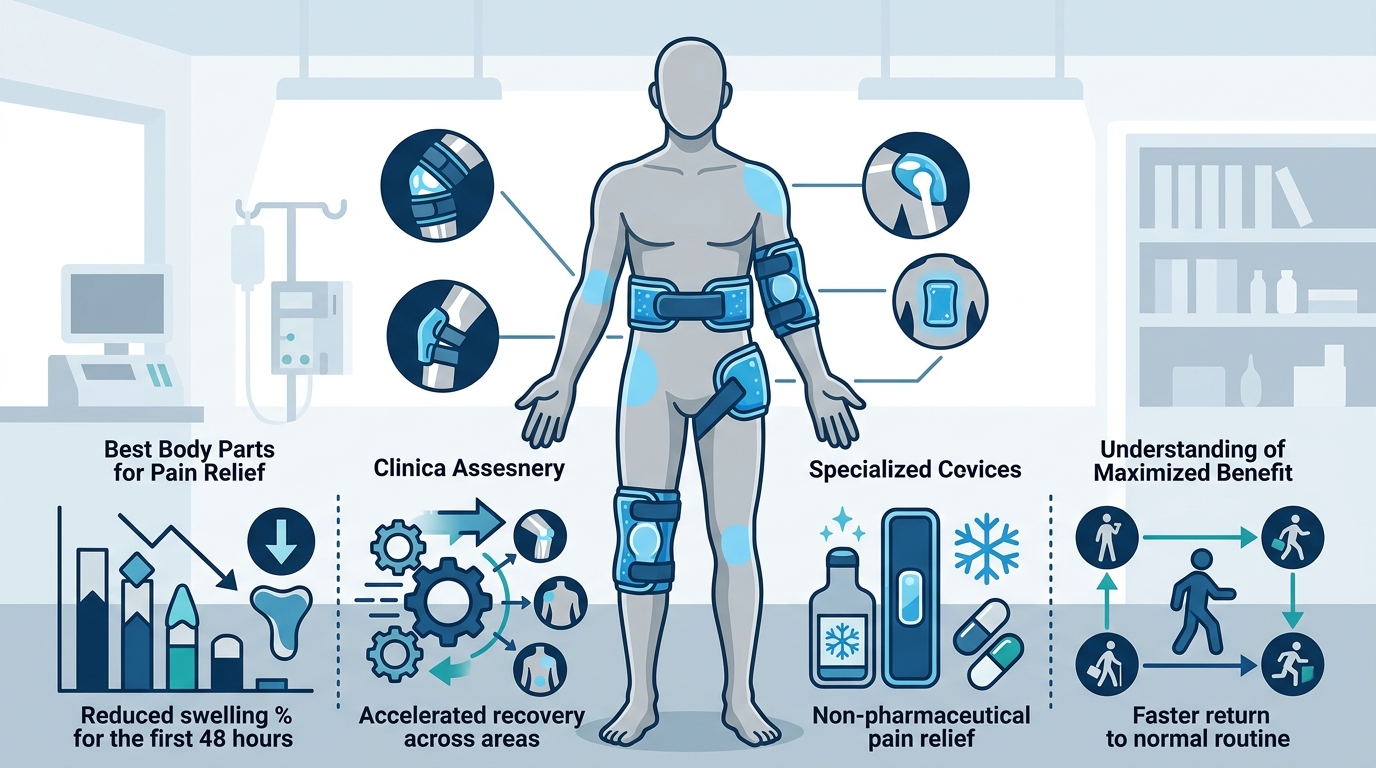
Clinical data shows that targeted cold therapy reduces post-operative swelling by approximately forty percent within the first forty-eight hours. According to recent orthopedic studies, consistent application of cryotherapy accelerates tissue recovery across multiple joint zones. Patients seeking non-pharmaceutical interventions increasingly rely on specialized cooling devices to manage acute inflammation. Understanding exactly where these therapeutic tools deliver maximum benefit ensures faster return to daily activities. This guide examines the precise anatomical regions that respond best to compression-based cooling systems.
The Science Behind Targeted Cold Therapy
Cold therapy is the controlled application of sub-ambient temperatures to restrict blood flow and minimize tissue damage. Cryotherapy refers to the medical practice of using extreme cold to treat specific physiological conditions. Compression wrapping is a mechanical stabilization method that secures cooling agents directly against the skin. When these three mechanisms combine, they create a highly efficient recovery protocol. The physical pressure from the wrap prevents fluid accumulation while the gel pack lowers local tissue temperature. This dual action significantly reduces nerve signal transmission responsible for acute pain. Healthcare providers consistently recommend this approach for immediate injury management and scheduled post-surgical care. The design eliminates the need for loose ice bags that frequently shift or leak during movement.
Lower Extremity Applications for Joint Recovery
The lower body bears the majority of structural weight and experiences the highest frequency of impact injuries. The knee joint requires specialized contouring to accommodate the patella and surrounding ligaments. A properly fitted knee ice wrap maintains constant contact with the anterior capsule and collateral ligaments. This consistent pressure distribution prevents the gel pack from sliding during rehabilitation exercises. Athletes recovering from meniscus repairs or ligament grafts rely on this targeted cooling method. The ankle and foot region demands equal attention due to its complex network of tendons and small joints. Ankle and foot compression wraps feature reinforced side panels to stabilize the lateral and medial malleoli. These designs accommodate swelling without restricting necessary circulation. Patients managing plantar fasciitis or Achilles tendonitis benefit from the sustained thermal exchange. The structured fit ensures the cooling agent remains positioned exactly where inflammation peaks. This anatomical precision reduces recovery timelines and minimizes compensatory movement patterns.
Upper Body Support for Muscular Strain
The upper extremities face repetitive stress from occupational tasks and recreational sports. The shoulder joint requires a wide coverage area to address the rotator cuff and deltoid attachments. Shoulder ice wraps feature extended panels that drape across the acromioclavicular joint and bicipital groove. This comprehensive coverage addresses referred pain that often radiates down the tricep region. Individuals recovering from rotator cuff repairs or labral tear procedures utilize these wraps daily. The wrist and elbow region demands flexible materials that bend without losing thermal contact. Wrist and elbow compression wraps incorporate articulated hinges that follow natural joint flexion. This design allows patients to perform light range-of-motion exercises while maintaining therapeutic cooling. The gel pack remains securely positioned over the carpal tunnel and olecranon bursa. Consistent application reduces the risk of chronic tendonitis and nerve compression syndromes. The ergonomic construction ensures comfort during extended wear periods without causing skin irritation.
Spinal and Core Regions for Chronic Discomfort
The spinal column and core musculature require specialized cooling strategies due to their depth and structural complexity. The lower back experiences significant compressive forces from daily activities and prolonged sitting. Back ice wraps feature elongated profiles that span the lumbar and thoracic regions. These wraps distribute cooling pressure evenly across the erector spinae and quadratus lumborum muscles. Patients managing herniated discs or sciatic nerve irritation find this targeted approach highly effective. The hip joint requires a contoured design to navigate the iliac crest and greater trochanter. Hip compression wraps feature strategic cutouts that avoid bony prominences while maximizing soft tissue contact. This anatomical mapping ensures the cooling agent targets the gluteal tendons and hip flexors. Individuals recovering from total joint replacements or labral repairs utilize these wraps for scheduled recovery. The structured fit prevents the pack from shifting during sleep or light household activities. Consistent application reduces inflammatory markers and improves mobility within the first week of use.
Facial and Jaw Zones for Post-Procedure Care
The facial and cranial regions demand ultra-soft materials that conform to delicate skin and complex bone structures. The jaw joint requires precise pressure mapping to avoid excessive compression on the temporomandibular articulation. Jaw ice wraps feature thin, pliable gel inserts that adapt to the mandibular angle and masseter muscles. Dental surgeons and oral surgeons recommend these wraps for immediate post-operative swelling management. The face and neck region requires breathable fabrics that prevent moisture buildup during extended wear. Face and neck compression wraps utilize moisture-wicking liners that maintain skin integrity during prolonged application. Patients recovering from rhinoplasty, facelifts, or cosmetic dermatology procedures rely on this gentle cooling method. The lightweight construction eliminates pressure points while maximizing thermal exchange across the zygomatic and maxillary regions. This targeted approach reduces bruising and accelerates tissue remodeling without compromising surgical outcomes. The adjustable straps ensure a secure fit that remains comfortable during sleep or light reading.
Multi-Purpose Solutions for Full-Body Coverage
| Anatomical Region | Recommended Wrap Type | Primary Clinical Application | Collection Link |
|---|---|---|---|
| Knee | Contoured Knee Ice Wrap | Post-surgical swelling and ligament strain | Shop Knee Wraps |
| Ankle/Foot | Reinforced Ankle and Foot Wrap | Tendonitis and joint stabilization | Shop Ankle/Foot Wraps |
| Shoulder | Extended Shoulder Ice Wrap | Rotator cuff recovery and referred pain | Shop Shoulder Wraps |
| Back/Hip | Elongated Back and Hip Wrap | Lumbar support and joint replacement care | View Pain Relief Guide |
| Face/Jaw | Soft Facial and Jaw Wrap | Cosmetic procedure recovery and TMJ management | Shop Facial Wraps |
Key Takeaways
- Targeted cold therapy reduces post-operative swelling by approximately forty percent within the first forty-eight hours.
- Knee and ankle wraps feature reinforced side panels to stabilize lateral and medial joints during rehabilitation.
- Shoulder and wrist wraps incorporate articulated designs that follow natural joint flexion without losing thermal contact.
- Back and hip wraps utilize elongated profiles that span the lumbar and thoracic regions for comprehensive coverage.
- Facial and jaw wraps utilize ultra-soft materials that conform to delicate skin and complex bone structures.
- Multi-purpose wraps feature interchangeable gel pack inserts that maintain consistent thermal output across applications.
- Consistent application reduces inflammatory markers and improves mobility within the first week of use.
Frequently Asked Questions
How long should I apply a compression ice wrap to an injured area?
Standard clinical guidelines recommend applying cooling therapy for fifteen to twenty minutes per session. This duration prevents tissue damage while maximizing therapeutic benefits. Users should allow the skin to return to normal temperature before reapplying the wrap. Consistent scheduling throughout the day accelerates recovery timelines.
Can I use these wraps over surgical incisions?
Healthcare providers typically clear patients for wrap application once initial wound healing occurs. The breathable fabric prevents moisture buildup while maintaining therapeutic cooling. Users should verify incision status with their surgeon before beginning treatment. The adjustable straps ensure secure positioning without putting pressure on healing tissue.
Are the gel packs safe for repeated freeze-thaw cycles?
The reusable gel inserts maintain structural integrity through hundreds of freeze-thaw cycles. These packs utilize non-toxic polymers that resist cracking or leakage. Users should follow manufacturer guidelines regarding maximum freezing duration. The standardized dimensions ensure compatibility across the entire product ecosystem.
Do compression wraps restrict blood circulation during use?
Properly fitted compression wraps maintain adequate blood flow while restricting excessive fluid accumulation. The elastic materials adapt to natural swelling patterns without causing constriction. Users should monitor skin color and temperature during extended wear. The breathable liners prevent moisture buildup while maximizing thermal exchange.
Can I use these wraps for chronic pain management?
Regular application reduces inflammatory markers and improves mobility within the first week of use. Patients managing arthritis or tendonitis benefit from scheduled cooling sessions. The modular design allows users to rotate cooling zones throughout the day. Consistent application minimizes reliance on over-the-counter pain medications.
How do I clean and maintain the cooling wraps?
The removable liners feature machine-washable fabrics that maintain therapeutic properties. Users should detach the gel pack inserts before laundering the outer shell. Air drying preserves the elastic integrity of the compression panels. Regular maintenance extends the functional lifespan of the entire system.
What is the difference between ice wraps and standard ice packs?
Compression wraps feature structured panels that maintain constant contact with the target area. Standard ice packs frequently shift or leak during movement. The ergonomic construction ensures comfort during extended wear periods without causing skin irritation. This anatomical precision reduces recovery timelines and minimizes compensatory movement patterns.
Get Started With Targeted Cold Therapy
Identifying the correct anatomical region for your specific injury accelerates recovery and minimizes downtime. The comprehensive product lineup features specialized designs for every major joint and muscle group. Users can explore the full collection to find the precise wrap that matches their recovery protocol. Visit the main store to browse available sizes and configurations. Contact the support team for personalized recommendations regarding your specific condition. Begin your recovery journey today and experience the clinical benefits of structured cooling therapy.