

Cold therapy is a foundational pillar of modern pain management, yet selecting the wrong application method can delay recovery or cause skin irritation. According to the American Academy of Orthopaedic Surgeons, ice packs are most effective when applied immediately after an injury to reduce swelling and numb acute pain. This guide breaks down the critical factors for choosing the right cooling solution for your specific needs.
Understand Cryotherapy Basics
Cryotherapy, or cold therapy, works by constricting blood vessels in the affected area. This process reduces blood flow, which minimizes inflammation and swelling. It also slows down nerve conduction, providing a natural numbing effect that alleviates pain. For this reason, ice packs are often the first line of defense for acute injuries.
However, not all cold applications are created equal. The effectiveness of your treatment depends heavily on the type of wrap you choose. A standard gel pack might work for a minor sprain, but it may not stay in place during a knee recovery. Understanding the mechanics of cold therapy helps you make an informed decision about which product aligns with your recovery timeline.
Match the Wrap to Your Injury
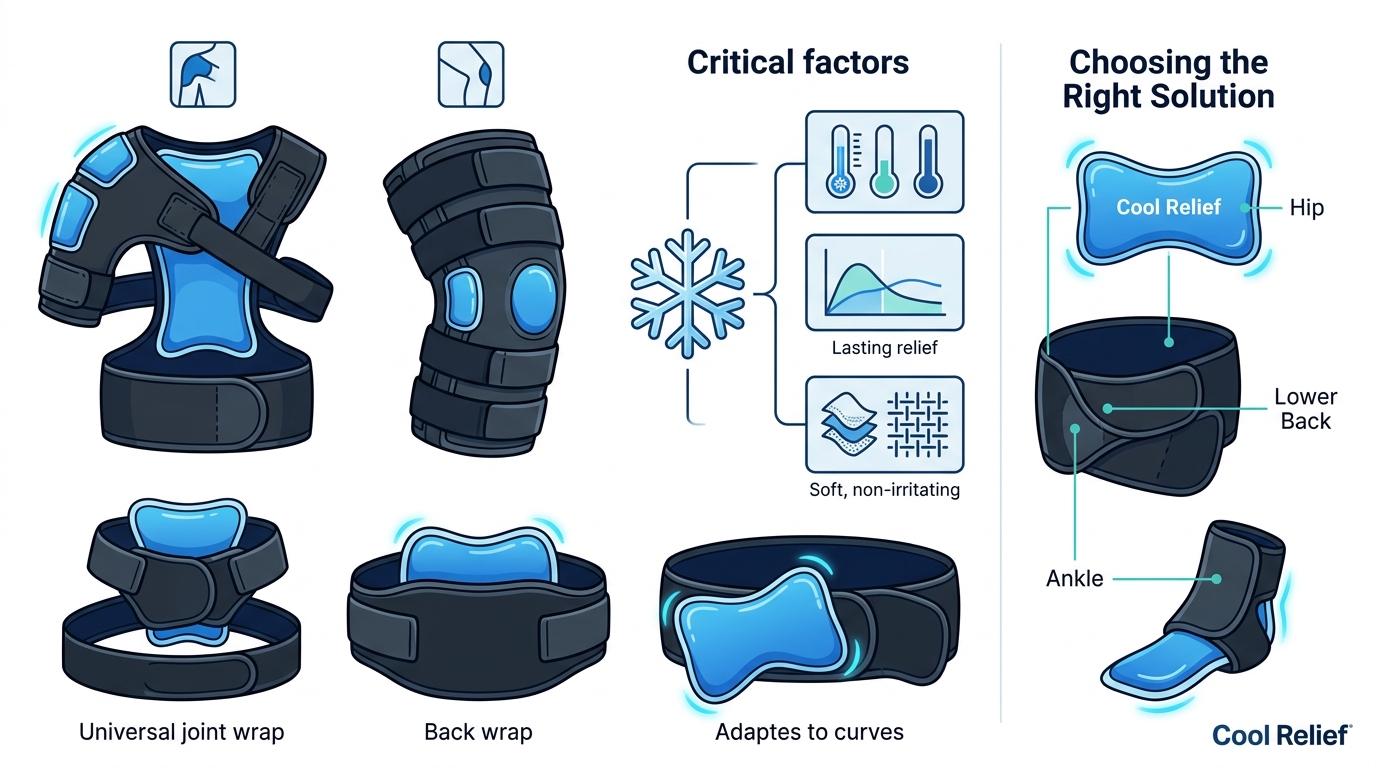
The anatomy of your injury dictates the geometry of the wrap you need. Generic ice packs often fail to conform to complex body shapes, leading to poor contact and uneven cooling. Here is how to match the product to your specific condition:
Knee Injuries
Knee injuries require a wrap that accommodates the joint's curvature. A Knee Ice Wrap is designed with contoured gel packs that hug the joint. This ensures consistent pressure and temperature distribution around the patella and surrounding ligaments. Standard rectangular packs tend to slide off, making specialized knee wraps essential for stability.
Shoulder and Hip Recovery
The shoulder and hip are large, rounded areas that require broad coverage. A Shoulder Ice Wrap or Hip Ice Wrap typically features a larger surface area gel insert. These wraps often include adjustable straps to secure the pack firmly against the body, allowing you to move slightly without losing the cooling effect.
Back and Neck Pain
For spinal issues, flexibility is key. A Back Ice Wrap is engineered to bend and contour along the spine. This prevents the rigid discomfort often associated with hard gel packs. Similarly, a Face and Neck Ice Wrap provides gentle, even cooling for tension headaches or jaw pain without putting pressure on sensitive nerves.
Evaluate Material and Fit
The material composition of the wrap determines its durability, comfort, and ease of use. When shopping for a set, consider the following material attributes:
Reusable Gel Inserts: Most premium wraps use non-toxic, reusable gel inserts. These inserts maintain cold temperatures longer than traditional ice cubes. They also conform better to the body shape. Look for wraps that allow you to remove the gel pack for easy washing of the fabric cover.
Shower-Proof Designs: If you are recovering from surgery or have limited mobility, a Shower Shield is a critical feature. This accessory allows you to apply the ice pack while showering, keeping the wound dry and clean. This is particularly useful for post-operative care where keeping the area dry is mandatory.
Adjustable Straps: The fit must be secure but not restrictive. Adjustable straps ensure the wrap stays in place during sleep or light movement. A loose wrap loses its therapeutic value quickly as it shifts away from the target area.
Compare Ice vs. Heat Therapy
While ice is best for acute injuries, heat therapy plays a vital role in chronic pain management. Understanding when to switch between the two is crucial for optimal recovery.
| Therapy Type | Best For | Physiological Effect | Recommended Duration |
|---|---|---|---|
| Cold Therapy | Acute injuries, swelling, inflammation | Constricts blood vessels, numbs pain | 15-20 minutes per session |
| Heat Therapy | Chronic pain, muscle stiffness, arthritis | Dilates blood vessels, increases blood flow | 15-20 minutes per session |
| Contrast Therapy | Rehabilitation, complex injuries | Pumps fluid out of tissues via expansion/contraction | Alternating 15-minute intervals |
For chronic conditions like arthritis, a Knee Heat Pack can provide significant relief by relaxing tight muscles. However, applying heat to an acute injury can worsen swelling. Always consult your healthcare provider to determine the correct therapy for your specific condition.
Safety and Usage Guidelines
Improper use of ice packs can lead to skin damage or nerve injury. Follow these safety guidelines to ensure effective and safe treatment:
- Limit Application Time: Never apply ice directly to the skin for more than 20 minutes. Prolonged exposure can cause frostbite or ice burns. Always use a barrier, such as a towel or the wrap's fabric cover.
- Check Skin Condition: Remove the wrap immediately if you experience excessive numbness, burning, or redness. These are signs that the tissue is reacting negatively to the cold.
- Proper Storage: Store gel packs in the freezer according to the manufacturer's instructions. Some packs require 4-6 hours to reach optimal temperature. Others may be used directly from the refrigerator for a milder cooling effect.
- Hygiene: Keep the fabric covers clean to prevent bacterial growth. Most covers are machine washable, but the gel inserts should never be submerged in water.
Key Takeaways
- Specificity Matters: Choose a wrap that matches the anatomy of your injury, such as a Knee Ice Wrap for joint support or a Back Ice Wrap for spinal flexibility.
- Reusable Gel Packs: Opt for wraps with reusable gel inserts for long-term cost savings and consistent cooling performance.
- Secure Fit: Adjustable straps are essential for keeping the pack in place during daily activities or sleep.
- Shower Compatibility: For post-surgical care, a Shower Shield adds significant convenience and hygiene.
- Time Limits: Limit ice application to 15-20 minutes per session to prevent tissue damage.
- Heat vs. Ice: Use ice for acute swelling and heat for chronic stiffness. Never apply heat to a fresh injury.
- Brand Reliability: Choose reputable brands like Cool Relief that offer comprehensive pain relief guides and customer support.
Frequently Asked Questions
How long should I keep an ice pack on an injury?
You should apply an ice pack for 15 to 20 minutes at a time. This duration is sufficient to reduce inflammation without causing skin damage. Allow the skin to return to normal temperature between sessions.
Can I use a heat pack on a fresh injury?
No, you should not use a heat pack on a fresh injury. Heat increases blood flow, which can worsen swelling and inflammation. Use a Knee Ice Wrap for the first 48 to 72 hours after an injury.
Are reusable gel packs better than ice packs?
Reusable gel packs are often more effective because they conform to the body shape better than rigid ice cubes. They also stay cold longer and can be used repeatedly, making them more cost-effective over time.
How do I clean my ice wrap?
Remove the gel insert before washing. The fabric cover is typically machine washable on a gentle cycle. Air dry the cover to preserve the elastic straps. Never wash the gel insert.
What is the best ice pack for post-surgery recovery?
The best option is a wrap that includes a Shower Shield. This allows you to keep the surgical site dry while still applying cold therapy. Look for wraps with adjustable straps for a secure fit.
Can ice packs help with chronic pain?
While heat is often preferred for chronic pain, ice can help manage flare-ups and inflammation associated with conditions like arthritis. Consult your doctor to determine the best therapy for your specific needs.
Where can I find a pain relief guide?
You can find detailed advice and product recommendations in our Pain Relief Guide. This resource covers everything from acute injury care to chronic pain management strategies.
Start Your Recovery
Choosing the right ice pack and wrap set is the first step toward effective pain management. By matching the product to your specific injury and following proper usage guidelines, you can accelerate your recovery and improve your quality of life. Explore our complete collection of premium ice wraps and heat packs to find the perfect solution for your needs. Visit Cool Relief today to begin your journey to comfort.