

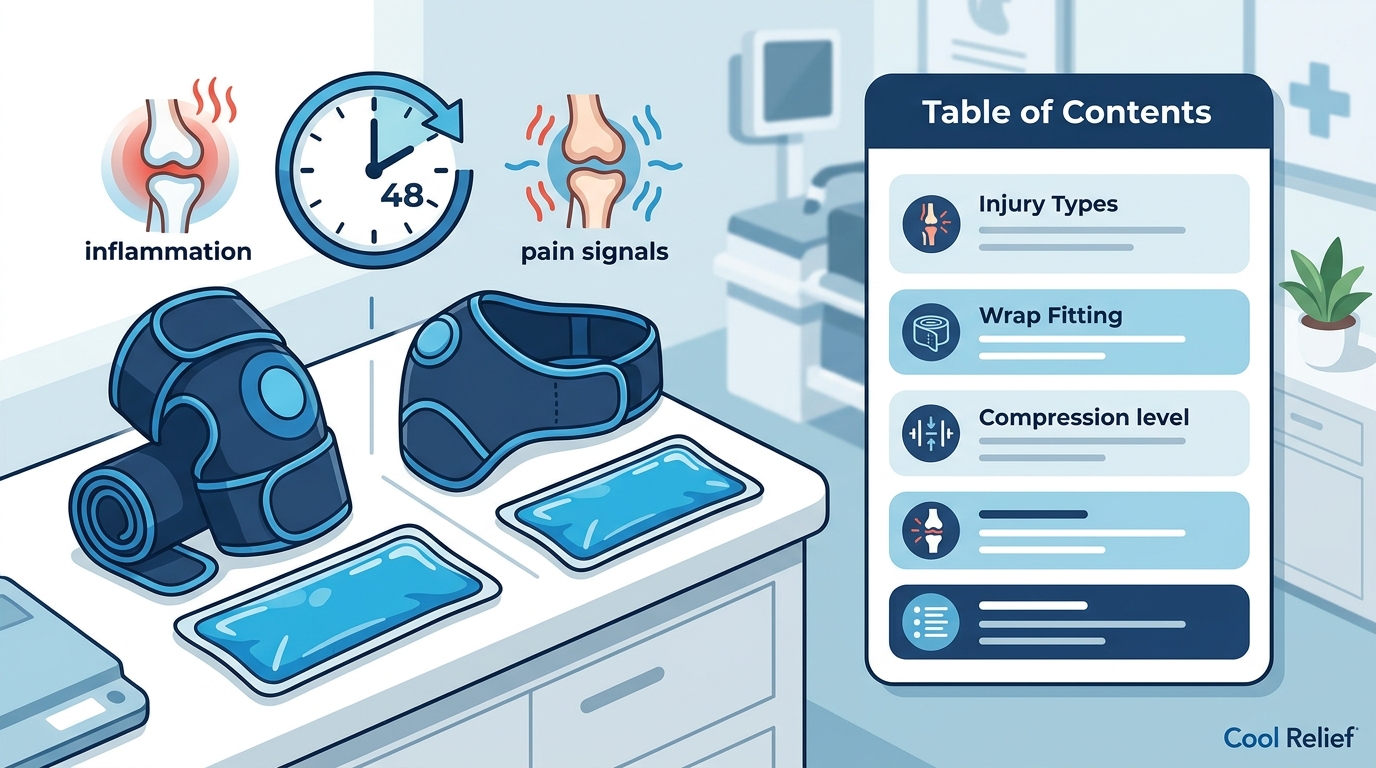
Acute inflammation is the body's immediate response to tissue damage, and managing it correctly within the first 48 hours is critical for recovery. According to the American Academy of Orthopaedic Surgeons, consistent cold therapy can significantly reduce swelling and numb sharp pain signals in injured areas. This guide explains how to select the right cooling solution for your specific injury, ensuring you get the most out of every application.
Understanding the Mechanism of Cold Therapy
Cold therapy, or cryotherapy, works by constricting blood vessels in the targeted area. This process, known as vasoconstriction, limits the flow of blood to the injured tissue. The result is a reduction in the accumulation of fluid that causes swelling. Ice packs also slow down nerve conduction velocity, which effectively numbs the area and provides immediate pain relief.
Cold therapy is the application of low temperatures to the body to reduce inflammation and pain. It is most effective for acute injuries such as sprains, strains, and post-surgical swelling. Using the wrong type of ice pack can lead to uneven cooling or rapid warming, which reduces the therapeutic window. Understanding how different materials retain cold is the first step in making an informed purchase.
Material Selection and Gel Composition
The core component of any effective ice wrap is the cooling medium. Most premium products use a non-toxic gel that remains pliable even when frozen. This gel composition is crucial because it allows the pack to conform to the body's curves rather than remaining rigid like a block of ice. Rigid ice blocks create pressure points that can be uncomfortable and may not cover the entire injured area.
Reusable gel packs are designed to maintain a consistent cold temperature for longer periods than traditional ice cubes. They also eliminate the mess and waste associated with melting ice. When evaluating gel packs, look for products that specify a non-toxic, BPA-free formula. This ensures safety in case of minor leaks or prolonged skin contact. The gel should also be odorless and resistant to mold growth, which is a common issue with lower-quality hydrogel products.
Anatomical Fit and Contouring
One size does not fit all when it comes to pain relief. The anatomy of the knee, shoulder, or ankle requires different shapes and sizes to be effective. For example, a knee injury requires a wrap that can navigate the patella and the surrounding ligaments. A shoulder injury needs a wrap that can accommodate the ball-and-socket joint without slipping off during movement.
Contouring is the ability of the ice pack to mold to the specific shape of the body part. CoolRelief offers specialized designs for various body parts, including ankle and foot wraps that provide targeted coverage for sprains. These specialized wraps ensure that the cold therapy is applied exactly where it is needed, rather than being dispersed over a larger, less relevant area. Proper contouring maximizes the therapeutic benefit while minimizing the surface area that needs to be cooled.
Secure Attachment and Mobility
An ice pack that slips off is useless for pain management. The best ice wraps feature secure attachment mechanisms that allow for mobility while maintaining consistent contact with the skin. Velcro straps are the industry standard for adjustability, allowing users to tighten or loosen the wrap as swelling changes throughout the day.
Look for wraps with reinforced stitching and durable hook-and-loop fasteners. These components must withstand repeated freezing and thawing cycles without losing their grip. Some advanced wraps include elastic bands that provide additional compression, which helps control swelling while delivering cold therapy. This dual-action approach is particularly beneficial for hip and back ice wraps where gravity and movement can dislodge standard packs.
Heat and Cold Versatility
While ice is critical for the initial acute phase of an injury, heat therapy becomes valuable in the later stages of recovery. Heat increases blood flow, which helps relax tight muscles and promote healing. The most versatile products are designed to be used for both hot and cold applications.
Microwavable gel packs offer this dual functionality. They can be heated to provide soothing warmth for chronic pain or stiff joints, or frozen for immediate relief from acute inflammation. This versatility makes them a cost-effective solution for households with multiple members or varying pain conditions. For those dealing with shoulder heat wraps, the ability to switch between modalities can significantly speed up the rehabilitation process.
Product Comparison Overview
Choosing the right product depends on your specific needs. The table below compares the key features of different types of cooling solutions available for pain relief.
| Product Type | Best For | Key Feature | Reusability |
|---|---|---|---|
| Ankle/Foot Ice Wrap | Sprains, Plantar Fasciitis | Contoured Fit | Reusable |
| Knee Ice Wrap | Patellar Tendinitis, Post-Surgery | Secure Velcro Straps | Reusable |
| Shoulder Ice Wrap | Rotator Cuff Injuries | Ball-and-Socket Design | Reusable |
| Back Ice Wrap | Lower Back Strain | Wide Coverage Area | Reusable |
| Reusable Gel Inserts | Customizable Fits | Multi-Purpose Use | Reusable |
Key Takeaways
- Immediate Action: Apply cold therapy within the first 48 hours of an injury to minimize swelling.
- Gel Quality: Choose non-toxic, BPA-free gel packs for safety and consistent cooling.
- Anatomical Fit: Select wraps designed specifically for the injured body part for maximum efficacy.
- Secure Attachment: Ensure the wrap has durable Velcro or elastic straps to stay in place.
- Versatility: Consider heat and cold dual-use packs for comprehensive pain management.
- Hygiene: Look for washable covers to maintain cleanliness and prevent bacterial growth.
- Duration: Limit ice applications to 15-20 minutes at a time to prevent tissue damage.
Frequently Asked Questions
How long should I keep an ice pack on an injury?
It is recommended to apply ice for 15 to 20 minutes at a time. Leaving it on longer can cause skin damage or nerve irritation. Allow the skin to return to normal temperature between applications.
Can I use an ice wrap directly on my skin?
No, you should always place a thin towel or cloth between the ice pack and your skin. Direct contact can cause frostbite or ice burns, especially during prolonged use.
What is the difference between an ice pack and an ice wrap?
An ice pack is a rigid or semi-rigid container that must be held in place. An ice wrap is a flexible sleeve that contains a cooling gel and includes straps to secure it to the body, allowing for hands-free relief.
Are reusable gel packs safe for children?
Yes, most reusable gel packs are made from non-toxic materials. However, always supervise children to ensure they do not bite or puncture the pack, which could lead to ingestion of the gel.
How do I clean my ice wrap?
Most ice wraps come with a removable, washable cover. Hand wash the cover with mild soap and water. The gel pack itself should be wiped down with a disinfectant wipe if it comes into contact with bodily fluids.
Can I freeze my ice wrap in the microwave?
No, you cannot freeze a pack in the microwave. However, many of our products are designed to be heated in the microwave for warm therapy. Always check the product label for specific heating instructions.
What is the best ice pack for a shoulder injury?
A shoulder-specific ice wrap is best because it is designed to fit the ball-and-socket joint. This ensures even coverage and prevents the pack from slipping off during movement.
Shop Premium Cooling Solutions
Recovering from an injury requires the right tools and the right strategy. By choosing a high-quality, anatomically designed ice wrap, you ensure that your pain relief is both effective and convenient. CoolRelief offers a comprehensive range of premium ice packs and wraps designed to meet your specific needs. Visit our Pain Relief Guide for more expert advice on managing your recovery. Shop our full collection today and take the first step toward faster healing.