

Shoulder injuries are among the most common musculoskeletal complaints, with data showing that rotator cuff issues account for a significant percentage of all orthopedic visits annually. Proper cold therapy application is critical for reducing inflammation and managing pain during the acute phase of recovery. This guide details the precise method for applying a shoulder ice wrap to ensure maximum therapeutic benefit while maintaining safety and comfort. (Cool Relief Ice Wraps)
Preparation and Product Selection
Before beginning the application process, you must select the appropriate cooling device. Shoulder Ice Wraps are specifically designed to contour to the complex anatomy of the shoulder joint, unlike generic ice packs that slide off or fail to cover the entire affected area. Cool Relief offers specialized Shoulder Ice Wraps that utilize soft gel technology to maintain consistent contact with the skin. (Collections ndash Cool Relief)
Ensure the gel pack is fully frozen before use. A partially frozen pack will not provide the necessary thermal mass to draw heat out of the inflamed tissue. If you are using a reusable gel insert, verify that it is securely sealed within its fabric cover to prevent leakage. The fabric cover acts as a barrier, protecting the skin from direct contact with the freezing gel while allowing cold to transfer efficiently. (Ankle Foot Wraps for)
Correct Positioning and Placement
Proper placement is the most critical factor in effective cold therapy. The shoulder joint, or glenohumeral joint, is a ball-and-socket joint that requires targeted cooling to reduce synovial fluid inflammation. Incorrect placement can lead to ineffective treatment or unnecessary cold exposure to healthy tissue. (Premium Ice Packs amp)
Identify the area of maximum pain or swelling. This is typically the front (anterior) or side (lateral) of the shoulder. Sit or lie down in a comfortable position that allows you to relax the shoulder muscles. Tension in the deltoid or trapezius muscles can interfere with the wrap's ability to adhere to the skin. If you are recovering from surgery, follow your surgeon's specific positioning instructions, as they may require you to keep the arm in a sling or specific angle.
Step-by-Step Application Technique
Follow these steps to apply the shoulder compression wrap correctly. This method ensures that the cold therapy is distributed evenly across the target area.
Step 1: Prepare the Skin
Clean and dry the shoulder area. Moisture on the skin can reduce the effectiveness of the wrap and increase the risk of skin irritation. Do not apply lotions or oils immediately before placing the wrap, as this can create a barrier that impedes cold transfer.
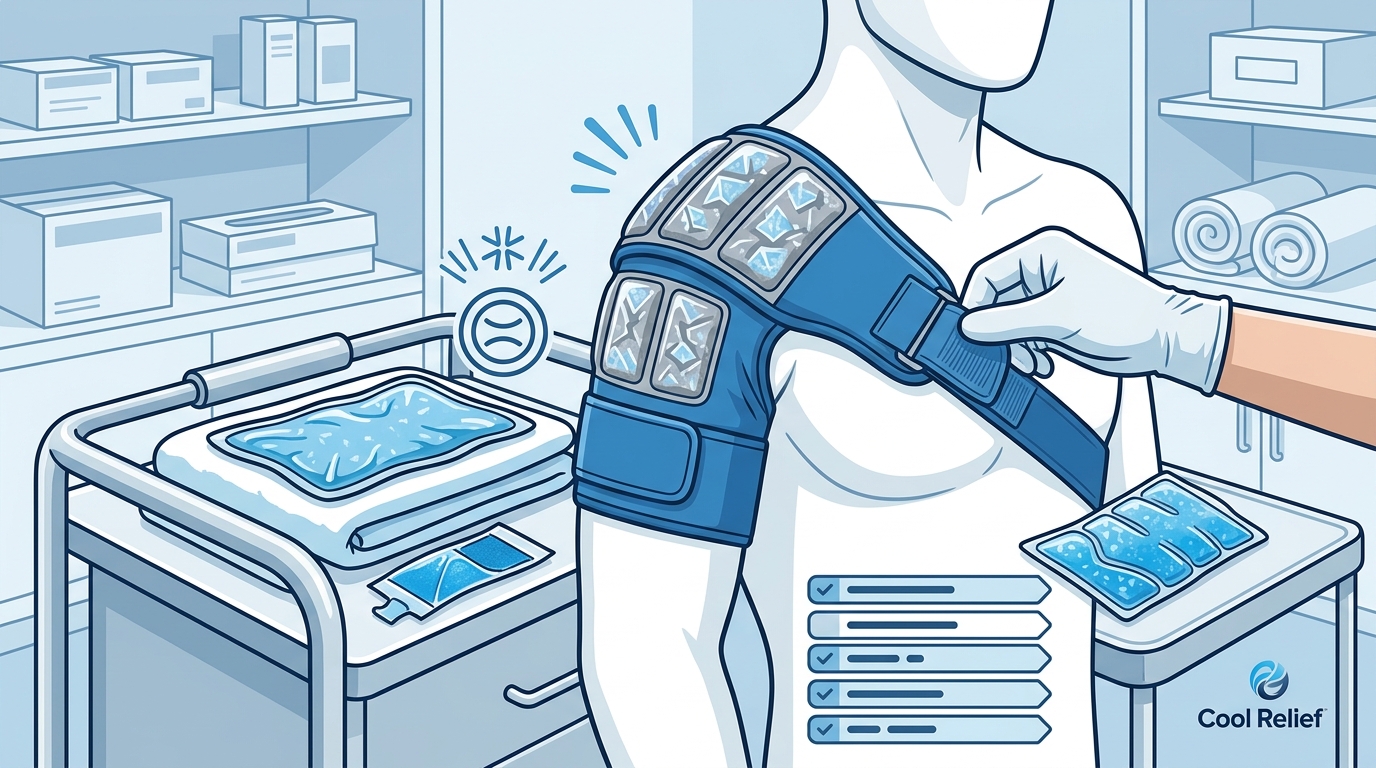
Step 2: Position the Gel Pack
Take the frozen gel pack and place it directly over the painful area. For anterior shoulder pain, place the pack on the front of the shoulder. For lateral pain, such as bursitis, position it on the side. The gel pack should cover the entire width of the shoulder joint.
Step 3: Secure the Wrap
Most shoulder ice wraps come with elastic straps or Velcro closures. Start by securing the strap at the top of the shoulder, near the neck. Pull the strap gently but firmly to ensure the gel pack stays in place. Move to the bottom strap, securing it around the upper arm. The goal is to hold the pack firmly against the skin without cutting off circulation.
Step 4: Adjust for Comfort
Once the wrap is secured, check for any pinching or excessive pressure. You should feel a consistent, deep cold sensation, not sharp pain. If the wrap feels too tight, loosen the straps slightly. If it feels loose and the gel pack is shifting, tighten them. A well-applied wrap should stay in place even with gentle movement.
Achieving Optimal Compression
Compression is a key component of the RICE (Rest, Ice, Compression, Elevation) protocol. Compression wraps help to limit swelling by preventing fluid accumulation in the injured tissue. When applying the shoulder wrap, ensure that the compression is uniform. Avoid creating pressure points, which can cause nerve compression or skin damage.
The Cool Relief Shoulder Ice Wrap is designed to provide gentle, even compression. The elastic material conforms to the body's shape, ensuring that the cold therapy is delivered consistently. Do not use additional bandages over the wrap unless directed by a medical professional, as this can trap heat and reduce the cooling effect.
Treatment Duration and Frequency
The duration of cold therapy is crucial for achieving therapeutic benefits without causing tissue damage. Cold therapy works by constricting blood vessels, which reduces blood flow to the area and decreases inflammation. However, prolonged exposure can lead to nerve damage or frostbite.
Apply the ice wrap for 15 to 20 minutes at a time. This duration is sufficient to cool the underlying tissues without causing adverse effects. Remove the wrap and allow the skin to return to its normal temperature for at least 45 to 60 minutes before reapplying. This cycle can be repeated 3 to 4 times per day, or as directed by your healthcare provider.
Consistency is key. Regular application of cold therapy in the first 48 to 72 hours after an injury can significantly reduce the overall recovery time. For chronic conditions, such as arthritis, regular application can help manage pain and improve mobility.
Safety Precautions and Contraindications
While cold therapy is generally safe, there are important precautions to observe. Never apply ice directly to the skin. Always use a barrier, such as the fabric cover provided with your ice wrap, to prevent cold burns. If you have conditions such as Raynaud's disease, cold urticaria, or peripheral vascular disease, consult your doctor before using cold therapy.
Monitor your skin during and after application. If you experience numbness, tingling, or intense pain, remove the wrap immediately. These are signs that the cold is affecting your nerves or blood flow too aggressively. If the skin turns white or blue, this indicates reduced circulation, and you should seek medical attention.
Do not sleep with the ice wrap on. Unconscious exposure to cold can lead to severe tissue damage. Set a timer to remind you to remove the wrap after the recommended duration. After removing the wrap, gently massage the area to restore blood flow and reduce stiffness.
Key Takeaways
- Product Selection: Use a specialized shoulder ice wrap, such as those available at Cool Relief, to ensure proper contouring and coverage.
- Placement: Position the gel pack directly over the area of maximum pain, whether anterior or lateral.
- Compression: Secure the wrap firmly but comfortably to maintain contact without cutting off circulation.
- Duration: Limit application to 15-20 minutes per session to prevent tissue damage.
- Frequency: Repeat 3-4 times daily during the acute phase of injury.
- Safety: Always use a fabric barrier and never sleep with the ice wrap on.
- Monitoring: Watch for signs of nerve compression or cold burns, such as numbness or skin discoloration.
Frequently Asked Questions
How long should I keep a shoulder ice wrap on?
You should keep the shoulder ice wrap on for 15 to 20 minutes at a time. Prolonged exposure can cause tissue damage, so it is important to remove it after this period and allow the skin to warm up.
Can I use a shoulder ice wrap after surgery?
Yes, shoulder ice wraps are commonly used after shoulder surgery to reduce swelling and pain. However, you should follow your surgeon's specific instructions regarding the type of wrap and application schedule.
What is the difference between a shoulder ice wrap and a regular ice pack?
A shoulder ice wrap is designed to contour to the shoulder joint, providing even coverage and compression. A regular ice pack may slide off or fail to cover the entire area, reducing its effectiveness.
How often should I apply cold therapy to my shoulder?
For acute injuries, apply cold therapy 3 to 4 times per day. For chronic conditions, you may apply it as needed for pain relief, but always allow at least 45 minutes between sessions.
Is it safe to use a shoulder ice wrap if I have sensitive skin?
Yes, but you should use a thick barrier, such as a towel, between the wrap and your skin. Monitor your skin closely for any signs of irritation or redness.
Can I use heat therapy instead of cold therapy for shoulder pain?
Heat therapy is generally used for chronic pain or muscle stiffness, while cold therapy is used for acute injuries and inflammation. Consult your healthcare provider to determine the best approach for your specific condition.
How do I clean a shoulder ice wrap?
Most shoulder ice wraps can be wiped down with a damp cloth and mild soap. Allow them to air dry completely before storing. Check the manufacturer's instructions for specific cleaning guidelines.
What are the signs that I am applying too much pressure?
Signs of too much pressure include numbness, tingling, or intense pain. If you experience these symptoms, loosen the straps immediately.
Get Your Recovery Started
Proper application of a shoulder compression wrap is essential for effective cold therapy and faster recovery. By following the steps outlined in this guide, you can ensure that you are maximizing the benefits of your ice therapy while minimizing the risk of injury. Cool Relief offers a range of high-quality Shoulder Ice Wraps designed to provide superior comfort and therapeutic relief. Visit our product collection to find the perfect solution for your needs and start your journey to pain-free living today.