

If you have ever twisted an ankle, strained a muscle, or recovered from surgery, you know how important effective pain management is. Compression ice wraps combine two proven therapeutic principles, cold therapy and compression, into a single convenient product. They reduce swelling, numb pain, and support injured tissues all at once. In this guide we break down the specific benefits of compression ice wraps, explain the science behind them, and show you how to choose the right wrap for your needs. Whether you are an athlete or simply managing everyday aches, this information will help you recover smarter and faster.
What Are Compression Ice Wraps?
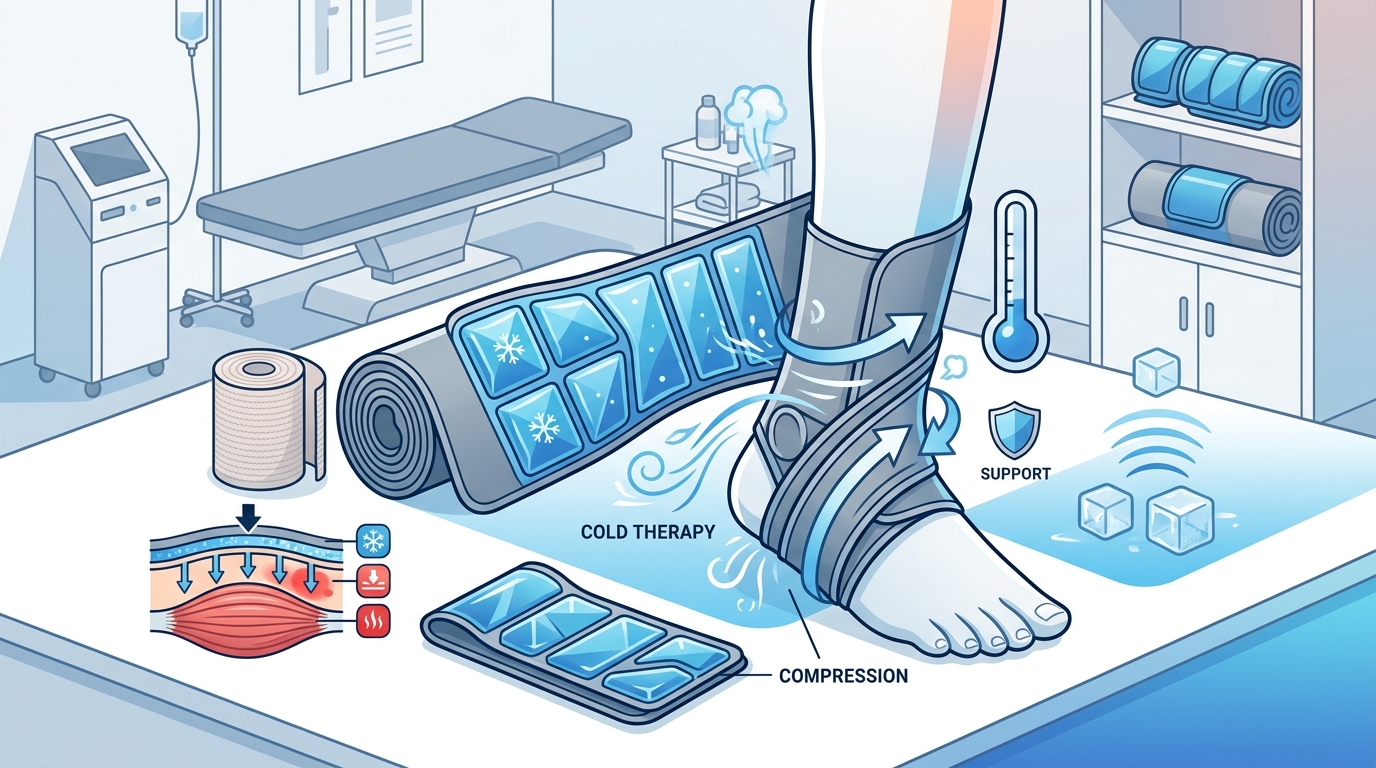
A compression ice wrap is a reusable therapeutic device that pairs a flexible gel ice pack with an adjustable compression sleeve or strap. Unlike a loose bag of ice, the wrap holds the cold pack securely against the injured area while applying gentle, even pressure. This dual-action design follows the well-known RICE (Rest, Ice, Compression, Elevation) method recommended by healthcare providers for acute soft-tissue injuries.
Cold compression therapy is a treatment approach that uses simultaneous cooling and pressure to manage pain, swelling, and inflammation in injured tissues. Modern gel-based wraps stay soft and pliable even when frozen, conforming to joints and curves that rigid ice packs cannot reach.
The Science Behind Cold Compression Therapy
Cold therapy works by constricting blood vessels near the injury site, a process called vasoconstriction. This limits fluid accumulation and reduces swelling. According to Medical News Today, compression further supports the area by limiting blood flow and controlling edema.
Pain Reduction
Cooling numbs nerve endings and slows their ability to transmit pain signals. It also limits muscle contraction, which helps reduce painful spasms around the injured area.
Faster Healing
By managing inflammation early, cold compression can help the body move through the acute phase more efficiently. Research cited by Guillot et al. (2019) confirms that cold wraps are effective at reducing pain and swelling for conditions like arthritis and post-surgical recovery.
Top Benefits of Compression Ice Wraps
1. Hands-Free Convenience
Adjustable straps and elastic closures keep the wrap in place, so you do not need to hold an ice bag against your body. Cool Relief ice wraps feature a hands-free design that lets you stay mobile during treatment sessions.
2. Longer-Lasting Cold
High-quality soft gel packs retain cold far longer than standard ice cubes. Cool Relief's proprietary gel pack design stays colder for longer with the flexibility to move with your body.
3. Targeted, Uniform Coverage
Because the gel conforms to body contours, you get even cold distribution rather than random cold spots. This targeted coverage is especially important for joints like the knee and shoulder, where uneven cooling can leave parts of the injury untreated.
Body-Part-Specific Applications
Compression ice wraps are available for nearly every major joint and muscle group. Choosing a wrap designed for a specific body part ensures a better fit and more effective therapy.
| Body Part | Common Injuries Treated | Recommended Wrap |
|---|---|---|
| Knee | ACL tears, meniscus injuries, post-surgery swelling | Soft Gel Knee Ice Pack |
| Shoulder | Rotator cuff tears, tendinitis, dislocations | Soft Gel Shoulder Ice Wrap |
| Hip | Bursitis, post-replacement recovery | Soft Gel Hip Ice Pack |
| Ankle/Foot | Sprains, plantar fasciitis, Achilles tendinitis | Ankle Ice Pack |
| Back | Muscle strains, post-surgery soreness | Back Ice Wraps |
For areas not listed above, a universal ice and heat wrap offers versatile coverage for elbows, thighs, wrists, and more.
Compression Ice Wraps vs. Traditional Ice Bags
| Feature | Compression Ice Wrap | Traditional Ice Bag |
|---|---|---|
| Hands-free use | Yes, secured by straps | No, must be held in place |
| Conforms to body | Flexible gel molds to joints | Rigid, uneven contact |
| Duration of cold | Up to 2 hours per session | 15-30 minutes before melting |
| Reusable | Yes, freeze and reuse | Single use (ice melts) |
| Compression support | Built-in adjustable compression | None unless separately wrapped |
| Mess factor | No dripping or condensation | Drips as ice melts |
The comparison makes it clear: compression ice wraps deliver a more controlled, comfortable, and effective therapy experience.
How to Use Compression Ice Wraps Safely
Cryotherapy is a therapeutic technique that uses cold temperatures to reduce pain and inflammation, but it must be applied correctly to avoid skin damage. Follow these guidelines:
- Apply the wrap for 15 to 20 minutes at a time, then remove for at least 20 minutes before reapplying.
- Place a thin cloth barrier between the gel pack and bare skin if needed.
- Tighten straps enough for gentle compression without cutting off circulation.
- Elevate the injured limb during icing for maximum swelling reduction.
- Consult a healthcare provider before using cold therapy on open wounds or if you have circulatory conditions.
Cool Relief wraps include built-in cover layers that insulate and reduce condensation, driving cold toward the injury without direct skin contact.
Key Takeaways
- Compression ice wraps combine cold therapy and compression for superior pain and swelling management.
- Cold constricts blood vessels and numbs nerve endings, while compression limits fluid buildup at the injury site.
- Gel-based wraps stay cold significantly longer than traditional ice bags and conform to body contours.
- Body-part-specific wraps for the knee, shoulder, hip, ankle, and back deliver more targeted relief.
- Hands-free designs let you remain mobile during treatment sessions.
- Always limit icing to 15-20 minute intervals and consult your doctor for serious injuries.
- Reusable gel packs make compression ice wraps an eco-friendly, cost-effective investment in recovery.
Frequently Asked Questions
What injuries benefit most from compression ice wraps?
Compression ice wraps are most effective for acute soft-tissue injuries such as sprains, strains, bruises, tendinitis, and post-surgical swelling. They are commonly used on the knee, shoulder, hip, ankle, and back.
How long should I wear a compression ice wrap?
Most healthcare providers recommend 15 to 20 minutes per session. Remove the wrap for at least 20 minutes before reapplying to protect your skin from cold-related damage.
Can compression ice wraps be used for heat therapy too?
Yes, many gel-based wraps are dual-purpose. Cool Relief gel inserts can be warmed in a microwave in short 20-second intervals for soothing heat therapy on stiff or sore muscles.
Are compression ice wraps reusable?
Absolutely. Quality gel packs can be refrozen and reused hundreds of times. Cool Relief also sells replacement gel pack inserts so your wrap lasts even longer.
Do compression ice wraps work better than loose ice packs?
Yes. The added compression holds the cold pack firmly against the injury, delivers even cooling across the area, and provides structural support that a loose ice bag cannot match.
Can I use a compression ice wrap after surgery?
Compression ice wraps are widely used in post-surgical recovery. Cool Relief wraps are trusted by hospitals and surgical centers nationwide. Always follow your surgeon's specific post-operative instructions.
What makes Cool Relief ice wraps different?
Cool Relief produces soft, flexible gel packs that stay cold for extended periods. Their wraps ship from a centrally located warehouse in Oklahoma City for fast delivery across the United States, and every wrap features a hands-free, adjustable design.
Start Your Recovery Today
Do not let pain slow you down. Browse the full line of Cool Relief compression ice wraps and find the perfect wrap for your injury. With free 2-day shipping on orders over $25 and a 30-day return policy, there is zero risk in giving your body the relief it deserves.