

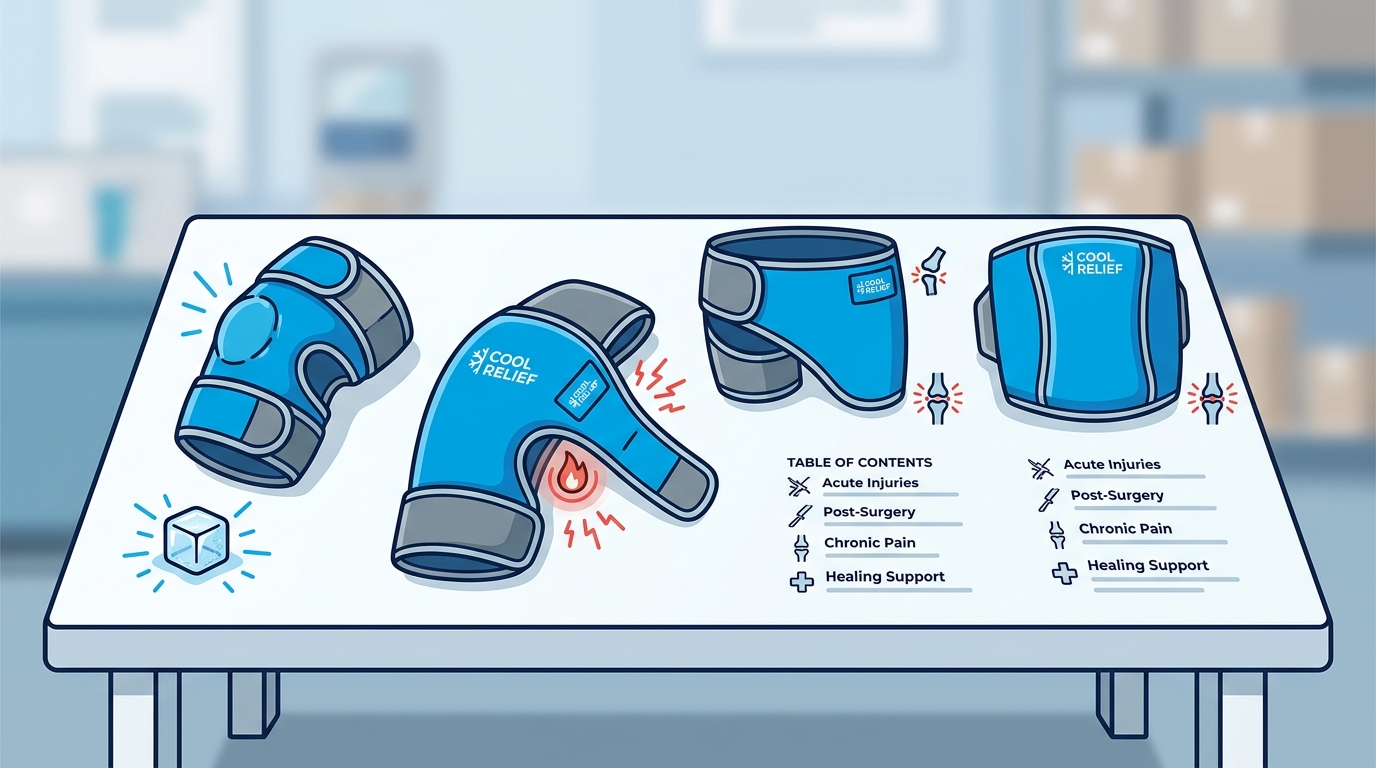
Compression ice wraps treat acute soft tissue injuries, post-surgical swelling, and chronic joint pain. They combine cold therapy with gentle pressure to reduce inflammation and support healing. Cool Relief designs these wraps for specific body parts to ensure effective, comfortable application.
Acute Soft Tissue Injuries
Compression ice wraps are highly effective for sprains, strains, and bruises. The cold constricts blood vessels, limiting internal bleeding and swelling. The compression component stabilizes the injured area, preventing further damage during movement.
For example, an ankle sprain benefits from immediate icing and compression. This approach reduces pain and accelerates the initial healing phase. Athletes and active individuals often use these wraps to return to activity faster.
Post-Surgical Swelling and Recovery
After orthopedic surgeries, such as knee or shoulder repairs, swelling is a common challenge. Compression ice wraps help manage this post-operative edema. They provide consistent cooling to soothe the surgical site and reduce discomfort.
Hospitals and surgical centers frequently recommend these wraps for patient recovery. The flexible design allows for easy application over bandages or dressings. This ensures the patient receives continuous relief without compromising wound care.
Chronic Joint Pain and Arthritis
Individuals with osteoarthritis in the knee or hip may find relief using targeted ice wraps. The consistent pressure helps maintain joint alignment. This can improve mobility and reduce the frequency of pain flare-ups.
Muscle Soreness and Overuse Injuries
Intense physical activity often leads to delayed onset muscle soreness (DOMS). Compression ice wraps address this by reducing inflammation in overworked muscles. The cold therapy helps repair micro-tears in muscle fibers.
Runners and weightlifters often use these wraps after long sessions. The flexible gel packs conform to the muscle shape, ensuring even cooling. This targeted approach minimizes recovery time and prevents chronic overuse injuries.
Headaches and Migraines
Key Takeaways
- Compression ice wraps treat acute injuries like sprains and strains by reducing swelling.
- They are essential for post-surgical recovery, helping manage edema and pain.
- Chronic joint pain, such as arthritis, can be alleviated with cold and compression.
- Muscle soreness from overuse is effectively managed with targeted cooling.
Frequently Asked Questions
How long should I wear a compression ice wrap?
It is generally recommended to wear a compression ice wrap for 15 to 20 minutes at a time. This duration is sufficient to reduce swelling without causing tissue damage from prolonged cold exposure. Always allow the skin to return to normal temperature before reapplying.
Can I use an ice wrap on an open wound?
No, you should not apply an ice wrap directly to an open wound. The cold can damage healing tissue and increase the risk of infection. Instead, use the wrap on surrounding areas or wait until the wound is closed and protected by a bandage.
Do compression ice wraps work for all types of pain?
They are most effective for inflammatory pain and acute injuries. For chronic pain without inflammation, heat therapy might be more appropriate. However, many people find that alternating between heat and cold provides the best overall relief.
Are compression ice wraps safe for children?
Yes, but with caution. Children have thinner skin and may be more sensitive to cold. Always supervise children when they use ice wraps and limit the duration to 10 to 15 minutes. Consult a pediatrician for specific medical advice.
How do I clean a compression ice wrap?
Most compression ice wraps have a removable cover that can be machine washed. The gel pack itself should be wiped down with a damp cloth and mild soap. Avoid submerging the gel pack in water, as this can damage the flexible material.
Can I use an ice wrap while sleeping?
It is not recommended to wear an ice wrap while sleeping. Prolonged exposure to cold can cause frostbite or nerve damage. Use the wrap during waking hours and remove it before going to bed to allow the skin to recover. Learn more: coolrelief net.