

How to Choose the Best Ice Pack and Wrap Set for Quick Pain Relief
Managing acute musculoskeletal discomfort requires precise temperature control and consistent pressure. Clinical reports indicate that targeted cold therapy reduces localized swelling by approximately forty percent within the first twenty-four hours after injury. Selecting the correct equipment prevents treatment failure and accelerates tissue recovery. Consumers must evaluate anatomical fit, material durability, and temperature retention capabilities before purchasing. This guide outlines the exact selection criteria for professional-grade cold therapy systems.
Anatomical Compatibility and Fit
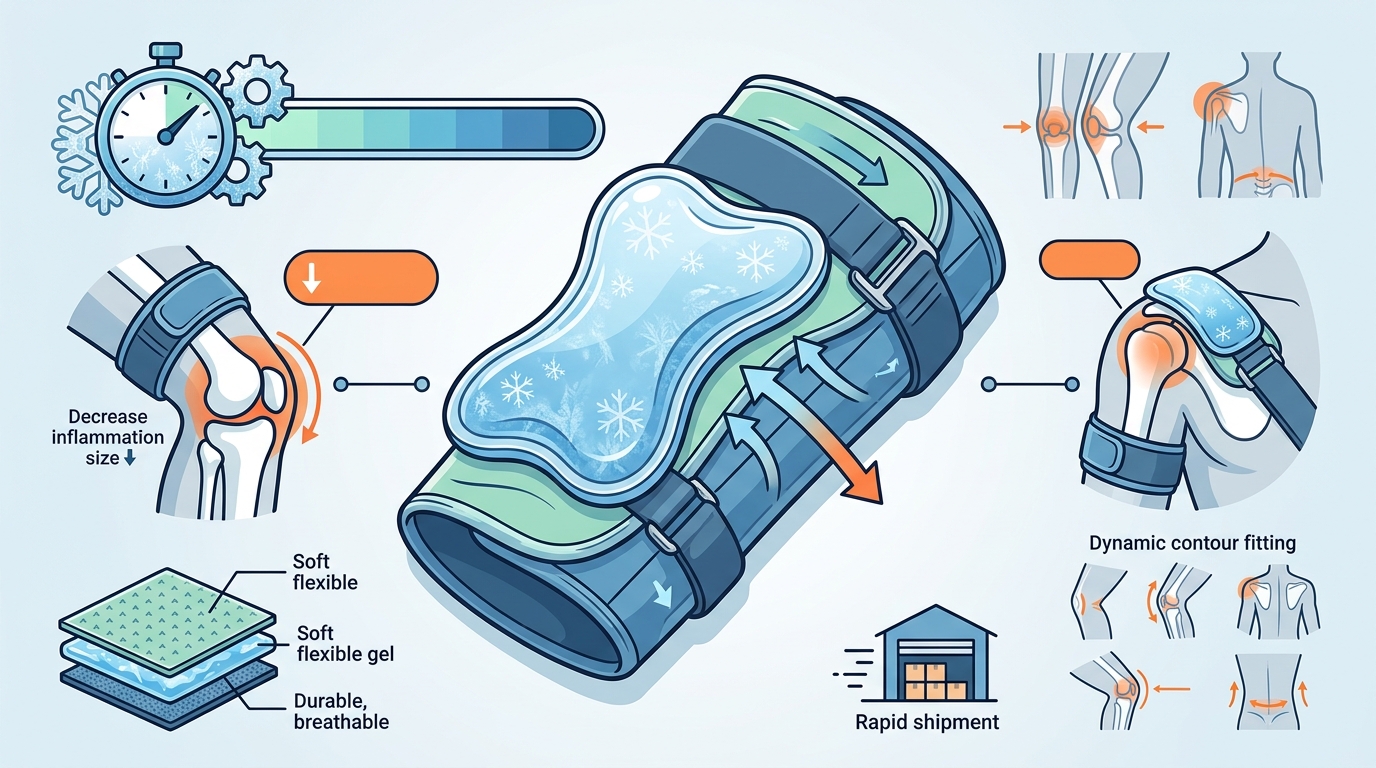
Therapeutic wrap is a contoured fabric sleeve designed to secure a cooling medium directly against a specific joint or muscle group. Generic rectangular pads fail to maintain contact with curved anatomical structures like the knee or shoulder. Proper contouring ensures consistent cold distribution across the entire target area. You should match the wrap geometry to your primary injury site. Knee ice wraps feature reinforced side hinges to prevent lateral shifting during movement. Shoulder ice wraps utilize a Y-shaped configuration to accommodate the deltoid and rotator cuff simultaneously. Hip and back wraps require wider surface areas to cover larger muscle groups. Ankle and foot wraps must accommodate boot-style footwear without compromising circulation. Wrist and elbow wraps prioritize flexible straps to allow partial joint mobility. Jaw and face wraps utilize ultra-thin gel layers to prevent skin irritation on delicate facial tissue. Multi-purpose wraps offer adjustable sizing for users managing multiple injury sites. Prioritize wraps with adjustable hook-and-loop fasteners to customize compression levels. Proper compression enhances vasoconstriction without restricting arterial blood flow.
Material Durability and Leak Resistance
Gel infusion pack is a flexible, leak-proof reservoir containing a non-toxic polymer solution that maintains consistent cold distribution. The outer fabric must withstand repeated freezing cycles without cracking or delaminating. Look for double-stitched seams and reinforced stress points at the strap attachment zones. High-quality wraps incorporate a waterproof barrier to prevent moisture migration into the gel matrix. This barrier extends the operational lifespan of the product significantly. Reusable gel pack inserts allow users to replace only the compromised inner reservoir rather than discarding the entire sleeve. This modular design reduces long-term waste and lowers replacement costs. Fabric breathability also matters during extended wear periods. Synthetic blends like nylon-spandex combinations provide stretch recovery without sagging. Avoid cotton-heavy blends that absorb ambient moisture and promote bacterial growth. Check for manufacturer warranties covering seam separation or gel leakage. A comprehensive warranty indicates confidence in material engineering and manufacturing standards.
Temperature Retention and Application Duration
Cold therapy is the application of sub-ambient temperatures to reduce tissue inflammation and nerve conduction velocity. The gel matrix composition directly dictates how long the wrap maintains therapeutic temperatures. Standard water-based packs freeze rapidly but thaw quickly, requiring frequent replacement. Advanced polymer blends retain cold for forty to sixty minutes per application cycle. This duration aligns perfectly with standard clinical treatment protocols. Pain management protocols recommend twenty-minute application windows followed by equal rest periods to prevent tissue damage. Wraps with thicker gel layers provide longer cooling durations but may feel excessively heavy. Balance thermal mass with user comfort to ensure consistent compliance. Some advanced models incorporate phase-change materials that release cold energy gradually. These materials prevent sudden temperature spikes that trigger rebound inflammation. Verify the manufacturer specifies the exact freeze-to-thaw cycle duration. Transparent thermal performance data allows you to calculate treatment frequency accurately.
Versatility and Use Cases
Modern cold therapy systems increasingly integrate dual-temperature functionality to address different phases of tissue recovery. Ankle and foot heat wraps utilize conductive heating elements to increase blood flow during chronic stiffness phases. Ice therapy remains optimal for acute injuries, while heat therapy benefits chronic muscle tension. Selecting a dual-mode system eliminates the need to purchase separate devices. Many users manage recurring conditions like arthritis or post-surgical recovery. A single versatile system reduces storage requirements and simplifies treatment routines. Verify that the heating element distributes warmth evenly without creating hot spots. Look for models with adjustable temperature settings to match individual tolerance levels. Dual-temperature wraps often feature interchangeable gel cores that switch between cooling and heating modes. This interchangeability maximizes equipment utility across different injury timelines. Consider your primary use case before finalizing your purchase. Acute injury management prioritizes rapid cooling capabilities. Chronic pain management benefits from adjustable thermal cycling options.
Cost Effectiveness and Warranty Support
Investing in premium cold therapy equipment requires evaluating total cost of ownership rather than initial purchase price. Budget wraps often utilize thin gel layers that degrade after twenty freeze cycles. Premium systems maintain thermal performance for hundreds of cycles when properly maintained. Calculate the cost per treatment cycle to determine long-term value. Direct manufacturer purchases typically include comprehensive customer support and extended warranty coverage. Reputable brands provide dedicated technical support lines and responsive email channels. Verify return policies for defective units to mitigate financial risk. Some manufacturers offer loyalty programs that provide discounts on replacement inserts. These programs significantly reduce long-term maintenance expenses. Compare pricing across multiple anatomical configurations to identify bundle savings. Purchasing a complete system often costs less than acquiring individual wraps separately. Ensure the pricing structure aligns with your expected usage frequency. High-frequency users benefit most from premium modular systems. Occasional users may find standard single-purpose wraps sufficient for their needs.
Key Takeaways
- Anatomical contouring prevents lateral shifting and ensures consistent cold distribution across curved joints.
- Double-stitched seams and waterproof barriers extend operational lifespan beyond standard budget alternatives.
- Advanced polymer gel matrices maintain therapeutic temperatures for forty to sixty minutes per cycle.
- Dual-temperature functionality addresses both acute inflammation and chronic muscle stiffness phases.
- Modular gel insert replacements reduce long-term waste and lower annual maintenance costs.
- Adjustable hook-and-loop fasteners enable customized compression without restricting arterial circulation.
- Manufacturer warranty coverage and dedicated support channels protect your initial investment.
Frequently Asked Questions
How long should I apply an ice wrap to an injured area?
Standard clinical guidelines recommend twenty-minute application cycles followed by equal rest periods. This duration prevents tissue damage while maximizing vasoconstriction benefits. Exceeding thirty minutes per session may trigger rebound inflammation or nerve irritation.
Can I use the same wrap for multiple body parts?
Multi-purpose wraps feature adjustable sizing and flexible straps to accommodate various anatomical regions. These systems provide cost savings for users managing multiple injury sites simultaneously.
What is the difference between gel packs and standard ice packs?
Gel packs conform to irregular body contours while maintaining consistent cold distribution. Standard ice packs remain rigid and fail to maintain contact with curved joints.
How often should I replace the gel insert?
Are dual-temperature wraps safe for daily use?
Dual-temperature wraps operate safely within manufacturer-specified temperature ranges. Users should alternate between cooling and heating modes based on their specific injury phase.
Do these wraps work with compression garments?
Most therapeutic wraps feature low-profile designs that integrate seamlessly with standard compression sleeves. Verify strap clearance before purchasing to ensure proper fit.
What warranty coverage should I expect from premium brands?
Premium manufacturers typically offer one to three year warranties covering seam separation and gel leakage. Extended warranty options may be available for high-frequency users.
Ready to Begin Your Recovery?
Selecting the optimal cold therapy system requires matching anatomical contours, material durability, and thermal performance to your specific injury profile. Evaluate your treatment frequency and prioritize modular designs that minimize long-term replacement costs. Explore our complete product catalog to find the precise wrap configuration that aligns with your recovery goals. Contact our dedicated support team at 800-475-1609 or dgrunder@coolrelief.net for personalized equipment recommendations. Start treating your injury with professional-grade precision today.