

Chronic inflammation and acute soft tissue injuries affect millions of people annually, often leading to prolonged downtime and increased medical costs. According to data from the American Academy of Orthopaedic Surgeons, proper cold therapy can significantly reduce swelling and pain in the first 48 hours after an injury. This guide explores how compression ice wraps outperform traditional ice packs by combining thermal regulation with mechanical pressure to accelerate healing. (Products ndash Ice Wraps)
What Are Compression Ice Wraps?
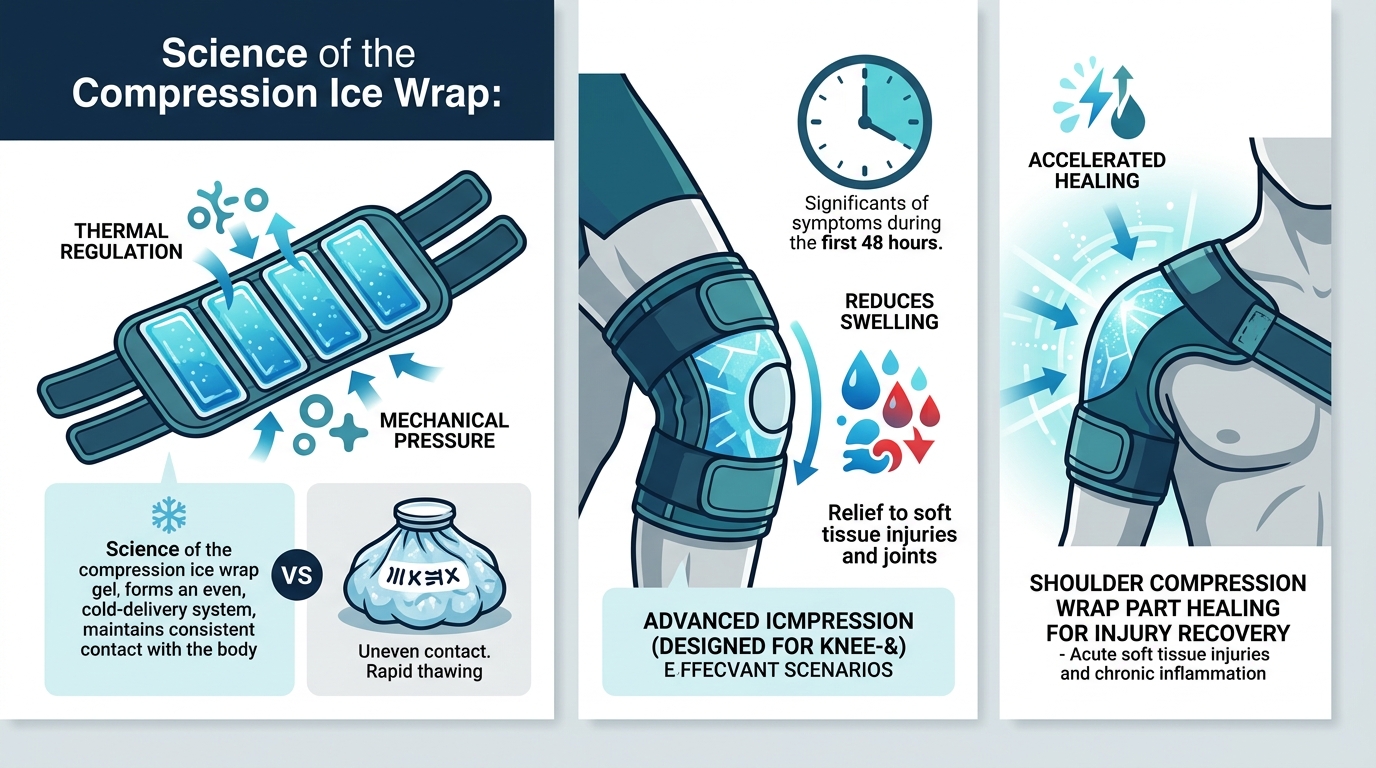
A compression ice wrap is a specialized therapeutic device designed to deliver cold therapy while simultaneously applying consistent pressure to an injured area. Unlike standard gel packs that simply sit on the skin, these wraps utilize elastic straps or sleeves to maintain contact and restrict fluid accumulation. Cold therapy is the application of low temperatures to the body to reduce inflammation and numb pain. This dual-action approach addresses both the thermal and mechanical aspects of acute injury response.
These devices typically contain reusable gel inserts that can be frozen to specific temperatures. The outer shell is often made from breathable, moisture-wicking materials to ensure comfort during extended wear. By conforming to the body's contours, they provide targeted relief where it is needed most, making them essential for athletes and individuals recovering from surgery.
The Physiological Benefits of Cold Therapy
Understanding the biological mechanisms behind cold therapy helps explain why compression ice wraps are so effective. When applied to injured tissue, the cold causes vasoconstriction, which is the narrowing of blood vessels. This process reduces blood flow to the area, thereby limiting the amount of fluid that leaks into the surrounding tissues. Vasoconstriction is the physiological response where blood vessels narrow to reduce blood flow.
Reducing blood flow directly correlates to a decrease in swelling, also known as edema. Less swelling means less pressure on nerve endings, which results in immediate pain relief. Furthermore, cold temperatures slow down the metabolic rate of the injured cells, reducing their oxygen demand and preventing further tissue damage. This is particularly critical in the acute phase of an injury, typically the first 72 hours.
Additionally, the numbness induced by cold therapy helps break the pain-spasm cycle. When muscles are injured, they often tighten up to protect the area, leading to secondary pain. By numbing the area, the wrap allows muscles to relax, facilitating a faster return to normal function.
Compression vs. Traditional Ice Packs
While traditional ice packs are widely available, they lack the mechanical advantage of compression. Traditional packs often slide off the body, lose contact quickly, and fail to limit fluid buildup effectively. In contrast, compression wraps maintain consistent pressure, which is crucial for managing edema.
| Feature | Traditional Ice Pack | Compression Ice Wrap |
|---|---|---|
| Pressure Application | None | Consistent, adjustable pressure |
| Conformity | Poor, slides off easily | High, fits body contours |
| Swelling Reduction | Moderate | High, due to combined cold and pressure |
| Hands-Free Use | Requires holding or taping | Yes, via elastic straps |
| Reusability | Often single-use or limited | Highly reusable with gel inserts |
The ability to keep hands free is a significant advantage for daily activities. Whether you are working at a desk or performing light rehabilitation exercises, a compression wrap stays in place without constant adjustment. This consistency ensures that the therapeutic benefits are delivered continuously throughout the day.
Key Injury Areas for Ice Wrap Application
Different body parts require different approaches to cold therapy. The versatility of compression ice wraps makes them suitable for a wide range of injuries. Edema is the medical term for swelling caused by excess fluid trapped in your body's tissues. Managing this swelling is critical for joints and extremities where space is limited.
Knee Injuries
The knee is one of the most common sites for acute injuries, such as ligament tears and meniscus damage. A knee ice wrap provides circumferential compression, which helps stabilize the joint while reducing inflammation. This is particularly useful for post-surgical recovery, where swelling can impede mobility.
Ankle Sprains
Ankle sprains are prevalent in both athletic and everyday settings. The complex anatomy of the ankle requires a wrap that can conform to the curves of the foot and lower leg. Compression helps prevent the ankle from rolling further while the cold therapy reduces the initial shock and pain.
Shoulder and Back Pain
While often associated with acute trauma, shoulder and back pain can also benefit from cold therapy. In cases of acute muscle strains or post-workout inflammation, a shoulder ice wrap or back heat wrap can provide targeted relief. The compression helps to hold the gel pack in place against the curved surface of the back or shoulder blade.
Optimal Usage Protocols
To maximize the benefits of compression ice wraps, it is essential to follow proper usage guidelines. Overuse can lead to tissue damage, while underuse may not provide sufficient relief. RICE is an acronym that stands for Rest, Ice, Compression, and Elevation, which is a standard first-aid protocol for acute injuries.
Apply the ice wrap for 15 to 20 minutes at a time. This duration is long enough to penetrate the tissue and induce vasoconstriction but short enough to prevent ice burns or nerve damage. Allow the skin to return to normal temperature between applications, typically waiting at least one hour before reapplying.
Always place a thin barrier, such as a towel, between the ice wrap and your skin if the wrap is extremely cold. This protects the skin from direct contact with freezing temperatures. Elevating the injured area above the heart level can further enhance the reduction of swelling by using gravity to drain excess fluid.
Key Takeaways
- Dual Action: Compression ice wraps combine cold therapy with mechanical pressure for superior swelling reduction.
- Vasoconstriction: Cold therapy narrows blood vessels, reducing blood flow and inflammation in injured tissues.
- Edema Management: Consistent compression prevents fluid accumulation, which is critical for joint recovery.
- Versatility: These wraps are effective for knees, ankles, shoulders, and back injuries.
- Hands-Free Convenience: Elastic straps allow for continuous therapy without manual holding.
- Reusability: Reusable gel pack inserts make these wraps a cost-effective long-term solution.
- Protocol: Limit application to 15-20 minutes per session to avoid tissue damage.
Frequently Asked Questions
How often should I use a compression ice wrap?
You should use a compression ice wrap every 2 to 3 hours during the first 48 to 72 hours after an injury. This frequency ensures that inflammation is kept under control while the body begins the healing process.
Can I use a compression ice wrap on a fresh injury?
Yes, compression ice wraps are ideal for fresh injuries. They help minimize the initial swelling and pain response, which can lead to a faster overall recovery time compared to using heat or no treatment.
Are compression ice wraps safe for sensitive skin?
Most compression ice wraps are made from hypoallergenic materials. However, it is always recommended to place a thin cloth barrier between the wrap and your skin to prevent direct contact with freezing temperatures.
What is the difference between a heat wrap and an ice wrap?
Ice wraps are used for acute injuries to reduce swelling and numb pain. Heat wraps are used for chronic pain and muscle stiffness to increase blood flow and relax muscles. Using the wrong type can worsen certain conditions.
How long do the gel inserts last?
High-quality gel inserts are designed to be reusable for years. They maintain their flexibility and cooling properties through repeated freezing and thawing cycles, making them a durable investment in your health.
Can I sleep with a compression ice wrap on?
It is generally not recommended to sleep with an ice wrap on. Prolonged exposure to cold can cause nerve damage or skin irritation. It is safer to apply the wrap for set intervals while awake.
Do compression ice wraps help with post-surgical recovery?
Yes, they are commonly prescribed by surgeons to manage post-operative swelling and pain. The consistent pressure helps prevent fluid buildup around the surgical site, promoting a smoother recovery.
Start Your Recovery Today
Recovering from an injury requires the right tools and knowledge. Compression ice wraps offer a proven, effective method for managing pain and swelling. Explore our full range of therapeutic products to find the perfect solution for your needs. Visit our Pain Relief Guide for more expert advice on injury management. Shop now to begin your journey to faster recovery.