

Optimal Hip Gel Pack Positioning for Comfort and Relief
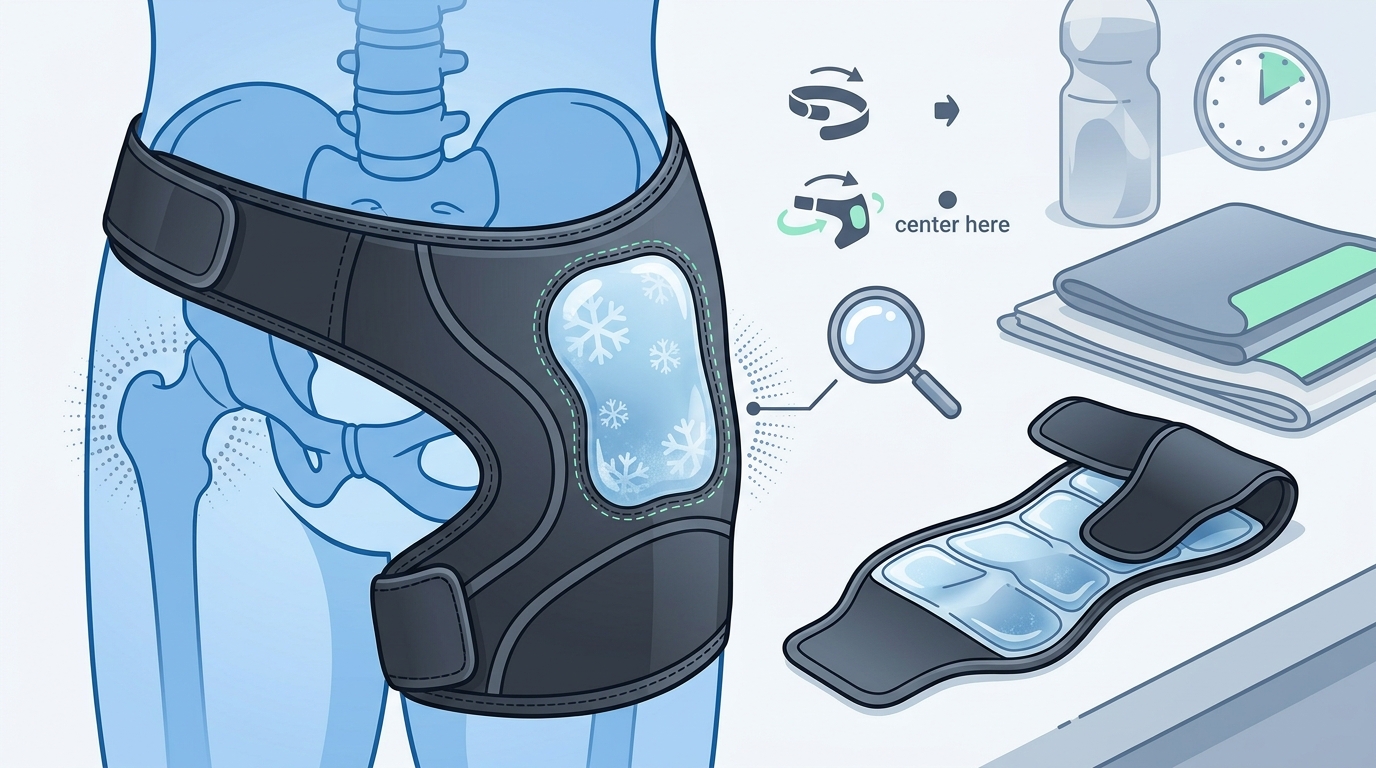
The best way to position a gel pack on your hip is to center it directly over the painful area, typically the greater trochanter or the groin, and secure it with a flexible wrap. This ensures consistent cold contact without excessive pressure. At Cool Relief, we design our hip ice wraps to conform to the body's natural curves, allowing you to achieve this precise positioning with minimal effort and maximum comfort. For additional details, review the coolrelief net.
Anatomical Targets for Hip Pain
Effective cold therapy requires targeting the specific source of discomfort. Hip pain often originates from the greater trochanter, the bony prominence on the outer side of the hip, or from the groin area where the hip joint is located. Greater trochanteric pain syndrome is a condition characterized by inflammation of the bursa or tendons on the outer hip. Identifying whether your pain is lateral (outer) or medial (inner) determines where you should place the ice. For additional details, review the Customer Experience.
For outer hip pain, position the gel pack directly over the bony point. For groin or joint pain, place it in the crease of the hip. Misalignment can lead to uneven cooling and reduced therapeutic effect. By mapping the pain to a specific anatomical landmark, you ensure the cold reaches the inflamed tissue rather than just the surrounding muscle. For additional details, review the Frequently Asked Questions.
The Role of Flexibility in Wrap Design
Standard ice packs are rigid and often fail to stay in place on curved body parts. Flexible compression wraps are designed to mold to the body, maintaining consistent pressure and contact. This is critical for the hip, which is a complex, multi-directional joint. A rigid pack may slide down or create pressure points, leading to discomfort and the need for frequent repositioning. For additional details, review the About.
Cool Relief ice wraps are engineered with soft, flexible gel that remains pliable even when frozen. This flexibility allows the wrap to hug the hip's contour, ensuring that the cold gel stays in contact with the skin. The compression component also helps reduce swelling by limiting fluid accumulation in the tissues. This dual action of cooling and compression is more effective than using a loose bag of ice.
Securing the Wrap for Stability
Once the gel pack is positioned, securing it properly is essential for sustained relief. Use the adjustable straps to fasten the wrap snugly but not tightly. The goal is to hold the pack in place without cutting off circulation or causing numbness. If the wrap feels too tight, loosen it slightly. If it slides, tighten it just enough to keep it centered.
For the hip, you may need to adjust the strap length to accommodate your body size. A well-fitted wrap should feel secure during light movement. If you are sitting or lying down, ensure the wrap does not shift when you change positions. Stability is key to allowing the cold therapy to work uninterrupted for the recommended duration.
Duration and Frequency of Application
Cold therapy is most effective when applied in controlled intervals. Apply the ice wrap for 15 to 20 minutes at a time. After each session, remove the wrap and allow the skin to return to normal temperature for at least 20 minutes before reapplying. This prevents frostbite and allows the tissue to recover between sessions.
You can repeat this cycle up to three times a day. Consistency is more important than duration. Short, frequent applications provide better long-term relief than one long, intense session. Always place a thin cloth between the ice and your skin if you have sensitive skin, although Cool Relief wraps are designed to be skin-safe.
Key Takeaways
- Center the gel pack over the specific pain point, such as the greater trochanter or groin.
- Use a flexible wrap to ensure consistent contact with the curved hip area.
- Secure the wrap snugly to prevent sliding without restricting blood flow.
- Apply ice for 15 to 20 minutes, followed by a 20-minute break.
- Repeat the cycle up to three times daily for optimal results.
- Choose a wrap that fits your body size to maintain stability.
Frequently Asked Questions
Where exactly should I place the ice on my hip?
Place the ice directly over the area of pain. For outer hip pain, center it on the bony prominence. For groin pain, place it in the hip crease.
How tight should the hip ice wrap be?
The wrap should be snug enough to hold the pack in place but loose enough to allow normal blood circulation. You should not feel numbness or tingling.
Can I use a hip ice wrap while sleeping?
It is generally not recommended to use ice therapy while sleeping due to the risk of frostbite from prolonged, unmonitored contact. Use it while awake for controlled sessions.
How long does the Cool Relief hip wrap stay cold?
Cool Relief wraps are designed to stay cold for extended periods, typically several hours, depending on the environment and how it is stored.
Should I use a cloth barrier with the ice wrap?
If you have sensitive skin, you may use a thin cloth barrier. However, Cool Relief wraps are designed to be safe for direct skin contact.