
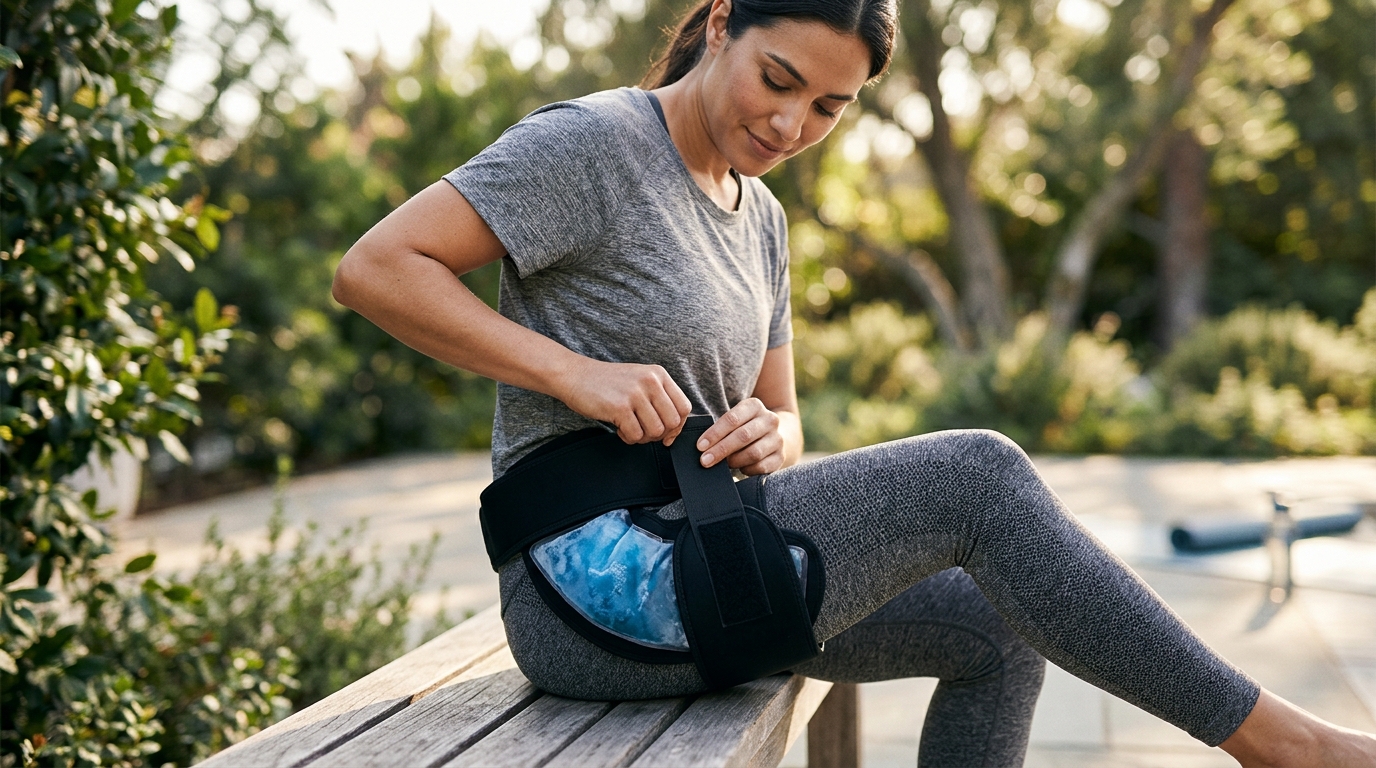
Proper strap tension is the single most important factor in the effectiveness of any cold therapy session. If the straps are too loose, the ice pack shifts and fails to target the injured tissue. If they are too tight, you risk restricting blood flow and causing discomfort. Cool Relief hip ice wraps are designed with flexible, adjustable straps to help you find the perfect balance between secure coverage and comfortable wear.
1. Start with a Baseline Fit
Begin with the straps at their loosest setting to establish a neutral starting point. Before applying any tension, ensure the ice pack is centered over the specific area of pain or inflammation. This baseline allows you to add tension gradually rather than trying to loosen a strap that is already too tight. A neutral start prevents the common mistake of over-tightening during the initial application.
2. Use the Quick-Release Buckle
3. Adjust for Body Position
Modify strap tension based on whether you are sitting, standing, or lying down. Your hip joint changes shape and position depending on your posture. A strap that feels secure while sitting may become too tight when you stand up. Conversely, it may slip when you lie on your side. Adjust the straps to accommodate your current position to maintain consistent contact with the skin.
4. Check for Pressure Points
Ensure the straps are not digging into sensitive areas or creating uneven pressure. Run your fingers under the straps to check for any pinching or excessive tightness. The compression should feel firm but not painful. If you feel numbness or tingling, the straps are too tight and need to be loosened immediately to prevent nerve compression.
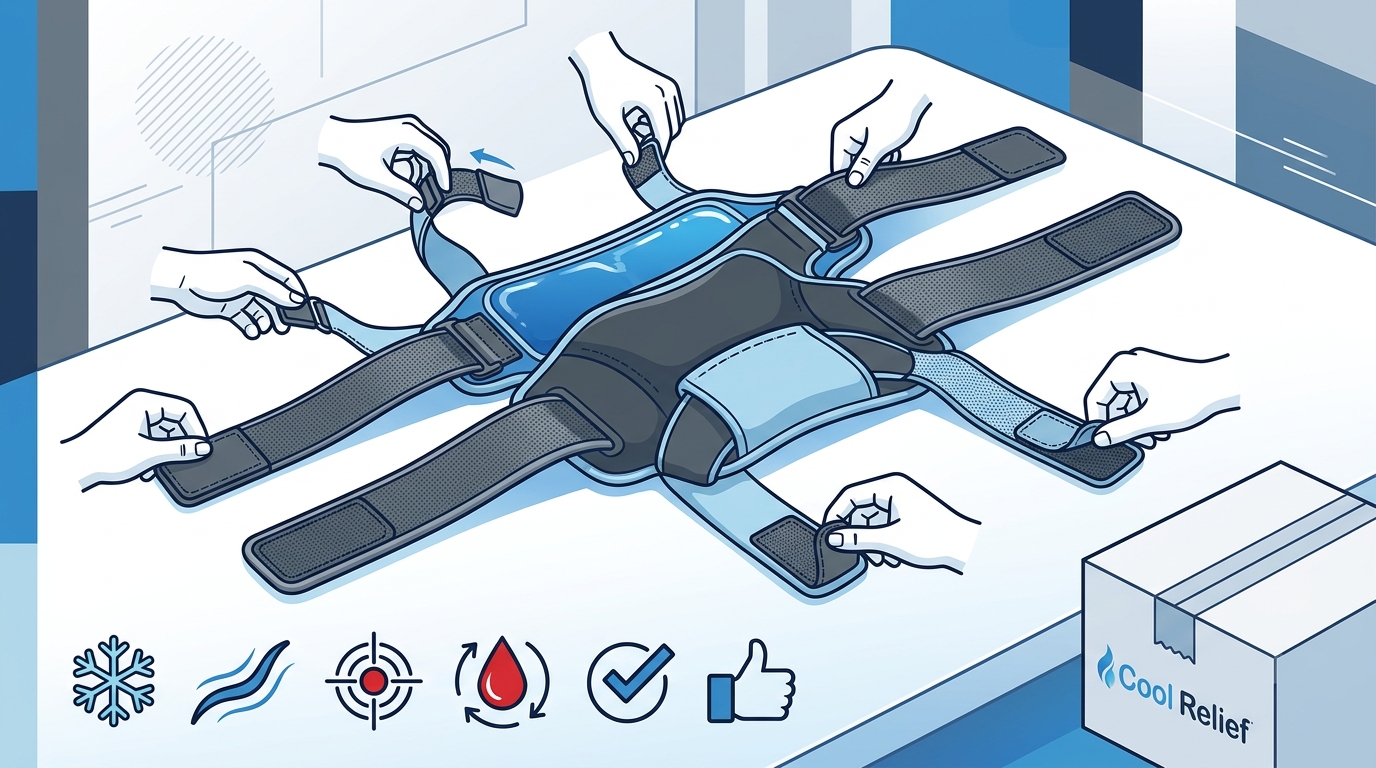
5. Secure with Secondary Straps
Use any secondary or stabilizing straps to lock in the primary fit. Some hip wraps include additional straps that help keep the main ice pack in place during movement. Once you have the primary straps at the correct tension, use these secondary straps to prevent shifting. This adds stability without requiring you to tighten the main straps further.
6. Test Range of Motion
Perform gentle hip movements to ensure the wrap does not restrict natural motion. Slowly bend and extend your hip, and rotate your leg slightly. The wrap should move with your body without pulling or chafing. If the straps restrict your movement, loosen them until you can move comfortably. Cold therapy should not immobilize you completely unless directed by a medical professional.
7. Reassess After 15 Minutes
Check the fit again after the initial 15 minutes of cold therapy. As the ice melts and the gel pack softens, the wrap may shift or feel different. Reassess the strap tension to ensure the ice pack remains in the correct position. This simple check ensures you continue to receive targeted relief throughout the entire session.
Choosing the Right Tension
The ideal strap tension is firm enough to keep the ice pack in place but loose enough to allow for comfortable movement and normal blood flow. If you are unsure, err on the side of slightly looser. You can always tighten the straps, but it is harder to loosen them if they are too tight.
Frequently Asked Questions
How tight should hip wrap straps be?
Straps should be firm enough to hold the ice pack securely against the skin but not so tight that they cause pain, numbness, or restrict movement. You should be able to slide a finger under the strap comfortably.
What if the ice pack keeps shifting?
If the pack shifts, tighten the straps slightly or use any secondary stabilizing straps provided. Ensure the pack is centered over the target area before adjusting the tension.
Can I wear a hip wrap while sleeping?
It is generally not recommended to wear a compression ice wrap while sleeping unless specifically advised by a doctor. The straps may become too tight as your body shifts, potentially restricting circulation.
How often should I adjust the straps?
Check the fit every 15 to 20 minutes. As the ice melts, the pack may shift, requiring minor adjustments to maintain proper coverage and comfort.
Do I need to remove the wrap to adjust the straps?
No, most wraps, including those from Cool Relief, are designed with quick-release buckles that allow you to adjust tension without removing the entire wrap. Learn more: How to contact Cool.