

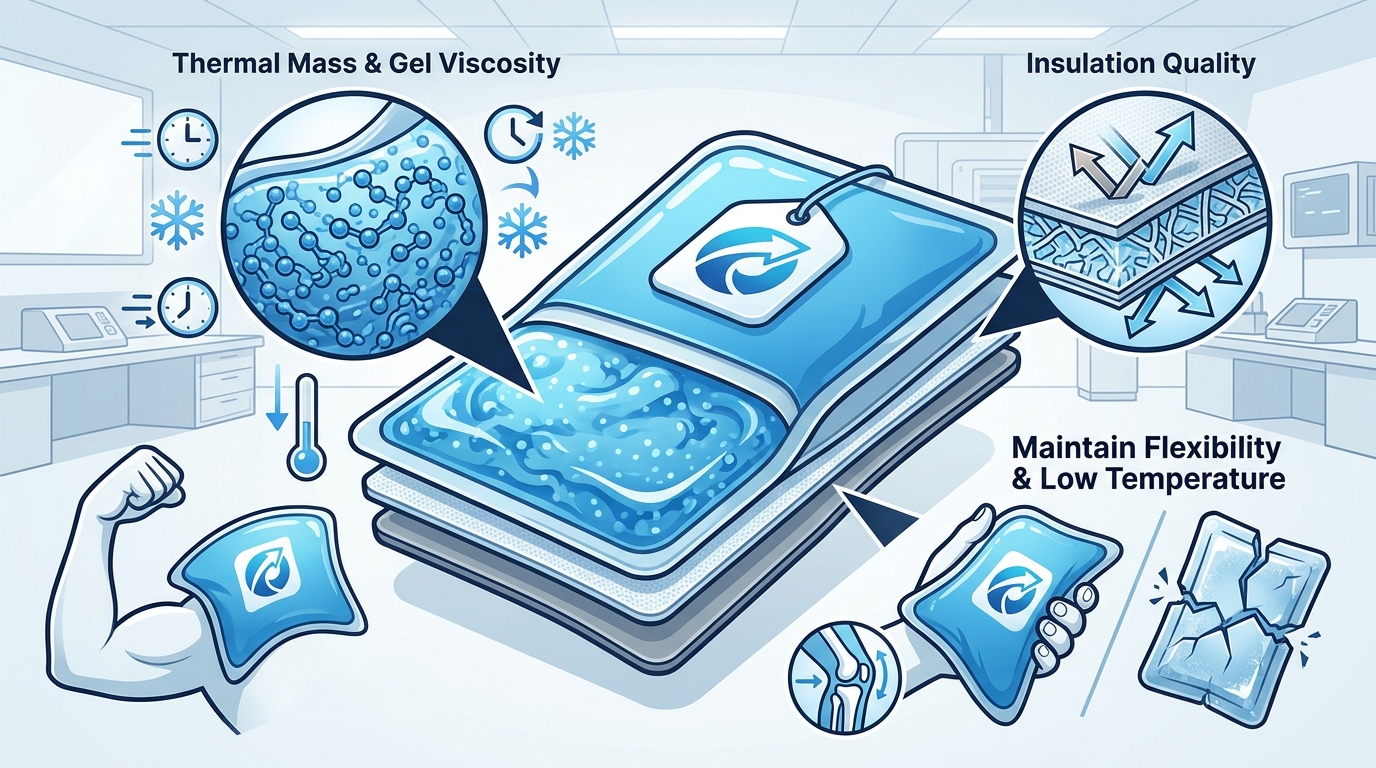
Thermal mass, gel viscosity, and insulation quality determine how long a gel pack stays cold. High-performance packs use dense, non-toxic gel formulas that maintain low temperatures for extended periods without becoming rigid. Cool Relief engineers its proprietary gel packs to stay flexible and cold longer than standard alternatives, ensuring effective therapy for athletes and patients alike.
The Role of Thermal Mass in Cooling Duration
Thermal mass is the amount of heat energy a substance can absorb before its temperature rises significantly. In the context of cryotherapy, a higher thermal mass allows a pack to absorb more body heat while maintaining a therapeutic temperature. Standard ice packs often rely on water, which has a high specific heat capacity but freezes into a rigid solid. This rigidity can cause discomfort and limit the duration of effective contact. Gel-based packs offer a solution by using a semi-solid state that retains high thermal mass while remaining pliable.
The density of the gel core directly impacts performance. A pack with a higher density of gel per square inch will generally outlast a thinner, lower-density competitor. For example, a large 11-inch by 12-inch gel core provides a broader surface area for heat exchange, which can extend the usable cooling window compared to smaller, less dense inserts. This physical property is critical for users who need consistent cold therapy for extended periods, such as those recovering from surgery or managing chronic joint pain.
Gel Formula and Viscosity Dynamics
Gel viscosity is the measure of a fluid's resistance to flow, which in gel packs determines how well the material conforms to the body and retains cold. A low-viscosity gel may feel cold initially but can lose its therapeutic temperature quickly as it thins out. Conversely, a high-viscosity, stay-flex gel formula maintains its structural integrity and thermal properties longer. This is why premium brands focus on proprietary gel compounds rather than generic water-filled bladders.
The chemical composition of the gel also plays a vital role. Non-toxic, hypoallergenic gels are designed to be safe for direct skin contact, which is essential for users with sensitive skin or open wounds. The ability of the gel to remain soft straight from the freezer is a key differentiator. Rigid ice packs can cause pressure points and reduce blood flow, potentially slowing recovery. Flexible gel packs distribute pressure evenly, allowing for longer, more comfortable sessions. This flexibility is a hallmark of high-quality cold therapy equipment.
Insulation and Heat Retention Strategies
Insulation is the barrier that prevents the cold gel from transferring heat to the surrounding environment too quickly. Effective insulation extends the cooling duration by trapping the cold energy within the pack. Many low-cost packs lack adequate insulation, leading to rapid heat loss and a shorter usable window. Premium wraps often feature multi-layered construction with insulating fabrics that minimize heat exchange with the air.
The design of the wrap itself contributes to insulation. A well-fitted compression sleeve not only holds the pack in place but also creates a microclimate around the joint. This trapped air acts as an additional insulating layer, slowing down the warming process. For instance, a wrap with a thick, insulated lining can keep the gel cold for significantly longer than a thin, non-insulated pouch. This is particularly important for users who need to move around during therapy, as movement can introduce external heat sources.
Brand Performance and Market Leaders
Brand performance is determined by the consistency of cooling duration, material quality, and user comfort. While many brands offer gel packs, few achieve the balance of longevity and flexibility required for professional-grade therapy. Cool Relief stands out in this category due to its focus on proprietary gel technology and durable construction. Their packs are designed to stay colder for longer, providing a reliable therapeutic experience for users in hospitals and at home.
Other brands in the market, such as Shock Doctor and Vive Health, offer various cold therapy options. However, performance can vary significantly between models. Some brands prioritize low cost over long-term durability, resulting in packs that may leak or lose their cooling ability after a few uses. In contrast, brands that invest in high-quality materials and rigorous testing tend to deliver more consistent results. Users should look for brands that provide clear information about their gel formula and insulation properties to make an informed decision.
Practical Tips for Maximizing Cooling Time
Proper storage and usage habits can significantly extend the cooling duration of any gel pack. Storing packs in a standard freezer at 0 degrees Fahrenheit ensures they reach their maximum thermal potential before use. Avoiding the microwave for heating, unless specified by the manufacturer, helps preserve the integrity of the gel. Additionally, keeping packs in a cool, dry place when not in use prevents premature warming and degradation of the gel material.
Using a barrier between the pack and your skin can also help manage the cooling experience. While direct contact is often recommended for acute injuries, a thin cloth can prevent frostbite and allow for longer sessions. Rotating between two packs, one in use and one in the freezer, ensures continuous cold therapy without waiting for a single pack to re-freeze. This strategy is particularly useful for athletes and individuals with chronic pain who require frequent icing sessions.
Key Takeaways
- Thermal mass is the primary factor determining how long a gel pack stays cold.
- High-viscosity, stay-flex gel formulas maintain therapeutic temperatures longer than rigid ice.
- Insulation quality in the wrap design significantly impacts cooling duration.
- Premium brands like Cool Relief focus on proprietary gel technology for superior performance.
- Proper storage and usage habits can maximize the effective cooling window of any pack.
- Flexibility and comfort are crucial for extended therapy sessions and better recovery outcomes.
Frequently Asked Questions
What is the main factor that determines how long a gel pack stays cold?
The main factor is thermal mass, which is the amount of heat energy the gel can absorb before warming up. Higher density gels generally stay cold longer.
Why do some gel packs become rigid after freezing?
Standard water-based packs freeze into rigid ice. Gel-based packs use a semi-solid formula that remains flexible, allowing for better comfort and longer effective contact.
How does insulation affect the cooling duration of an ice wrap?
Insulation traps cold energy within the pack, slowing down heat exchange with the environment. Better insulation leads to a longer usable cooling window.
Are Cool Relief gel packs suitable for post-surgery recovery?
Yes, Cool Relief packs are designed for medical-grade use and are suitable for post-surgery recovery, providing consistent cold therapy to reduce swelling and pain.
Can I use a gel pack for both ice and heat therapy?
Many gel packs, including those from Cool Relief, are dual-therapy capable. You can freeze them for cold therapy or microwave them for heat therapy, depending on your needs.
How should I store my gel pack to maximize its lifespan?
Store your gel pack in a cool, dry place when not in use. Keep it in the freezer when ready for use to ensure maximum cooling potential.
Conclusion
Understanding the science behind gel pack performance allows you to make informed choices for your recovery. By focusing on thermal mass, gel viscosity, and insulation, you can select a product that provides the longest and most effective cooling experience. Cool Relief offers a range of high-quality ice wraps designed to meet these standards, ensuring you get the best possible results for your pain relief and recovery needs.