

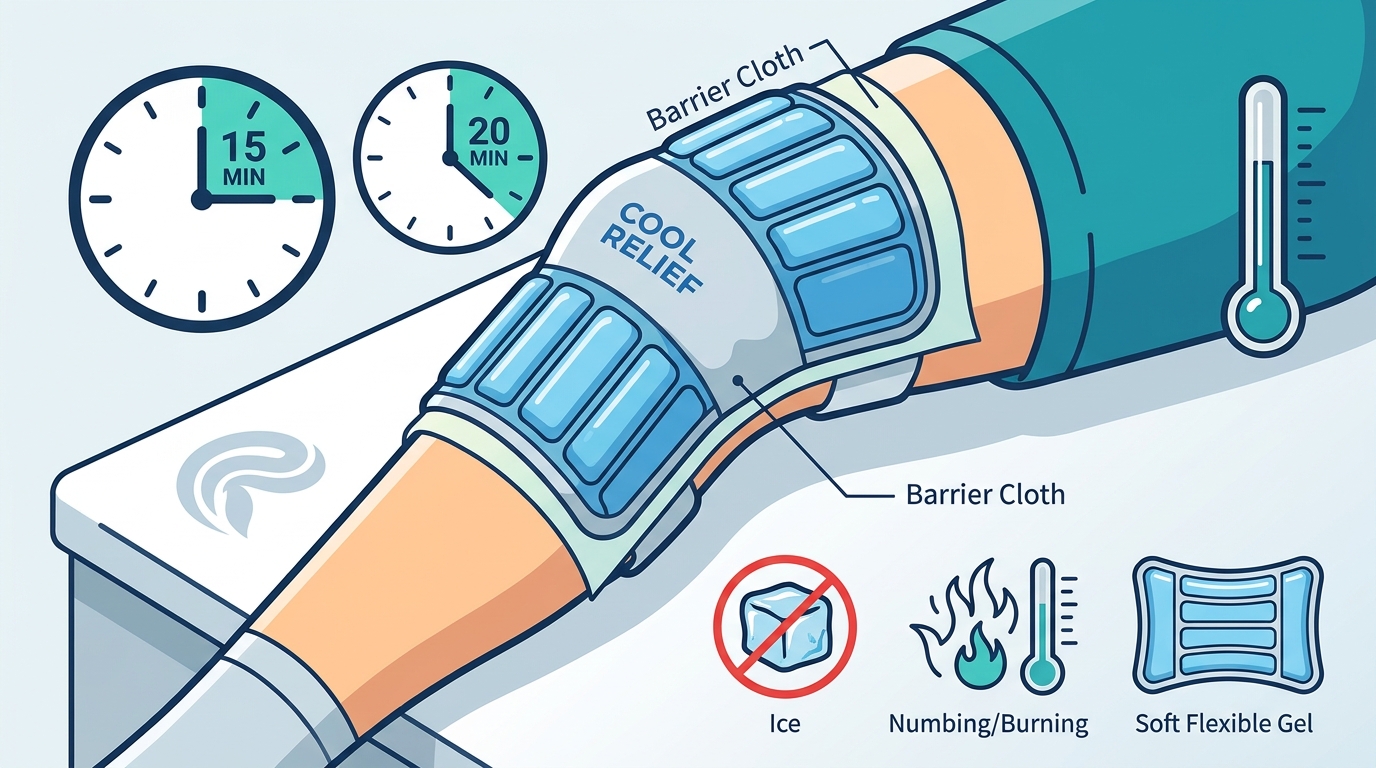
To safely use ice packs on your knee without frostbite, always place a thin barrier like a towel between the ice and your skin. Limit each session to 15 to 20 minutes. Never apply ice directly to bare skin, and stop immediately if you feel numbness or a burning sensation. Cool Relief knee ice wraps are designed with soft gel technology to distribute cold evenly, reducing the risk of cold injury while providing targeted relief.
Understanding Frostbite and Cold Injury
Frostbite is a condition where skin and underlying tissues freeze due to prolonged exposure to extreme cold. In the context of home therapy, this is often referred to as a cold burn or ice burn. It occurs when the temperature of the skin drops below the freezing point, causing ice crystals to form within the cells. This process damages the tissue and can lead to long-term nerve damage if not prevented.
The risk is higher when the ice pack is in direct contact with the skin for extended periods. Standard gel packs can reach temperatures as low as 0 degrees Fahrenheit, which is dangerous for unprotected skin. The knee is a particularly sensitive area because the skin over the patella is thin and has less subcutaneous fat to insulate the underlying bone and nerves. Understanding this mechanism is the first step in safe application.
Key Definition: Frostbite is the freezing of skin and underlying tissues, which can result in permanent damage if the exposure is too long or the temperature is too low without a protective barrier.
The Barrier Method: Your First Line of Defense
The single most effective way to prevent frostbite is to create a physical barrier between the ice and your skin. You do not need a specialized medical device for this; a standard cotton towel, a thin sock, or a piece of cloth works perfectly. This barrier slows the rate of heat transfer from your body to the ice pack, keeping the skin temperature in a safe range.
When using a wrap-style ice pack, the fabric of the wrap itself often provides a layer of protection. However, if the gel pack is very cold, you should still add a thin layer of clothing over it. For example, wearing a thin knee sleeve under the ice wrap can add an extra layer of insulation. This method ensures that the cold is applied gently rather than aggressively, allowing the therapeutic benefits of vasoconstriction without the risk of tissue freezing.
Key Definition: A thermal barrier is any material placed between the cold source and the skin that reduces the rate of heat loss, thereby preventing the skin temperature from dropping to dangerous levels.
Timing and Duration: The 20-Minute Rule
Time is the critical variable in safe icing. The general medical consensus is to limit cold therapy sessions to 15 to 20 minutes. After this period, the local blood vessels in the knee constrict significantly, reducing blood flow to the area. If you continue applying ice beyond this window, the tissue may become ischemic, meaning it is deprived of oxygen and nutrients, which increases the risk of injury.
Set a timer before you begin. Do not rely on how the knee feels, as the initial cooling sensation can mask the onset of numbness. Once the timer goes off, remove the ice pack immediately. Allow your knee to return to normal temperature before applying ice again. This cycle of cooling and rewarming is safer and more effective than prolonged, continuous exposure. Most people find that two or three sessions per day are sufficient for managing acute pain and swelling.
Recognizing Signs of Trouble
Your body sends clear signals when the cold is becoming harmful. The most common early sign is a change in skin color. If the skin over your knee turns white, waxy, or pale, remove the ice immediately. Another warning sign is a loss of sensation. If the area feels completely numb or if you experience a burning or stinging pain rather than a soothing cold, stop the session.
After removing the ice, observe the skin for any redness that does not fade within a few minutes. Persistent redness or a blister-like appearance indicates a cold burn. If you notice any of these signs, do not re-apply ice to that area for at least 24 hours. Seek medical attention if the skin remains discolored or if you experience persistent pain. Being vigilant about these signs is crucial for preventing long-term damage.
Key Definition: A cold burn is a type of skin injury caused by prolonged exposure to cold temperatures, characterized by redness, swelling, and sometimes blistering, which can mimic frostbite symptoms.
Choosing the Right Pack for Your Knee
Not all ice packs are created equal. Rigid, flat ice packs can create pressure points that increase the risk of cold injury. Flexible, gel-based wraps are generally safer because they conform to the shape of the knee, distributing the cold more evenly. This even distribution prevents localized hot spots of extreme cold that can occur with rigid packs.
When selecting a product, look for wraps that are designed specifically for the knee. These wraps often have adjustable straps that allow you to control the pressure and fit. A snug fit ensures the ice stays in place, but it should not be so tight that it cuts off circulation. Cool Relief offers a wide selection of knee-specific wraps that are engineered for comfort and safety. Using a product designed for your specific body part ensures that the cold therapy is both effective and safe.
Key Takeaways
- Always use a barrier, such as a towel or thin cloth, between the ice pack and your skin.
- Limit each icing session to 15 to 20 minutes to prevent tissue damage.
- Set a timer to ensure you do not exceed the safe duration.
- Stop immediately if you feel numbness, burning, or notice white, waxy skin.
- Choose flexible, gel-based wraps that conform to the knee for even cold distribution.
- Allow your knee to return to normal temperature between sessions.
- Consult a healthcare provider if you experience persistent skin changes or pain.
Frequently Asked Questions
How long can I leave an ice pack on my knee?
You should leave an ice pack on your knee for no more than 15 to 20 minutes. Leaving it on longer increases the risk of frostbite or cold burns. Always set a timer to keep track of the time.
Can I put ice directly on my skin?
No, you should never put ice directly on your skin. Always use a barrier like a towel or a thin piece of clothing to protect your skin from the extreme cold.
What should I do if my knee feels numb while icing?
If your knee feels numb, remove the ice pack immediately. Numbness is a sign that the cold is affecting your nerves and may be causing tissue damage. Wait for the sensation to return before considering another session.
Is it safe to ice my knee while sleeping?
No, it is not safe to ice your knee while sleeping. You may not wake up when the ice causes damage, leading to frostbite. Always ice while you are awake and can monitor the area.
How often can I ice my knee in a day?
You can ice your knee two to three times a day. Ensure there is a significant break between sessions, allowing your skin to return to its normal temperature and color.
What type of ice pack is safest for the knee?
Flexible, gel-based wraps are generally the safest for the knee. They conform to the shape of the joint and distribute cold evenly, reducing the risk of pressure points and cold burns.
Conclusion
Safe knee icing is about balance. You want the therapeutic benefits of cold therapy without the risk of frostbite. By using a barrier, limiting your time, and choosing the right equipment, you can protect your skin while managing pain. Cool Relief is dedicated to providing high-quality, safe cold therapy solutions. Explore their range of knee wraps to find the perfect fit for your recovery needs.