

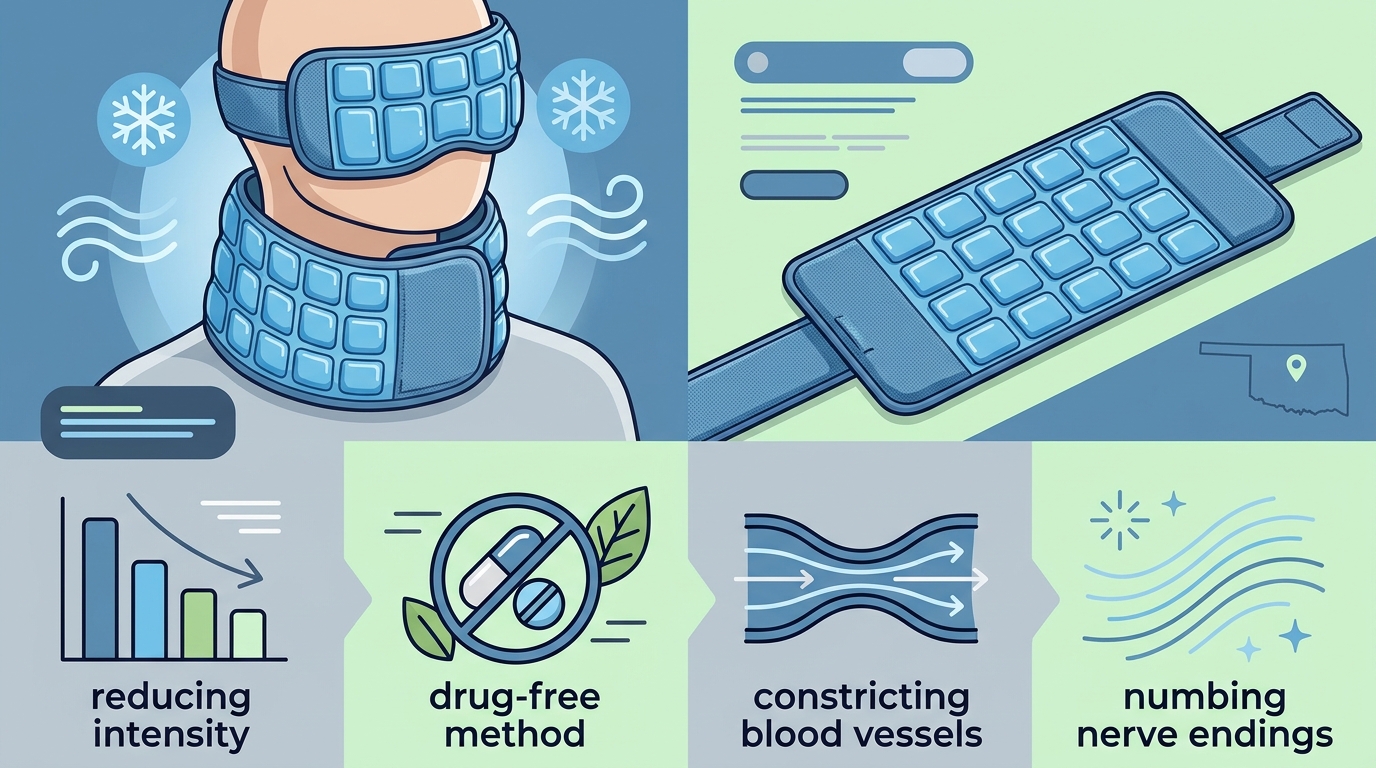
Applying a cold compress to the forehead or neck is a simple, drug-free method to reduce migraine intensity. Cool Relief designs flexible ice wraps that target these specific areas to help manage tension headaches and migraine pain naturally. By lowering local temperature, these wraps can constrict blood vessels and numb nerve endings, providing immediate comfort without medication.
The Science of Cold Therapy for Headaches
Cold therapy, or cryotherapy, is a non-pharmacological intervention used to manage pain. When applied to the head or neck, cold reduces the firing rate of pain signals. This process, known as counter-irritation, distracts the brain from the throbbing sensation of a migraine. The cold also causes vasoconstriction, which tightens blood vessels that may be inflamed during a migraine attack.
Research suggests that cold application can reduce the severity of headache pain. A study published in the Journal of Headache and Pain found that cold packs applied to the forehead or neck provided significant pain relief for many migraine sufferers. This physiological response is why Cool Relief focuses on creating wraps that maintain a consistent, safe temperature for extended periods.
Optimal Placement for Tension and Migraine Pain
Placement is critical for effective relief. For tension headaches, which often feel like a tight band around the head, the forehead and temples are primary targets. For migraines, which frequently involve neck tension, the nape of the neck is a key application zone. Cool Relief offers bandanas and wraps designed to be worn around the neck, forehead, or over the eyes, allowing you to target the specific area of discomfort.
Using a wrap that fits comfortably is essential. A wrap that is too loose may not stay in place, while one that is too tight can increase pressure and worsen pain. The flexible straps on Cool Relief products allow for adjustable tension, ensuring the cold is delivered directly to the affected muscles and nerves without causing additional strain.
How Long to Apply Ice for Maximum Effect
Duration matters as much as placement. Most experts recommend applying cold therapy for 15 to 20 minutes at a time. This duration is long enough to trigger vasoconstriction and numb pain but short enough to prevent tissue damage from prolonged cold exposure. After 20 minutes, remove the wrap and allow the skin to return to normal temperature for at least 20 minutes before reapplying.
Reusable gel packs, like those from Cool Relief, are ideal for this cycle because they stay cold longer than standard ice bags. The gel material maintains a consistent temperature, avoiding the extreme cold of melting ice that can cause ice burn. This consistency allows for safer, more predictable relief during a headache episode.
Integrating Cold Therapy into Your Routine
Cold therapy is most effective when used as part of a broader headache management strategy. It works well alongside other natural remedies, such as hydration, rest in a dark room, and stress reduction techniques. Keeping a headache diary can help you identify triggers and determine if cold therapy provides consistent relief for your specific type of headache.
Safety Considerations and Precautions
While cold therapy is generally safe, it is important to use it correctly. Never apply ice directly to the skin without a barrier, as this can cause frostbite or ice burn. Always use a wrap or cloth between the cold pack and your skin. If you have cold urticaria, a condition where cold triggers hives, consult a doctor before using cold therapy.
Listen to your body. If the cold increases your pain or causes numbness that persists after removal, stop using the wrap. Cool Relief emphasizes the importance of comfort and safety in their product design, ensuring that their wraps are soft, flexible, and safe for repeated use. Proper use of cold therapy can be a powerful tool in your migraine management toolkit.
Key Takeaways
- Cold therapy reduces migraine pain by constricting blood vessels and numbing nerve endings.
- Apply ice wraps to the forehead, temples, or neck for 15 to 20 minutes at a time.
- Always use a barrier between the ice pack and your skin to prevent injury.
- Reusable gel packs maintain a consistent temperature, making them safer than standard ice bags.
- Cold therapy works best as part of a comprehensive headache management plan.
- Consult a healthcare provider if you have cold sensitivity or if headaches persist.
Frequently Asked Questions
How long should I keep an ice wrap on my head?
Apply the ice wrap for 15 to 20 minutes. Remove it for at least 20 minutes to allow your skin to warm up before reapplying. This cycle prevents tissue damage and maximizes pain relief.
Where is the best place to put an ice pack for a migraine?
The forehead and temples are effective for most migraines. If you have neck tension, applying the wrap to the nape of the neck can also provide significant relief. Cool Relief bandanas are designed to be worn in these areas.
Can I use an ice wrap for a tension headache?
Yes. Cold therapy is effective for tension headaches. Place the wrap around your forehead or at the base of your skull to relax tight muscles and reduce the sensation of pressure.
Is it safe to sleep with an ice wrap on?
No. Do not sleep with an ice wrap on. Prolonged exposure to cold can damage skin and tissue. Use the wrap for short periods while awake and remove it before sleeping.
Do I need to freeze the wrap every time I use it?
Yes, for maximum effectiveness, freeze the wrap before use. Reusable gel packs stay cold longer than ice bags, but they will eventually warm up. Refreezing ensures you have a cold compress ready for your next headache.
Start Your Natural Relief Journey
Managing migraine and tension headache pain does not always require medication. Cold therapy is a safe, effective, and accessible option that can provide immediate comfort. By understanding how cold works on your body and using the right tools, you can take control of your symptoms. Cool Relief offers high-quality, flexible ice wraps designed specifically for these needs, ensuring you have the right support when you need it most. Explore our collection to find the perfect wrap for your headache relief routine.