

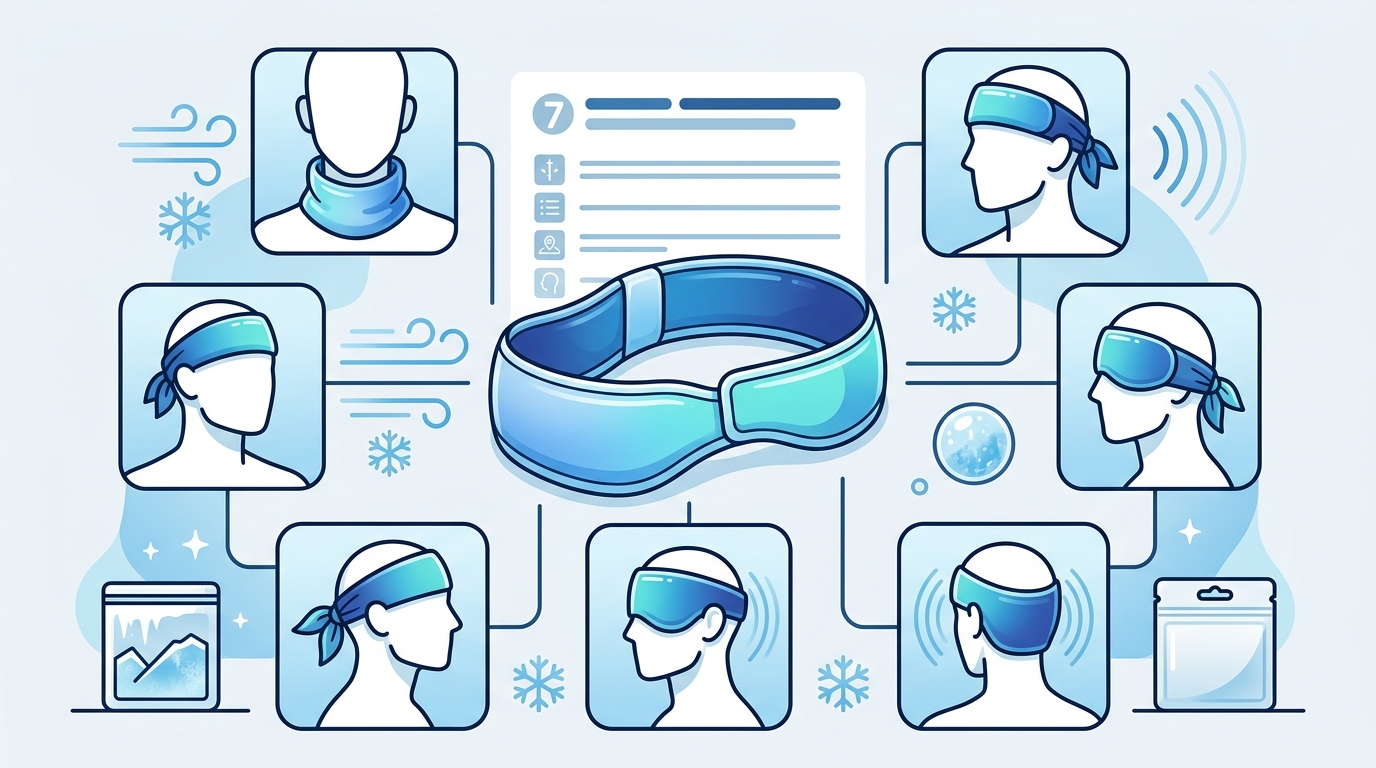
Managing migraine pain at home often requires targeted cold therapy to reduce inflammation and numb nerve signals. A freezing bandana is a versatile, reusable cooling tool that can be positioned in multiple ways to address different migraine triggers. This guide outlines seven effective placement methods to help you find the right fit for your specific symptoms.
1. Forehead Wrap for Tension-Type Migraines
Target the frontal nerves to relieve pressure headaches.
Tension migraines often manifest as a tight band around the head. Wrapping a frozen bandana around the forehead helps constrict blood vessels in the frontal region. This placement is ideal for stress-induced pain that radiates across the brow and temples.
2. Neck and Nape for Cervicogenic Pain
Cool the upper spine to ease neck-related triggers.
Cervicogenic migraines stem from neck muscle tension or joint issues. Placing the bandana around the neck and nape targets the suboccipital muscles. This method is particularly effective when poor posture or prolonged screen time contributes to your headache frequency.
3. Eye Mask Position for Photophobia
Combine darkness and cold to soothe light sensitivity.
Many migraine sufferers experience intense light sensitivity, known as photophobia. Folding the bandana to cover the eyes provides both darkness and cooling relief. This dual approach helps calm the trigeminal nerve, which is heavily involved in migraine pain pathways.
4. Temple Focus for Unilateral Pain
Apply localized pressure to one side of the head.
Classic migraines often affect only one side of the head. You can fold the bandana to concentrate the cold on the affected temple. This targeted approach allows you to manage throbbing pain without cooling the entire head, which some users find too intense.
5. Jaw and Cheek for Sinus Involvement
Reduce facial pressure associated with sinus migraines.
When migraines trigger sinus congestion or facial pressure, cooling the jaw and cheek area can provide relief. This placement helps reduce inflammation in the maxillary and mandibular regions. It is a useful technique for those who feel pain in their cheeks or upper teeth.
6. Full Head Wrap for Aura-Associated Pain
Cover the entire scalp to manage widespread throbbing.
Some migraines present with a full-head pressure sensation. Wrapping the bandana tightly around the entire head, including the crown, provides comprehensive cooling. This method is best used during the peak of a severe attack when pain feels diffuse rather than localized.
7. Shoulder and Upper Back for Referred Pain
Address muscle tension that radiates to the head.
Referred pain from the shoulders and upper back can trigger or worsen migraines. Draping the bandana over the shoulders and upper back helps relax the trapezius muscles. This is a supportive technique for those who experience migraines alongside significant upper body stiffness.
Choosing the Right Placement
Select the bandana position based on where you feel the most intense pain. If your headache starts in the neck, prioritize the nape. If it is centered on the forehead, use the frontal wrap. Experimenting with these seven methods will help you identify your personal sweet spot for relief.
Frequently Asked Questions
How long should I wear a freezing bandana for a migraine?
Most users find relief within 15 to 20 minutes. It is generally recommended to limit continuous cold exposure to 20 minutes to avoid skin irritation. You can re-freeze the bandana and apply it again after a break if needed.
Can I use a freezing bandana for all types of migraines?
Yes, cold therapy is effective for most migraine types, including tension, classic, and cervicogenic. The key is adjusting the placement to match the specific area of pain. However, if you have cold urticaria or a condition that worsens with cold, consult a doctor first.
How do I prepare the bandana before use?
Place the bandana in the freezer for at least two hours before use. Ensure it is fully frozen but not so hard that it becomes uncomfortable to bend. Some users prefer to wrap it in a thin cloth to prevent direct ice burn on sensitive skin.
Is a freezing bandana better than a gel pack?
A bandana is more versatile because it can be wrapped around the neck, forehead, or eyes. Gel packs are often rigid and harder to position on curved areas of the head. The flexibility of a bandana allows for a more conforming fit, which enhances comfort during long wear.
Where can I buy a high-quality freezing bandana?
You can find specialized cooling bandanas from reputable health retailers. Cool Relief offers a refreezable cooling ice bandana designed specifically for head and neck cooling. Their products are known for durability and effective cold retention.
Should I use heat or cold for my migraine?
Cold is generally better for acute migraine pain and inflammation. Heat is often used for tension headaches caused by muscle tightness. If you are unsure, try cold first, as it is the standard recommendation for most migraine sufferers. Learn more: How to contact Cool.