

How to Choose the Best Ice Pack and Wrap Set for Quick Pain Relief
Whether you are recovering from knee surgery, nursing a sore shoulder after a weekend hike, or managing chronic hip pain, the right ice pack and wrap set can make a real difference. Cold therapy is one of the most widely recommended first-response treatments for soft-tissue injuries, reducing pain by numbing the affected area and helping control swelling. But not every ice pack is created equal. Gel composition, flexibility when frozen, compression fit, and targeted body-part coverage all influence how fast you feel relief. This guide walks you through every factor you need to evaluate so you can pick the perfect set with confidence.
Cold Therapy Basics: Why Ice Packs Work
Cold therapy, also called cryotherapy, is the application of cold temperatures to an injured area to reduce pain and inflammation. When you place an ice pack on a sore joint or muscle, the cold causes blood vessels to constrict and numbs surrounding tissues, according to Cleveland Clinic. This slows nerve signals, which is why pain decreases almost immediately.
The traditional RICE protocol (Rest, Ice, Compression, Elevation) has been a foundational approach in acute soft-tissue injury management since it was introduced by Dr. Gabe Mirkin in 1978. While newer frameworks like PEACE & LOVE encourage early movement after the initial phase, most healthcare providers still consider cold therapy appropriate for immediate relief, especially within the first 48 hours.
Types of Ice Packs and Wraps Compared
Not all cold-therapy products deliver the same experience. Below is a quick comparison of the most common types.
| Type | Flexibility When Frozen | Cold Duration | Reusable | Compression |
|---|---|---|---|---|
| Bag of Ice / DIY | Low | 20-30 min | No | None |
| Basic Gel Pack | Medium | 30-45 min | Yes | None (handheld) |
| Soft Gel Ice Wrap Set | High (stays pliable) | 1-2 hours | Yes | Built-in elastic straps |
| Motorized Cryo Unit | N/A (pump system) | Continuous | Yes | Varies |
A soft gel ice wrap set is a kit that pairs a medical-grade gel insert with a cloth compression sleeve and adjustable straps, giving you hands-free cold therapy that conforms to your body. This combination of flexibility, long cold retention, and compression makes it the most practical option for home recovery.
Key Features to Look For
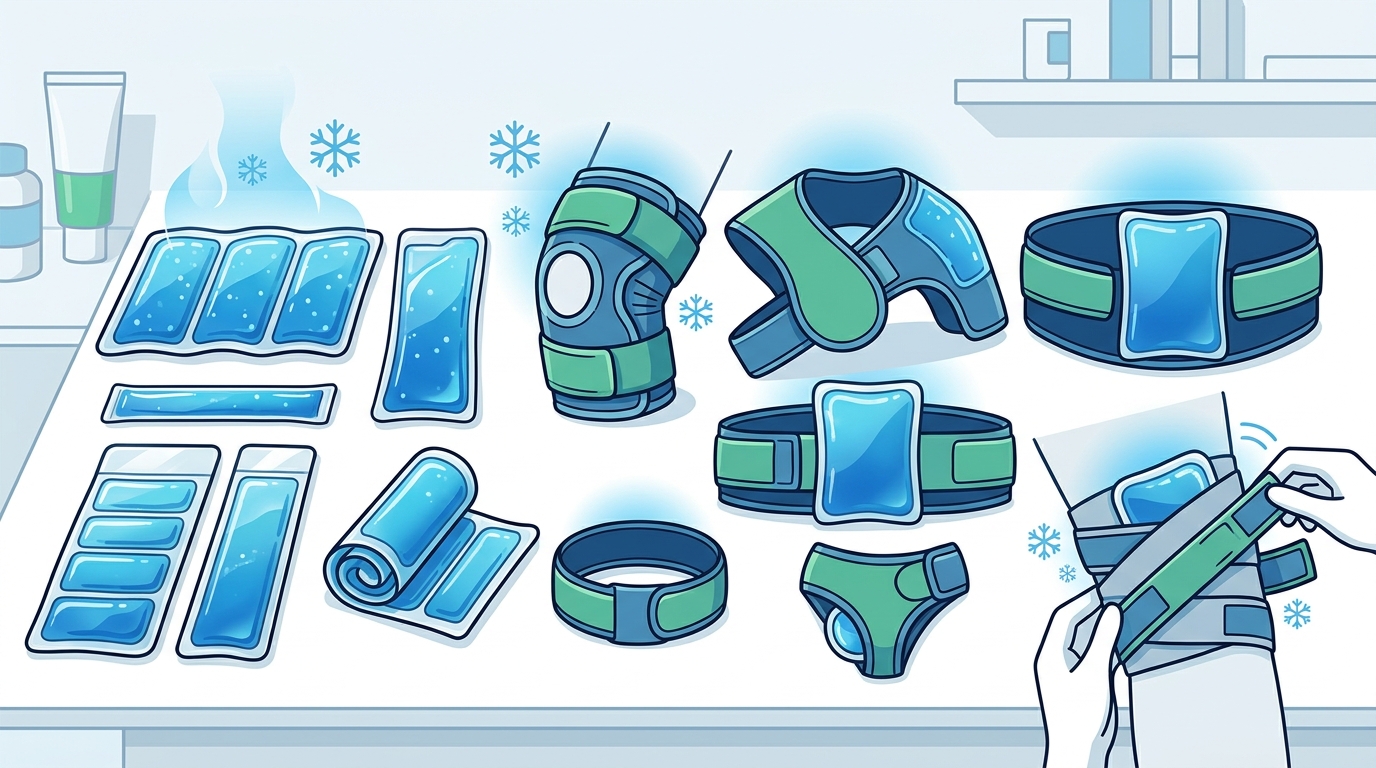
Gel Flexibility
Many generic gel packs freeze into rigid blocks that cannot conform to curved joints like the knee or shoulder. Look for packs that stay soft and pliable when frozen so they mold around the injury site. Cool Relief gel packs, for example, use a proprietary medical-grade gel that stays soft and flexible even when frozen, providing all-day comfort without hard pressure points.
Compression Design
Compression is the controlled application of pressure to an injured area, which helps limit swelling and supports the joint. An effective wrap includes elastic straps wide enough to distribute pressure evenly. Three-inch wide elastic straps, like those on Cool Relief's knee wrap, stretch for the perfect fit and provide broad compression that can help speed up healing.
Non-Toxic, Made-in-USA Materials
Safety matters, especially for products placed directly against skin. Cool Relief gel packs are made in the USA from a non-toxic, medical-grade gel solution that is long-lasting and safe for all ages.
Match the Wrap to Your Body Part
A universal wrap can handle many situations, but targeted wraps deliver superior coverage for specific joints. Here is how to match your needs:
- Knee: A dedicated knee ice wrap provides 360-degree coverage and adjustable straps that stay secure during movement.
- Shoulder: The shoulder ice wrap is contoured to fit all body types and delivers consistent cold directly to the rotator cuff area.
- Hip: A hip ice wrap with an adjustable waist strap fits people of all sizes and allows hands-free application while sitting, standing, or lying down.
- Ankle and Foot: Choose an ankle ice wrap with segmented inserts for better coverage around curved ankle bones.
- Head and Neck: A cooling ice bandana provides targeted cold for migraines, tension headaches, and outdoor heat relief.
- Multiple Areas: The universal ice and heat wrap adapts to elbows, wrists, calves, and more with a single adjustable strap.
How Long Should an Ice Pack Stay Cold?
Cold duration is the total time a gel pack maintains a therapeutically cold temperature after being removed from the freezer. Most basic gel packs lose effectiveness after 30 to 45 minutes. Cool Relief wraps are engineered to provide up to two hours of cold compression therapy, which means fewer trips to the freezer and longer, uninterrupted recovery sessions.
If you need extended icing, purchasing replacement gel inserts lets you swap in a fresh pack without removing the wrap. This is especially helpful after surgery when continuous cold therapy is recommended during the first 48 hours.
Safe Use: Timing, Duration, and Precautions
According to Medical News Today, most studies recommend intermittent 10 to 20 minute icing sessions, several times a day, for the first few days following an injury. Avoid applying ice directly to bare skin; always use a cloth barrier or a wrap with a built-in sleeve.
Cool Relief wraps include a soft cloth compression cover that can be applied without a towel, eliminating the risk of direct ice-to-skin contact while also reducing condensation. Stop icing and consult a healthcare provider if you notice skin color changes, increased pain, or numbness that persists after the pack is removed.
Key Takeaways
- Cold therapy reduces pain by numbing tissues and constricting blood vessels, making it ideal for the first 48 hours after injury.
- Gel flexibility matters: packs that stay soft when frozen conform better to joints and curved body parts.
- Built-in compression straps combine two elements of the RICE protocol in a single product.
- Match the wrap to your injury site for maximum coverage; targeted wraps outperform one-size-fits-all solutions for major joints.
- Look for non-toxic, medical-grade gel made in the USA for safety and durability.
- Cold duration of one to two hours per session minimizes interruptions during recovery.
- Always use a cloth barrier between the ice pack and your skin, and limit sessions to 20 minutes at a time.
Frequently Asked Questions
What is cold therapy?
Cold therapy is the therapeutic application of cold temperatures to an injured or painful area to reduce swelling, numb pain, and slow nerve conduction. It is commonly used within the first 48 hours of a soft-tissue injury.
How long should I ice an injury?
Most experts recommend 10 to 20 minutes per session, repeated every two to three hours during the first few days. Avoid prolonged icing, which can irritate skin or interfere with the body's natural healing response.
Can I use the same ice wrap on different body parts?
Yes. A universal ice wrap with an adjustable elastic strap can be used on the elbow, forearm, neck, back, thigh, knee, shin, calf, and more. However, for major joints like the shoulder, knee, or hip, a body-part-specific wrap provides better coverage.
Are Cool Relief gel packs safe?
Cool Relief gel packs are made in the USA from a non-toxic, medical-grade gel solution. They are safe for all ages and can even double as a lunchbox cold pack.
Do gel packs work for heat therapy too?
Yes. Most Cool Relief gel inserts can be removed from the cloth wrap and warmed in the microwave in short 20-second intervals for soothing heat therapy. Always test the temperature before applying to skin.
How do I clean my ice wrap?
Remove the gel insert, then hand wash the cloth sleeve with mild soap and water. Air dry completely before reinserting the gel pack. The gel inserts themselves can be wiped down with a damp cloth.
What is the RICE method?
RICE is an acronym for Rest, Ice, Compression, and Elevation. It is a first-aid protocol for soft-tissue injuries introduced in 1978. While still widely recommended for immediate pain management, newer approaches like PEACE & LOVE also encourage early, guided movement for long-term recovery.
Does Cool Relief offer free shipping?
Cool Relief offers free two-day shipping on orders over $25 and a 30-day free return policy, making it easy to try a wrap risk-free.
Find Your Perfect Ice Wrap
Ready to take control of your recovery? Browse the full collection of Cool Relief ice wraps and gel packs, choose the wrap that matches your body part, and experience flexible, long-lasting cold therapy trusted by hospitals and athletes nationwide. Visit the Pain Relief Guide for more recovery tips.