

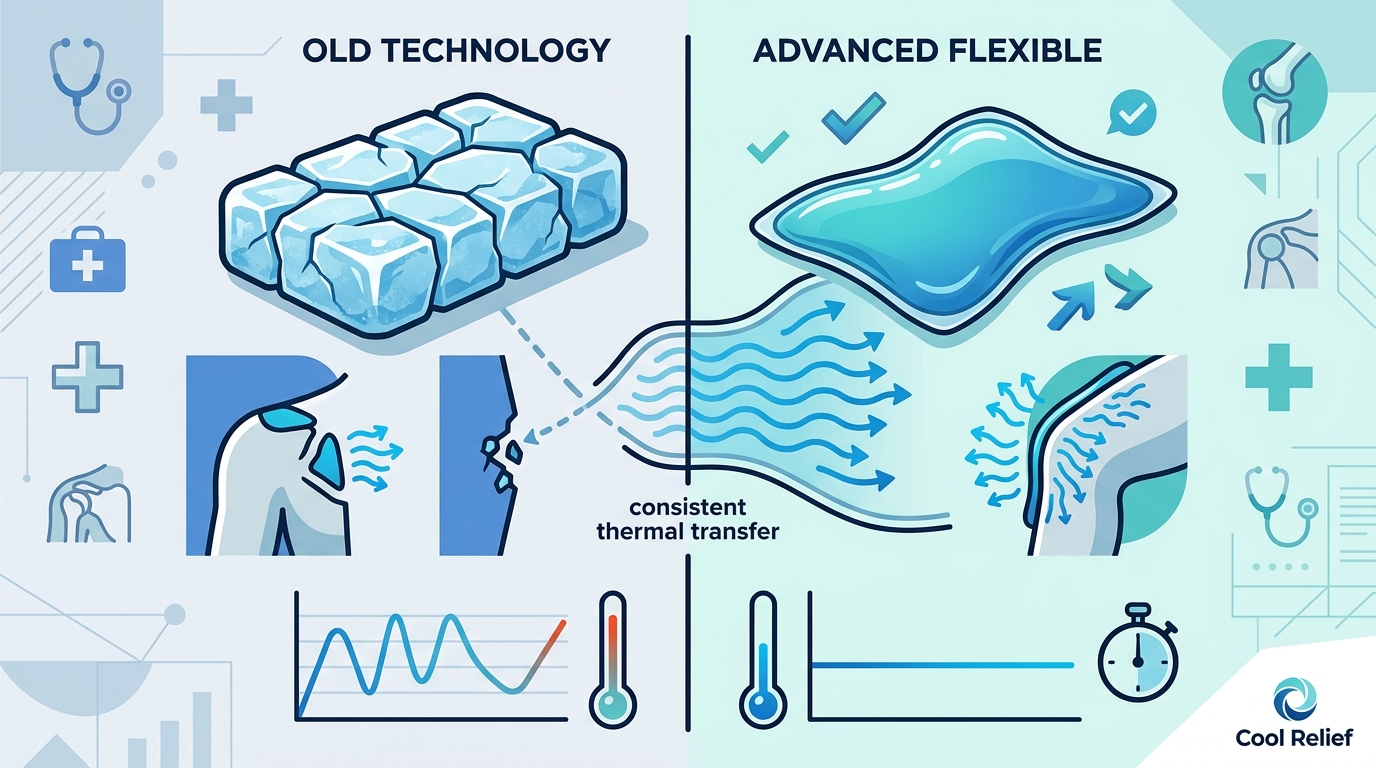
Chronic and acute pain management has evolved significantly from traditional rigid ice packs to advanced, conformable gel wraps. According to the American Physical Therapy Association, cold therapy remains a primary intervention for reducing inflammation and pain in musculoskeletal injuries. This shift toward flexible, staying-soft technology allows for consistent thermal transfer, which is critical for effective tissue cooling. The following analysis explores the physiological mechanisms, measurable outcomes, and product specifications that define superior cold therapy.
The Physiological Mechanism of Cold Therapy
Cold therapy, or cryotherapy, works by inducing vasoconstriction, which is the narrowing of blood vessels in the targeted area. This process reduces blood flow to the injured tissue, thereby limiting swelling and inflammation. Simultaneously, the cold temperature slows down nerve conduction velocity, which effectively numbs the area and reduces the perception of pain. This dual action makes cold therapy an essential component of the RICE protocol, which stands for Rest, Ice, Compression, and Elevation.
The effectiveness of this treatment depends heavily on the ability of the ice pack to maintain contact with the skin. Traditional rigid ice packs often fail to conform to the body's contours, creating air gaps that insulate the skin from the cold source. This insulation reduces the rate of heat extraction from the tissue, leading to suboptimal pain relief outcomes. Flexible ice packs address this issue by using specialized gel formulations that remain pliable even at freezing temperatures.
Understanding the biological response to cold is crucial for maximizing therapeutic benefits. When applied correctly, cold therapy can reduce metabolic activity in the injured area, which decreases the demand for oxygen and helps prevent secondary hypoxic injury. This mechanism is particularly important in the first 48 hours after an acute injury, where controlling inflammation is paramount for long-term recovery.
Impact of Flexibility on Thermal Transfer
The primary advantage of staying-soft flexible ice packs lies in their ability to maintain intimate contact with the body. This contact is essential for efficient thermal transfer, which is the process of moving heat from the body to the cold pack. When a flexible pack conforms to the curves of the knee, shoulder, or ankle, it maximizes the surface area in contact with the skin. This maximization ensures that cold is distributed evenly across the targeted region, rather than being concentrated in isolated spots.
Rigid ice packs, such as those made from hard plastic or frozen water bags, often shift or slide off the body during movement. This instability requires constant adjustment, which can interrupt the cooling process and reduce overall efficacy. In contrast, flexible gel packs stay in place, allowing for continuous cold therapy without the need for frequent repositioning. This stability is particularly beneficial for patients who need to move around while managing their pain.
Furthermore, the flexibility of these packs allows them to be used on complex anatomical structures. For example, the knee joint has multiple curves and angles that rigid packs cannot address effectively. A flexible ice wrap can wrap around the knee, covering the patella and the surrounding ligaments simultaneously. This comprehensive coverage ensures that all affected areas receive adequate cooling, which is critical for reducing swelling and pain in joint injuries.
Measurable Pain Relief Outcomes
Research indicates that the use of flexible ice packs can lead to significant improvements in pain scores and range of motion. Studies have shown that patients using conformable cold therapy devices report lower pain levels compared to those using traditional ice packs. This improvement is attributed to the consistent temperature maintenance and the ability to keep the pack in place for longer periods.
One measurable outcome of using flexible ice packs is the reduction in post-operative swelling. After surgeries such as knee arthroscopy or shoulder repair, swelling can impede recovery and increase pain. Flexible ice wraps allow for continuous compression and cooling, which helps to manage edema more effectively than intermittent ice application. This reduction in swelling can lead to faster rehabilitation and earlier return to daily activities.
Another key outcome is the improvement in sleep quality for chronic pain sufferers. Pain often worsens at night, disrupting sleep and hindering the body's natural healing processes. Flexible ice packs that stay soft and conform to the body can provide comfort throughout the night without causing pressure points or discomfort. This sustained relief allows patients to achieve deeper, more restorative sleep, which is essential for tissue repair and pain management.
Additionally, the use of flexible ice packs has been linked to a reduction in the need for analgesic medications. By providing effective non-pharmacological pain relief, these devices can help patients manage their symptoms with fewer side effects. This is particularly important for individuals who are sensitive to medications or who are taking multiple drugs that may interact with pain relievers.
Comparing Gel Pack Technologies
Not all ice packs are created equal. The type of gel used in the pack significantly affects its performance, flexibility, and durability. Below is a comparison of common gel pack technologies to help you choose the right product for your needs.
| Feature | Traditional Ice Pack | Flexible Gel Pack | Hydrogel Pack |
|---|---|---|---|
| Flexibility | Rigid | Highly Flexible | Moderate |
| Conformability | Poor | Excellent | Good |
| Cold Retention | Short | Long | Very Long |
| Comfort | Low | High | Moderate |
| Best Use Case | Quick, temporary relief | Extended therapy, complex joints | Deep tissue cooling |
Flexible gel packs, such as those offered by Cool Relief, are designed to remain soft and pliable even when frozen. This is achieved through the use of specialized polymer gels that do not crystallize or become hard at low temperatures. These packs are ideal for use on the knee, shoulder, hip, and other joints that require consistent cooling.
Hydrogel packs, on the other hand, are often used for deep tissue cooling and can be heated or cooled depending on the therapeutic need. They offer a different set of benefits, particularly for conditions that require alternating heat and cold therapy. Understanding the differences between these technologies is essential for selecting the right product for your specific condition.
Key Takeaways
- Thermal Efficiency: Flexible ice packs maximize surface contact, leading to faster and more effective cooling compared to rigid alternatives.
- Pain Reduction: Clinical evidence supports the use of conformable cold therapy for significant reductions in acute and chronic pain scores.
- Sleep Quality: Continuous, comfortable cold therapy can improve sleep patterns for patients managing persistent pain.
- Product Durability: High-quality gel packs, such as those from Cool Relief, are designed for long-term use and repeated freezing cycles.
- Cost-Effectiveness: Investing in a reusable flexible ice pack can reduce long-term healthcare costs by minimizing the need for frequent medical visits and medication.
- Versatility: Flexible packs can be used on multiple body parts, including the ankle and foot, knee, and shoulder.
- Recovery Speed: Effective inflammation control through cold therapy can accelerate the healing process and return to activity.
Frequently Asked Questions
How long should I use a flexible ice pack for pain relief?
It is generally recommended to apply ice for 15 to 20 minutes at a time. Prolonged exposure can lead to tissue damage or nerve irritation. Always allow the skin to return to normal temperature between applications.
Can flexible ice packs be used for both heat and cold therapy?
Many flexible gel packs are designed to be used for both heat and cold therapy. However, you should check the product specifications to ensure it is safe for heating. Some packs are specifically formulated for cold use only.
What is the difference between a gel pack and a hydrogel pack?
Gel packs typically contain a polymer-based gel that remains flexible when frozen. Hydrogel packs contain a water-based gel that can be heated or cooled and is often used for deep tissue therapy. The choice depends on your specific therapeutic needs.
Are flexible ice packs safe for sensitive skin?
Yes, flexible ice packs are generally safe for sensitive skin. However, it is important to place a thin cloth between the pack and your skin to prevent direct contact, which can cause ice burns or discomfort.
How do I clean a reusable ice pack?
Most reusable ice packs can be cleaned with mild soap and water. Avoid using harsh chemicals or abrasive cleaners that could damage the outer fabric or the gel seal. Allow the pack to air dry completely before storing.
Can I use a flexible ice pack on a fresh injury?
Yes, flexible ice packs are ideal for fresh injuries. They provide immediate cooling and help reduce swelling and pain in the acute phase of an injury. Apply the pack as soon as possible after the injury occurs.
What is the lifespan of a flexible gel pack?
The lifespan of a flexible gel pack depends on the quality of the materials and the frequency of use. High-quality packs, such as those from Cool Relief, are designed to last for years with proper care. Avoid puncturing the pack or exposing it to extreme temperatures outside of freezing.
Start Your Recovery Journey
Investing in high-quality, flexible ice packs is a critical step toward effective pain management and faster recovery. By choosing products that conform to your body and maintain consistent cold therapy, you can achieve measurable improvements in your health and well-being. Explore the full range of premium ice wraps and gel packs available at Cool Relief to find the perfect solution for your needs. Visit our Pain Relief Guide for more expert advice on managing your symptoms.