

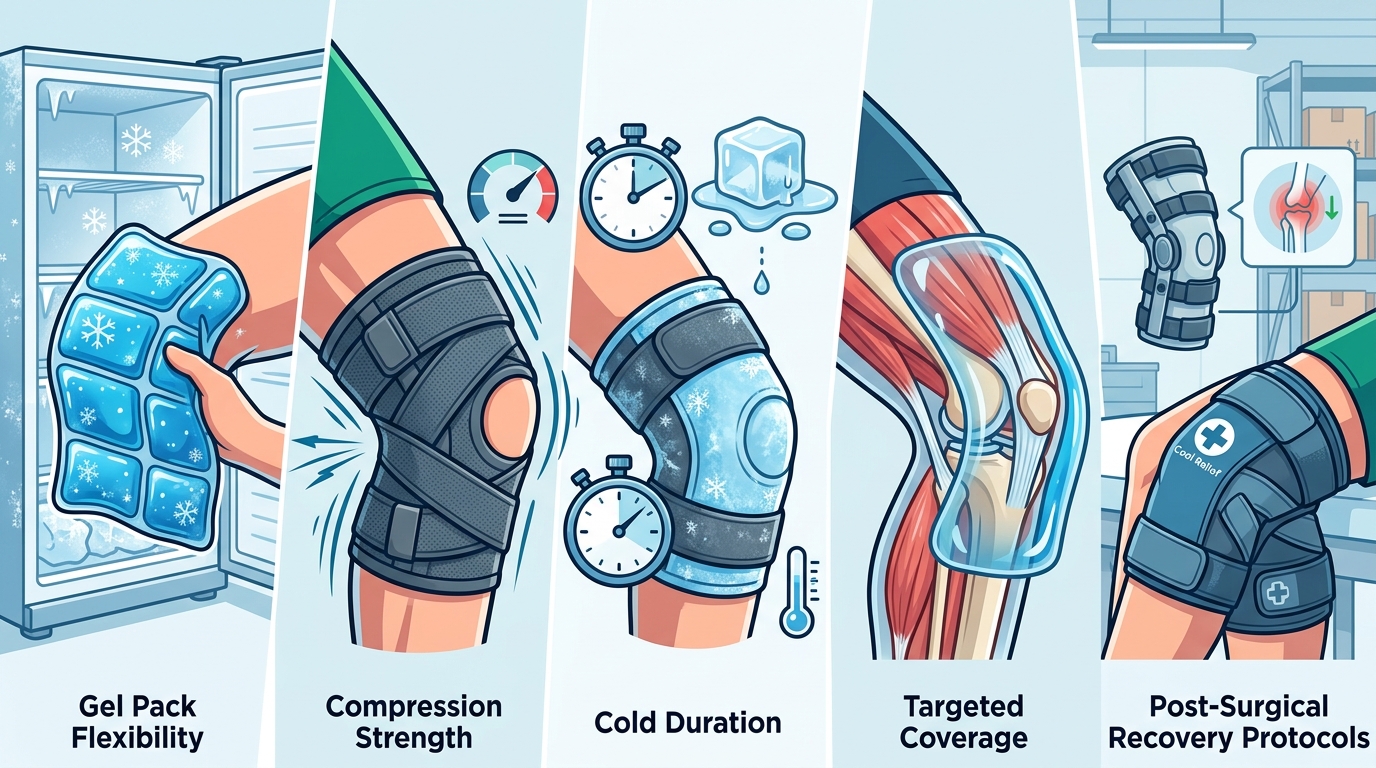
Choosing the best knee ice wrap for athletes requires balancing gel flexibility, compression strength, and cold duration. Cool Relief designs medical-grade wraps that stay pliable in the freezer and maintain therapeutic temperatures for extended periods. This guide covers five critical factors: gel pack flexibility, compression strength, cold duration, targeted coverage, and post-surgical recovery protocols.
Gel Pack Flexibility
Gel pack flexibility is the ability of a cold therapy insert to remain pliable and conform to joint contours after freezing. Standard ice packs often freeze rock solid, creating rigid pressure points that cause pain and reduce blood flow. Athletes need wraps that maintain a soft, flexible state even at standard freezer temperatures to ensure comfortable, continuous therapy.
Stay-Flex Engineering
Cool Relief utilizes a proprietary stay-flex medical gel compound. This formulation prevents the gel from freezing solid, ensuring the insert remains flexible straight from the freezer. This flexibility allows the wrap to contour seamlessly to the patella and surrounding ligaments without bunching or digging into the skin.
Impact on Joint Mobility
Rigid ice packs restrict range of motion, which is counterproductive for athletes recovering from strains. A flexible gel pack allows for gentle movement during therapy sessions. This dynamic fit is essential for maintaining muscle tone and preventing stiffness during the acute recovery phase.
Compression Strength
Compression strength is the degree of pressure applied to the injured area to reduce swelling and provide structural support. Effective knee ice wraps combine cold therapy with graduated compression to manage edema and stabilize the joint. The right balance of pressure is critical for both acute injury management and chronic pain relief.
Strap Systems and Adjustability
High-quality wraps feature adjustable multi-strap setups. Cool Relief wraps include wide-profile elastic straps with heavy-duty micro-hook fasteners. These systems allow athletes to customize compression levels based on their comfort and injury severity. Adjustable straps ensure the wrap stays securely in place during movement.
Swelling Reduction Mechanisms
Compression works by limiting the space available for fluid accumulation. When combined with cold therapy, compression helps flush out lactic acid and reduces localized inflammation. This dual-action approach is vital for athletes who need to return to training quickly.
Cold Duration
Cold duration is the length of time a gel pack maintains therapeutic temperatures suitable for pain relief and swelling reduction. Most standard ice packs lose their cooling power within 20 to 30 minutes. Extended cold duration allows for longer, more effective therapy sessions without the need for constant replacement.
Thermal Retainment Technology
Cool Relief gel packs are engineered to hold therapeutic cold thresholds for up to two hours per cycle. This extended duration is supported by high-volume internal gel and insulated fabric. Athletes can complete full therapy sessions without interrupting their rest or recovery routine.
Practical Implications for Athletes
Longer cold duration means fewer interruptions in the recovery process. Athletes can apply the wrap for the recommended 15 to 20 minute intervals and still have residual cooling power for subsequent sessions. This efficiency is particularly beneficial for those managing multiple injuries or high training loads.
Targeted Coverage
Targeted coverage is the design feature that ensures the cold therapy is applied precisely to the injured area rather than the entire limb. Knee wraps must conform to the complex geometry of the knee joint, including the patella, meniscus, and ligaments. Poor coverage leads to uneven cooling and reduced therapeutic efficacy.
Anatomical Contouring
Cool Relief knee wraps are designed with anatomical contouring in mind. The low-profile sleeve avoids external cords or bulky components that could interfere with movement. The wrap conforms to the knee joint contours, ensuring high-density encapsulation of the patella and surrounding tissues.
360-Degree Options
For severe injuries, athletes may benefit from wraps that offer 360-degree coverage. The Large Soft Gel Pack for Knee provides comprehensive anatomical distribution, surrounding the entire joint geometry. This design drives swelling out of patellar and ligament tissue more effectively than partial wraps.
Post-Surgical Recovery
Post-surgical recovery is the phase of healing following orthopedic procedures such as ACL reconstruction, meniscus repair, or total knee replacement. Cold therapy is a critical component of post-operative care, helping to manage pain, reduce swelling, and promote healing. Athletes undergoing surgery require wraps that are safe, effective, and comfortable for extended use.
Managing Post-Operative Swelling
Swelling is a natural part of the healing process, but excessive swelling can delay recovery. Cool Relief wraps are recommended by physicians for their efficiency in reducing post-surgical edema. The combination of cold therapy and compression helps mitigate bruising and promotes faster healing.
Comfort and Compliance
Patient compliance is key to successful recovery. Wraps that are uncomfortable or difficult to apply may be abandoned, leading to suboptimal outcomes. Cool Relief wraps are designed for ease of use and flexibility, making them a must-have for athletes recovering from surgery. The hypoallergenic and latex-free materials ensure skin safety during prolonged wear.
Comparison Table
| Feature | Standard Ice Pack | Cool Relief Knee Wrap |
|---|---|---|
| Gel Flexibility | Freezes solid, rigid | Stay-flex, pliable from freezer |
| Compression | Minimal or none | Adjustable multi-strap system |
| Cold Duration | 20-30 minutes | Up to 2 hours |
| Coverage | Partial, uneven | Anatomical, 360-degree options |
| Skin Safety | May cause condensation | Hypoallergenic, anti-condensation |
Key Takeaways
- Gel pack flexibility is crucial for comfort and joint mobility during therapy.
- Compression strength helps reduce swelling and provides structural support.
- Extended cold duration allows for longer, more effective therapy sessions.
- Targeted coverage ensures precise application of cold therapy to the injured area.
- Post-surgical recovery benefits from wraps that are safe, effective, and comfortable.
- Cool Relief wraps are designed with stay-flex gel, adjustable straps, and anatomical contouring.
- Choosing the right wrap can significantly impact recovery time and outcome.
- Always follow your physician's recommendations for cold therapy duration and frequency.
Frequently Asked Questions
How long should I wear a knee ice wrap?
It is generally recommended to wear a knee ice wrap for 15 to 20 minutes at a time. You can repeat sessions several times a day, allowing your skin to return to normal temperature between applications. Always follow the specific advice of your healthcare provider.
Can I use a knee ice wrap after surgery?
Yes, cold therapy is often recommended after knee surgery to reduce swelling and pain. Cool Relief wraps are designed for post-surgical care and are suitable for use following procedures like ACL reconstruction or meniscus repair. Consult your surgeon before starting any new therapy.
What is the difference between a gel pack and an ice wrap?
A gel pack is the reusable insert that holds the cold, while an ice wrap is the outer sleeve that holds the gel pack in place and provides compression. Ice wraps offer more targeted therapy and support compared to using a gel pack alone.
Are Cool Relief wraps suitable for all knee injuries?
Cool Relief offers a range of knee wraps designed for various injuries, including sprains, strains, and post-surgical recovery. The adjustable compression and flexible gel design make them suitable for a wide range of conditions. Choose the wrap that best fits your specific injury and comfort needs.
How do I clean my knee ice wrap?
The outer neoprene or soft-cloth sleeve is typically machine washable on a cold, light cycle. The gel insert should be wiped clean with a damp cloth and mild soap. Do not machine wash the gel insert, as this can damage the seal. Allow both components to air dry completely before reuse.
Can I use a knee ice wrap for heat therapy?
Some Cool Relief wraps are dual-therapy, meaning the gel insert can be heated in a microwave for heat therapy. Check the specific product instructions to see if your wrap is suitable for heat use. Heat therapy is often used for chronic pain or muscle stiffness, while cold therapy is best for acute injuries.
Conclusion
Selecting the best knee ice wrap for athletes involves prioritizing flexibility, compression, and duration. Cool Relief provides medical-grade solutions that address these critical factors, ensuring effective and comfortable therapy. Whether you are managing an acute injury or recovering from surgery, the right wrap can make a significant difference in your recovery journey. Explore the knee ice wraps collection to find the perfect fit for your needs. Learn more: How to contact Cool.