
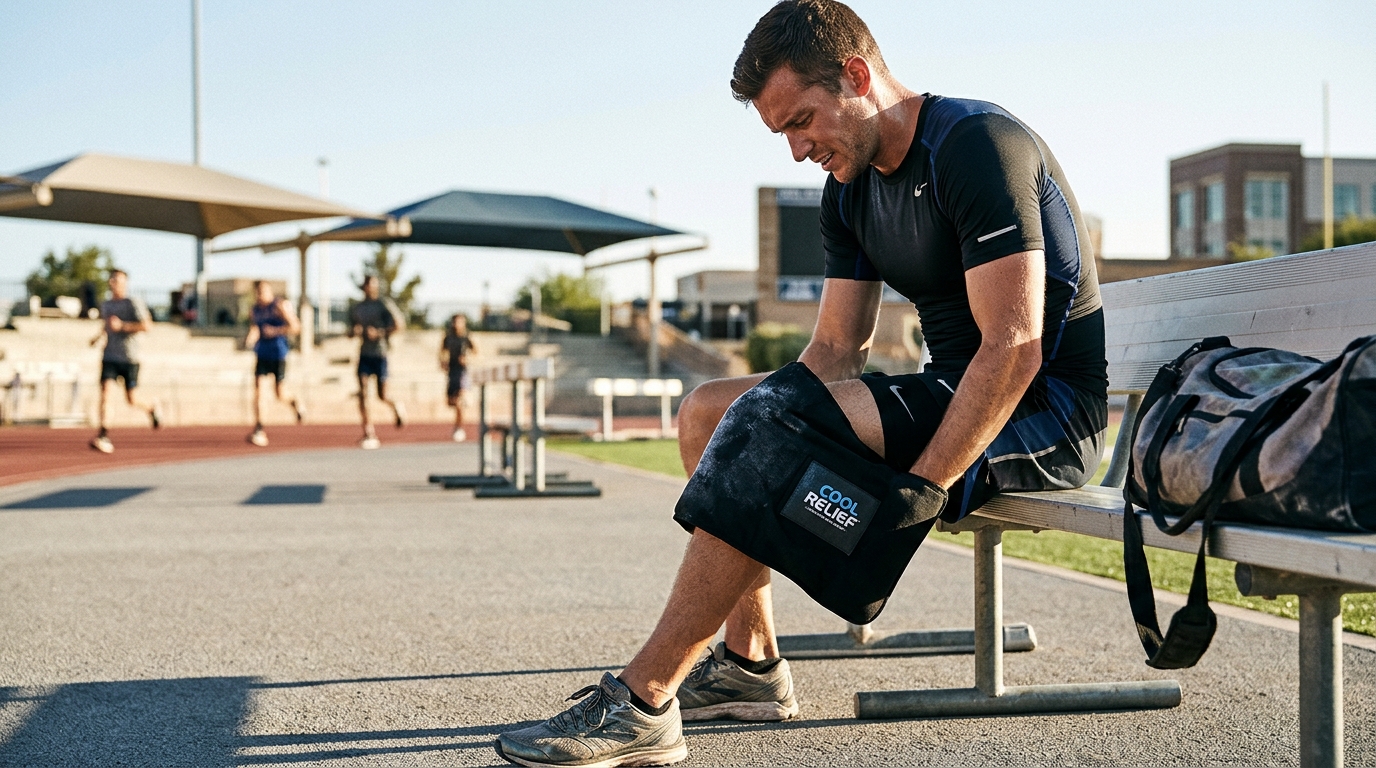
Ice packs typically retain therapeutic cold for 30 to 60 minutes during intense training, depending on the gel formulation and ambient heat. Standard freezer packs lose efficacy faster in high-heat environments, while advanced stay-flex gels maintain pliability and cooling power longer. Athletes need reliable thermal retention to manage swelling without constant re-freezing. Cool Relief designs proprietary gel systems specifically to address this retention gap in active recovery.
Thermal Physics of Gel Packs in Heat
Thermal retention is the ability of a material to maintain a specific temperature over time. In intense training, ambient temperatures and body heat accelerate the warming process. Standard ice packs often freeze into rigid blocks, which reduces surface contact and speeds up heat transfer. This rigidity forces the pack to warm unevenly, shortening its useful life. A flexible gel compound distributes heat more evenly across the joint surface. This even distribution slows the rate of temperature rise. As a result, the pack stays at a therapeutic threshold for a longer duration. Athletes benefit from this consistency because it prevents the 'hot spot' effect common with rigid ice.
Impact of Compression on Cooling Duration
Compression therapy is the application of pressure to a body part to reduce swelling. When a gel pack is used inside a compression wrap, the thermal dynamics change significantly. The compression layer acts as an insulator, trapping the cold against the tissue. This insulation reduces the rate at which external heat penetrates the pack. Furthermore, compression forces the gel into full contact with the skin. This maximizes heat exchange efficiency, allowing the pack to work harder for longer. Without compression, air gaps form between the pack and the body. These gaps act as insulators that waste cooling potential. A well-designed wrap system eliminates these gaps, extending the effective cold window in some cases.
Stay-Flex Technology and Pliability
Stay-flex technology is a gel formulation that remains pliable at freezer temperatures. Most standard gel packs become hard and brittle when frozen. This hardness makes them uncomfortable and less effective on curved joints like the knee or elbow. A stay-flex gel maintains its flexibility, allowing it to conform to the body's shape. This conformability ensures consistent contact, which is critical for sustained cooling. When a pack conforms perfectly, it does not shift during movement. Shifting creates friction and air pockets that degrade performance. By staying soft and flexible, the pack maintains its position and thermal output. This feature is essential for athletes who need to move while icing.
Practical Application in Training Cycles
Training cycles often involve multiple high-intensity intervals. Athletes need a cooling solution that lasts through the entire session. A single ice pack that warms up in 20 minutes is insufficient for a 90-minute workout. Advanced gel packs can maintain therapeutic cold for extended periods per cycle. This duration allows athletes to ice immediately after a set and continue training. The extended retention means fewer interruptions for re-freezing. This continuity is vital for maintaining training flow. For example, a runner can use a wrap during a long run to manage shin splints. The pack stays cold long enough to cover the entire distance. This practical application highlights the importance of choosing a pack with proven retention specs.
Choosing the Right Wrap for Retention
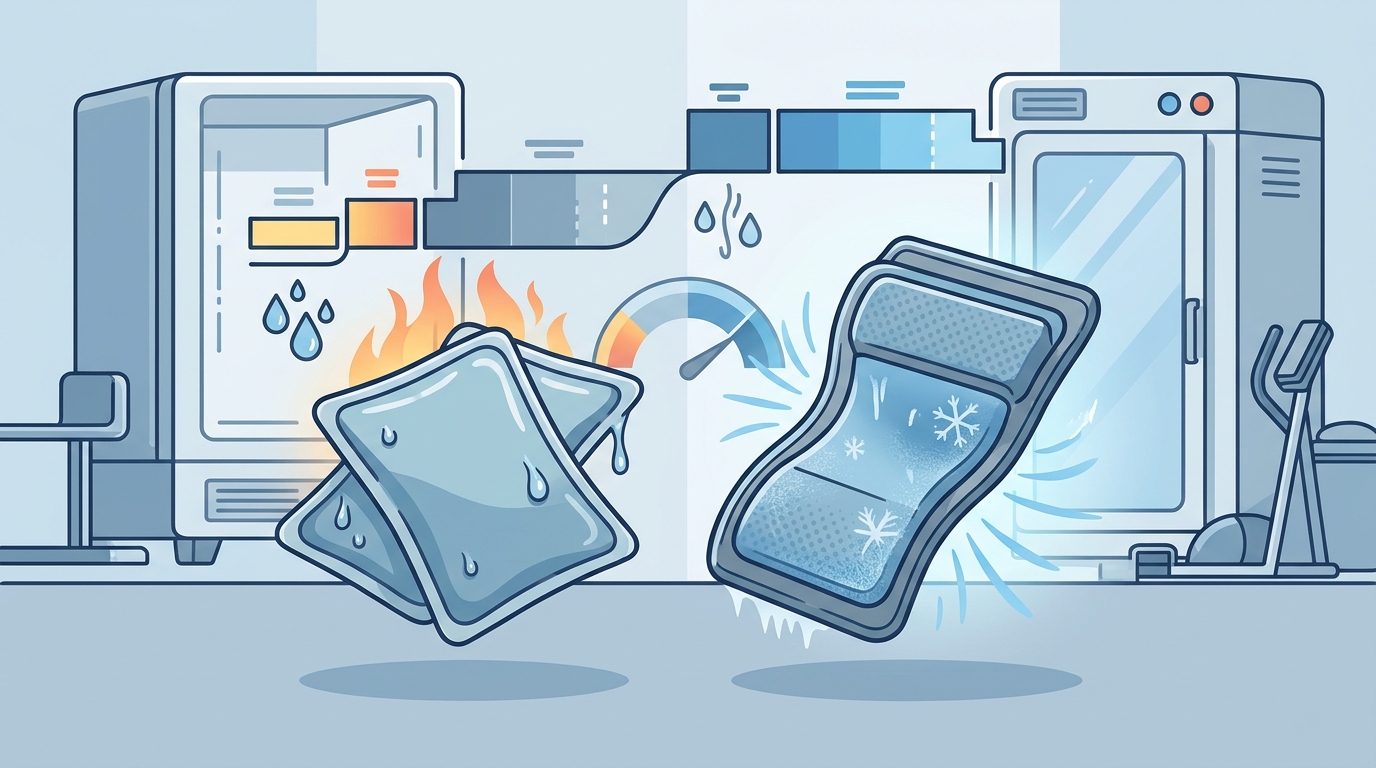
Not all ice wraps offer the same level of thermal retention. The quality of the gel insert and the insulation of the outer sleeve determine performance. Cool Relief replacement inserts are engineered for extended thermal retainment. They hold therapeutic cold thresholds for extended periods. The outer wrap provides additional insulation and compression. This combination creates a robust system for intense training. Athletes should look for wraps that specify retention times in their product details. Vague claims like 'stays cold' are less useful than specific timeframes. A reliable wrap will state exactly how long the gel remains at a therapeutic temperature. This transparency helps athletes plan their recovery protocols effectively.
Key Takeaways
- Standard ice packs often lose efficacy in 30 to 60 minutes during intense heat.
- Compression wraps act as insulators, extending the effective cold window of gel packs.
- Stay-flex gels remain pliable when frozen, ensuring consistent surface contact.
- Rigid ice blocks create air gaps that reduce cooling efficiency and duration.
- Advanced gel systems can maintain therapeutic cold for extended periods per cycle.
- Choosing a wrap with specified retention times helps plan uninterrupted training sessions.
Frequently Asked Questions
How long do standard gel packs stay cold?
Standard gel packs typically stay cold for 30 to 45 minutes. This duration can be shorter in high-heat environments or without compression. The exact time depends on the gel formulation and the ambient temperature.
Does compression help ice packs last longer?
Yes, compression helps ice packs last longer by acting as an insulator. It traps the cold against the body and prevents heat from penetrating the pack. This insulation can extend the effective cooling time significantly.
What is stay-flex gel technology?
Stay-flex gel technology is a formulation that keeps the gel soft and pliable at freezer temperatures. This flexibility allows the pack to conform to the body, ensuring consistent contact and better cooling performance.
Can I use an ice pack during a workout?
Yes, you can use an ice pack during a workout if it is designed for it. Wraps with secure straps and flexible gels allow you to ice while moving. This is useful for managing pain or swelling during long training sessions.
How do I know when an ice pack is no longer cold?
You can tell when an ice pack is no longer cold by feeling the surface temperature. If it feels warm or room temperature, it has lost its therapeutic value. Some packs may also change color or texture as they warm up.
Do I need to re-freeze the pack between sets?
It depends on the pack's retention time. If the pack stays cold for an extended period, you may not need to re-freeze it between sets. However, if it warms up quickly, you should have a backup pack ready to swap in.
Conclusion
Cold retention is a critical factor in effective athlete recovery. Choosing a pack that stays cold longer and remains flexible ensures better results. Cool Relief offers high-quality wraps designed for this purpose. Explore our collection to find the right solution for your training needs. Learn more: How to contact Cool.